
From concept to completion — we craft spaces that reflect your personality and elevate everyday living.
Interior Design
Full-service residential design, mood boards, furniture layout, and color consulting. We bring your vision to life.
SERVICEHome Decor Styling
Refresh your space with expert styling, accessories, seasonal decor curation, and virtual consultations.
SERVICEHome Improvement
Renovations, flooring, lighting upgrades, smart home integration, and complete room makeovers.
SERVICEKitchen & Bath Design
Custom cabinetry, premium finishes, functional layouts, and luxury upgrades for your most important spaces.
SERVICESmall Space Optimization
Maximize every square foot with clever storage solutions, multifunctional furniture, and spatial planning.
SERVICEDIY Home Guidance
Step-by-step virtual coaching, material recommendations, and project plans for confident DIY transformations.
SERVICEThe first house I ever helped redesign wasn’t some sprawling open-plan dream. It was a 600-square-foot rental in a city where square footage costs more than sense. The owner had stacked furniture against every wall, left the kitchen workflow to chance, and painted the whole thing a shade of beige that made even the plants look tired. Three weeks later no contractor, no demolition, no budget worth writing home about it looked like a completely different place. Not because we threw money at it. Because we paid attention to what the space was actually asking for.
That’s the thing most home improvement advice skips over. A home doesn’t just need decorating. It needs reading. And that’s what DrHomey does across every service we offer, from full residential design to the kind of DIY home guidance that actually makes weekends useful.
The global interior design market sat at $137.93 billion in 2024. It’s projected to reach $175.74 billion by 2030. That’s not a number about luxury penthouses. That’s millions of ordinary homeowners deciding, at the same time, that where they live deserves more thought than it’s been getting. We spend roughly 90% of our time indoors. The spaces we inhabit affect clarity, mood, productivity, and the kind of quiet peace that’s hard to name but immediately felt when it’s missing. DrHomey exists at that intersection where practical home improvement meets the kind of home decor styling that makes a room feel like yours.
How DrHomey Reads a Room Before It Redesigns One
Every service we offer starts the same way: with observation before prescription. Interior design done badly hands you a mood board you didn’t ask for and furniture that photographs better than it lives in. Done right, it starts with a style quiz not to put you in a box, but to pull out preferences you might not have words for yet. Do you lean Japandi, with its clean lines and wabi-sabi restraint? Or does your eye go to the layered warmth of cottagecore and hygge texture on texture, soft furnishings stacked with intention?
The answer shapes everything: the color palette, the tonal palette, the furniture layout, the focal point of every room. Our approach to residential design isn’t about importing a style from a magazine. It’s about building design cohesion from what’s already there your existing pieces, your light conditions, your daily patterns and then filling in what’s missing with enough precision that the result feels inevitable rather than imposed.
We use 3D rendering and floor plan tools so you can see decisions before they’re made. Not every homeowner can rotate a room in their head. Most people can’t. The 3D rendering step alone eliminates the single most expensive mistake in home renovation: committing to a layout that doesn’t work until the furniture is already in it.
Home Decor Styling That Goes Past the Surface
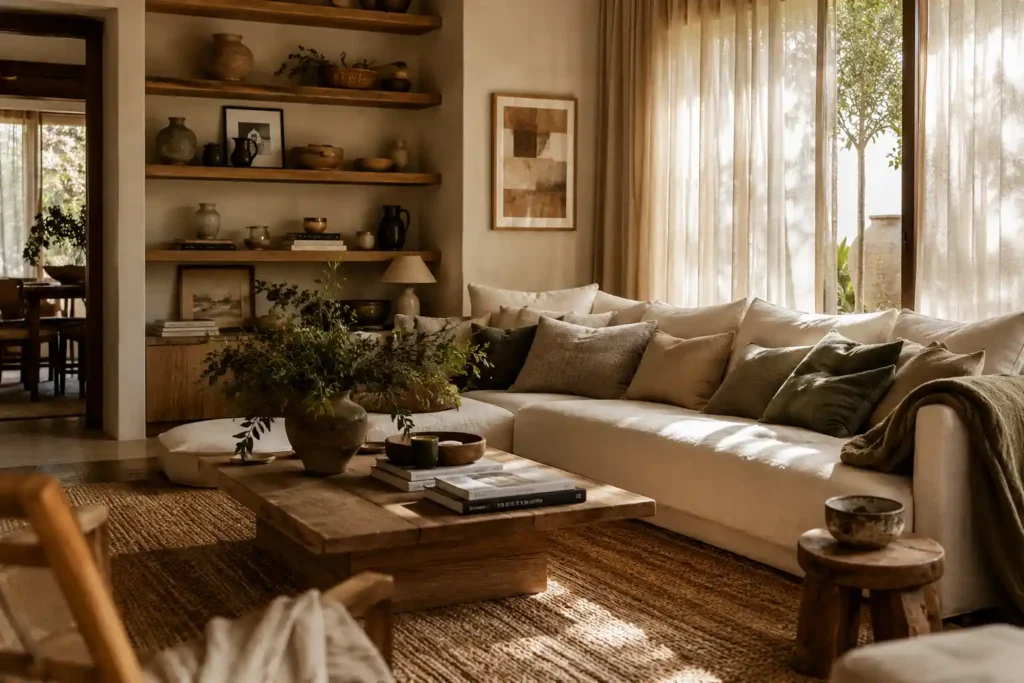
Home decor styling is where a lot of services stop. Swap the cushions, add a throw, hang something on the wall. DrHomey pushes past that. Styling is the difference between a room that looks arranged and a room that feels resolved.
Texture layering is underused in most homes. It’s not complicated rough linen against a smooth wall, a jute rug under a polished coffee table, warm neutrals broken up with organic shapes in a vase or bowl. The eye needs variety to settle. Without it, a room reads as flat no matter how expensive the pieces are. Pantone named Transformative Teal as the colour of 2026 a shift toward sustainability, calm, and mindful minimalism and it sits perfectly within the earthy tones and muted hues that have been replacing stark whites across both American and European homes over the last two years.
Our home decor styling work covers accent walls, wallpaper selection, paint selection, window treatments, statement lighting and layered lighting ambient, task, and the kind of warm low-level light that makes an evening at home feel like a choice rather than an accident. Decorative accents get placed with the same logic as punctuation: too many and the sentence collapses, too few and nothing lands. We also factor in what most decorators don’t mention out loud that 2 to 5 times the concentration of some pollutants exists indoors compared to outside, which means material selection and paint selection carry health implications alongside aesthetic ones. Biophilic design natural materials, indoor planting, natural light maximization isn’t just a trend. It’s a response to that reality.
Art Deco revival is pulling back into living rooms and hallways in 2026 with bold geometry and rich finishes. Traditional style inset cabinetry, arched details, handcrafted elements has risen 5 percentage points among renovating homeowners in the last year according to Houzz data. We track these shifts not to chase them, but to know which ones have staying power and which ones will date a room by 2028.
Home Improvement That’s Honest About What It Costs
Home improvement is the category where the gap between expectation and reality tends to be widest. Someone finds a before-and-after transformation on Pinterest, budgets for the after without accounting for the before, and ends up three months in with half a kitchen and a contractor who stopped returning calls.
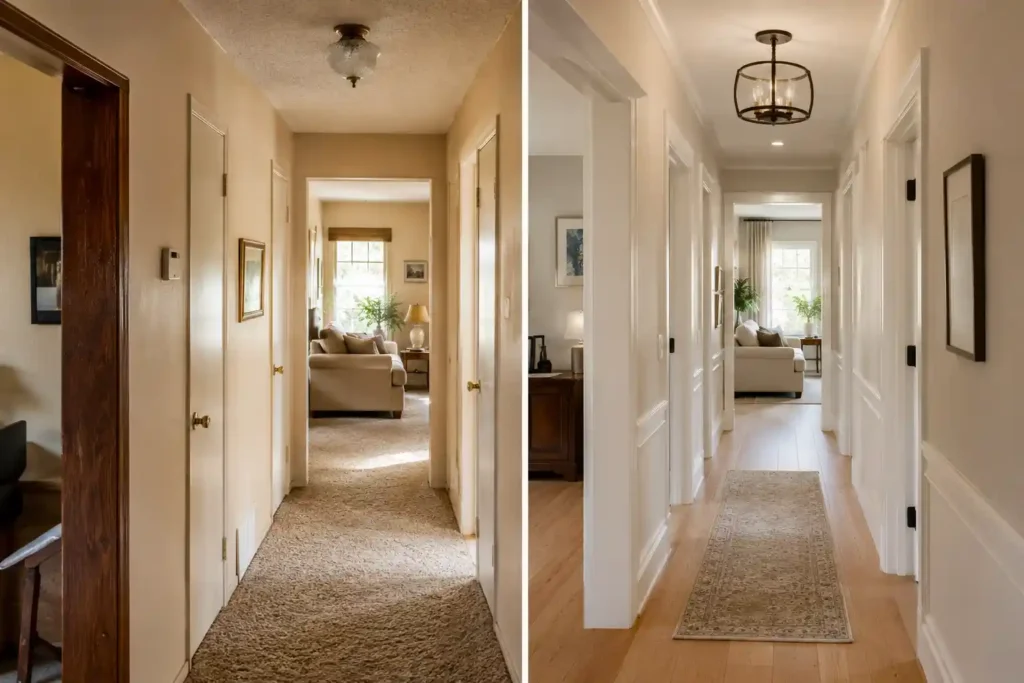
DrHomey’s home improvement guidance is structured around what actually goes wrong. Not a glossy checklist of possibilities, but a genuine home improvement checklist built around the decisions that create problems downstream: plumbing layout locked in before cabinet placement is finalised, tile selection chosen before grout colour is considered, lighting swap planned without checking whether existing wiring will carry the load.
We separate contractor vs DIY decisions explicitly because they’re not the same judgment every time. Some fixture upgrades take forty minutes and a YouTube video. Others anything touching load-bearing structure, main water lines, or electrical panels need a licensed hand regardless of how confident you feel on a Saturday morning. Getting that line right saves money. Getting it wrong costs multiples of what professional work would have cost.
We also cover curb appeal and seasonal home refresh as part of the improvement picture, because a home’s first impression sets expectations for everything inside it, and a seasonal approach rather than one large renovation — keeps the budget manageable and the disruption short.
Kitchen & Bath Design — the Two Rooms That Actually Sell Houses
Kitchen design and bathroom design are the two rooms that carry disproportionate weight in both daily living and in property value. They’re also the two rooms most people renovate badly either overspending on finishes while ignoring layout, or fixing the layout while leaving finishes that fight each other.
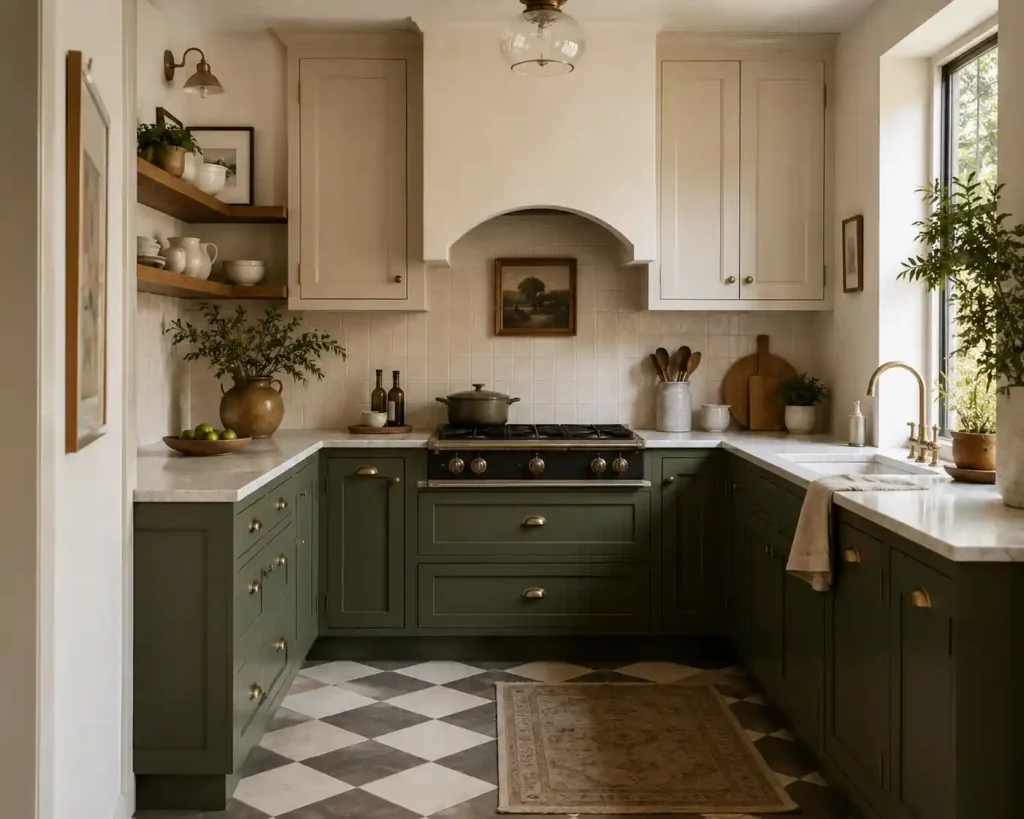
The work triangle is still the foundational logic of a functional kitchen layout: the relationship between the sink, the cooktop, and the refrigerator determines kitchen workflow before a single cabinet is chosen. Get that wrong and no amount of beautiful custom cabinetry fixes the daily frustration of a kitchen that works against you. Our kitchen design process starts with the triangle, moves to storage floating shelves, pull-out organizers, vertical storage, open shelving positioned for what’s actually used daily, not just what photographs well and then addresses finishes.
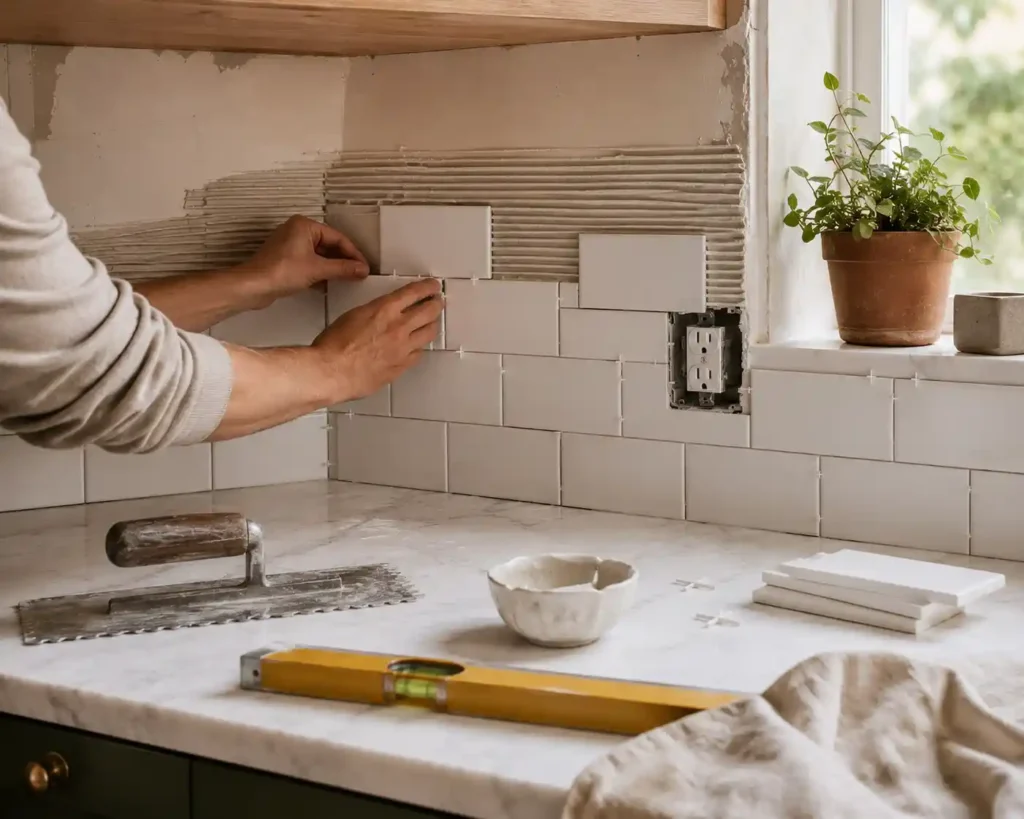
Two-tone cabinets have gained serious momentum. Inset cabinetry paired with an arched range hood reads traditionally elegant without being fussy. Kitchen cabinet refacing is worth serious consideration before a full kitchen remodel: if the bones of the layout work and the cabinet boxes are structurally sound, refacing changes the visual entirely at a fraction of the cost. Backsplash installation including the backsplash DIY route for those with patience and a level is the single highest visual-impact-per-dollar move in kitchen renovation. A checkerboard floor saw 38% growth in searches on Houzz in 2025. A well-chosen kitchen countertop and a strong tile selection can shift the character of a kitchen completely.
Bathroom design follows similar logic. Compact fixtures a corner sink, a pedestal sink, a soaking tub designed for the actual footprint free up floor space that changes how a bathroom feels to move through. Walk-in showers, particularly curbless shower designs with glass walls and a linear drain, make small bathrooms feel considerably larger. Vanity upgrade, bathroom storage built into recessed niches, and consistent finishes across tile selection and bathroom fixtures are what separate a bathroom remodel that looks assembled from one that looks designed. A plumbing layout decision made early in the process before walls close up saves the kind of money that funds the rest of the project.
Small Space Optimization — What Compact Living Actually Requires
Small space design gets treated as a consolation prize. It isn’t. A well-optimized compact living situation is harder to design than a large one precisely because there’s no room to hide decisions that don’t work.
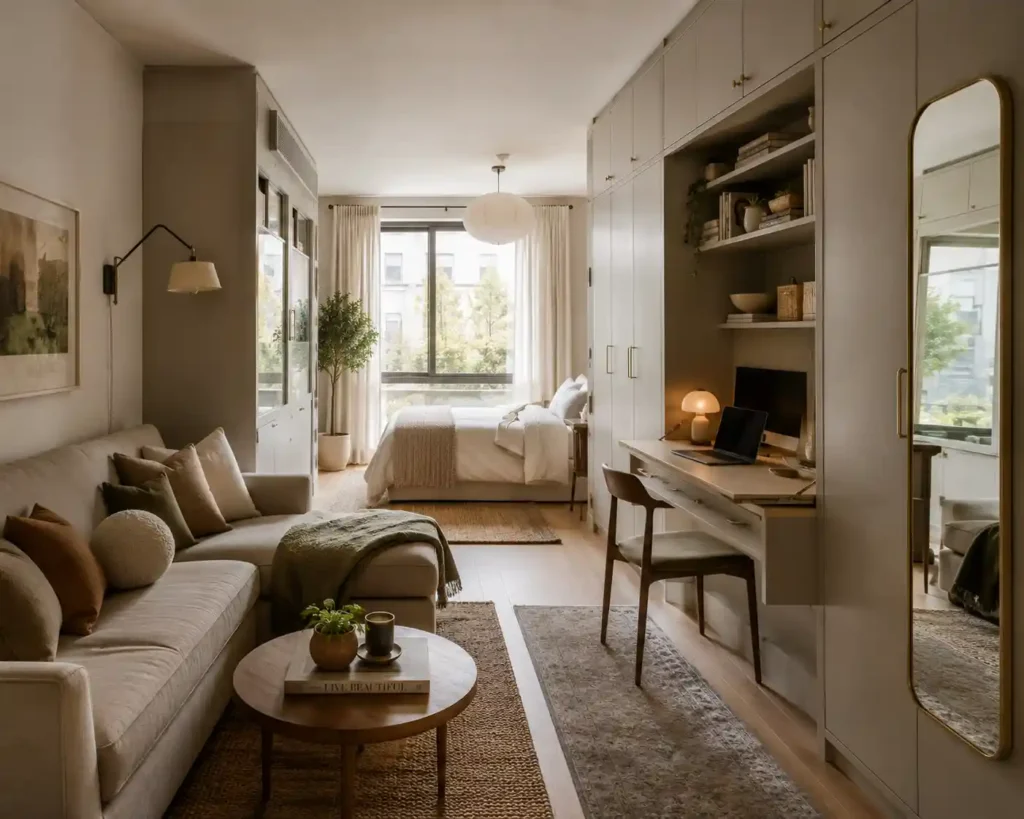
The principles that matter: vertical space is almost always underused. Most people stop thinking at eye level. Built-in storage running floor to ceiling, wall units that hold both display and closed storage, under-stair storage where structure allows these reclaim square footage without expanding the footprint. Multifunctional furniture is real and has moved well past the fold-out sofa: modular furniture that reconfigures, fold-down furniture that disappears, hidden storage built into beds, benches, and ottomans.
Studio apartment design requires zoned spaces defined areas for sleeping, working, and living that feel distinct even without walls separating them. A rug anchors a zone. A lighting change shifts the character of a corner. Mirror placement on a wall opposite a light source nearly doubles the perceived depth of a room. Open-concept design works when the spatial flow is managed; it fails when every zone bleeds into every other without visual break.
For renters and the majority of people living in compact spaces are renters the game is room proportion management and reversible change. Paint refresh, lighting swap, cabinet hardware swap, decorative accents, soft furnishings, and organizational systems are all renter-legal in most leases. The before and after transformation possible within those constraints is routinely underestimated. A tight clearance that felt claustrophobic becomes workable with the right furniture scale and a thought-through organizational systems approach. Awkward layout fix doesn’t always mean structural change. Sometimes it means understanding what’s creating the awkward read and subtracting the piece of furniture that’s causing it.
DIY Home Guidance That Treats You Like Someone Who Can Follow Instructions
The DIY home projects space online is full of content that either talks down or skips steps. DrHomey’s DIY home guidance is written and structured for someone who is capable, willing to learn, and doesn’t need to be told three times that they should measure twice. Weekend warrior projects a backsplash DIY, a paint refresh, a lighting swap, trim and molding installation, a cabinet hardware swap are achievable for most people with the right material selection guidance and an honest account of where things go wrong.
Step-by-step home guide content at DrHomey is built around the sequence that actually matters: planning before purchasing, material selection before commitment, and a clear contractor vs DIY line drawn before a single tool is picked up. Budget-friendly renovation doesn’t mean cheap. It means knowing where quality matters tile behind a cooker, grout in a wet room, a solid core door and where it doesn’t, so the budget lands on the decisions that last.
Home project planning also means knowing the renovation mistakes to avoid before they cost money to reverse. Skipping the primer because the paint says self-priming. Tiling over a surface that isn’t structurally stable. Choosing a paint colour from a sample card under fluorescent store lighting. Installing a kitchen island without accounting for the clearances needed to open adjacent cabinet doors. These aren’t obscure mistakes. They happen constantly, and they happen because affordable home makeover content on most platforms is written to inspire rather than to inform.
Beginner DIY tips at DrHomey are grounded in the same logic as the full-service design work: know what the space needs, understand what you’re committing to before you start, and build in the check points before the point of no return rather than after. Home staging tips, curb appeal improvements, seasonal home refresh routines these all sit within the DIY guidance offering because maintaining a home’s presentation is ongoing work, not a one-time project.
The DrHomey Difference Across Every Service
What runs through every service DrHomey offers interior design, home decor styling, home improvement, kitchen design, bathroom design, bath remodel, small space optimization, and DIY home guidance is the same underlying position: a home is not a background. It’s an active participant in how you feel and function every day.
The online home decor service and e-design consultation space has expanded significantly. Virtual interior design now lets homeowners access room design service quality that was previously limited to those with large project budgets. DrHomey’s home styling consultation approach whether you’re pursuing a full living space transformation or a targeted room makeover is built around honest guidance, real sequence, and the kind of space planning that accounts for how you actually live rather than how a room photographs.
Affordable home styling doesn’t mean cutting corners on the thinking. It means applying the thinking first, so the budget goes where it matters. That’s what a genuine home renovation guide does. And it’s what DrHomey has been built to deliver across every room, every budget, and every brief.