
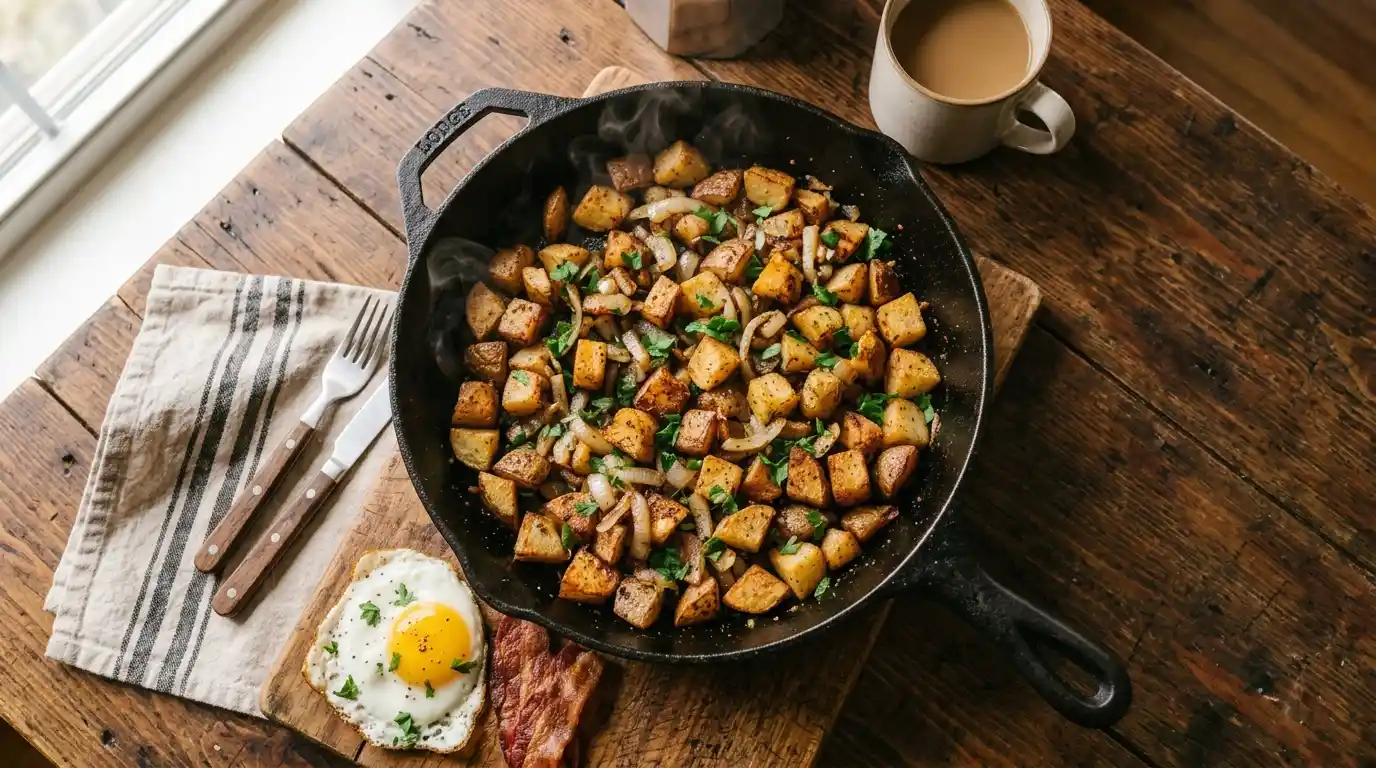
I ruined home fries for probably two years before I figured out what I was doing wrong. Same story every time potatoes went in the pan looking promising, came out pale, a little wet, sort of steamed instead of fried. I blamed the potatoes, then the pan, then the stove, before finally realizing the mistake happened before any of that, back when I was skipping the part where you actually dry the potatoes off. That’s really the whole secret behind how to make home fries the way a diner does: get the inside cooked, get the outside bone-dry, and only then let them near hot oil. Skip the drying step and no amount of seasoning saves you. This is the version that finally worked for me, potato choice through serving.
Picking the Right Potato (This Part Actually Matters)
I used to grab whatever potatoes were cheapest that week, and it showed. Russets are the move here, and not because some recipe says so arbitrarily their starch content is just built for this exact contrast, fluffy and almost creamy on the inside, crackling on the outside. Yukon Golds are fine in a pinch, hold their shape a little better since they’re waxier, but you lose some of that fluffiness trading up for structure. Red potatoes, the waxiest of the common bunch, mostly just stay firm and a bit dense the whole way through, which isn’t really what anyone’s chasing with this dish.
Cube size is the other lever people underrate. Half-inch pieces are about right small enough that the middle cooks through before the outside scorches, big enough to actually develop a crust instead of falling apart in the pan. I went smaller once, thinking faster cooking meant better results. Wrong everything turned to mush before it had a chance to brown.
Leftover baked or boiled potatoes work too, honestly maybe even better, since a night in the fridge does half the drying job for you. Cube them the same size, skip the boiling step entirely, and go straight to the skillet.
The Drying Step Nobody Talks About Enough
Here’s where I went wrong for two solid years, so pay attention to this part specifically. Boil your cubed potatoes about a pound and a half of Russets, an inch of water over them, a pinch of salt for six or seven minutes, just until a fork slides in without much resistance. Not falling-apart tender. Just tender. Drain them in a colander immediately, then walk away for a few minutes and let them sit there steaming themselves dry. I used to skip this part because I was impatient and hungry, and every single time, the potatoes came out gray and sad. Turns out any leftover surface moisture flashes straight into steam the moment potatoes touch hot oil, and steam is the enemy of crust. There’s no way around waiting it out.
Some people steam the potatoes covered right in the skillet instead of boiling separately ten minutes covered, then uncover and let it rip. Works fine, saves a dish. Either way you end up at the same spot: cooked through, dry on the surface, ready to actually crisp instead of just warming up.
Peeling is optional, for what it’s worth. I leave the skins on most of the time now, mostly because I like the texture and honestly because it’s less work, but scrub the potatoes well first if you’re going that route.
Getting the Skillet Right
Cast iron isn’t optional in my kitchen anymore, not after switching from a cheap nonstick pan that just couldn’t hold heat evenly. The uneven heat was giving me patchy dark spots next to totally pale ones, which is its own kind of frustrating. Get one to two tablespoons of oil, or butter and oil together, properly hot over medium-high heat before anything touches the pan a lukewarm skillet is basically a guarantee of limp, gray potatoes no matter how well you dried them earlier.
Lay everything in a single layer and then, this is the hard part, don’t touch it for eight to ten minutes. I know it’s tempting. I still fight the urge every time. But stirring early breaks whatever crust is trying to form, and potatoes genuinely need that long, undisturbed contact with a hot pan to brown properly. If your skillet’s too small for everything in one layer, do two batches instead of cramming it all in a crowded pan just steams potatoes against each other instead of letting them crisp.
Seasoning, Onions, and Actually Serving the Thing
Onions belong in this dish, no argument, but timing is where people (me, for years) mess it up. Throw diced onion in too early and it’s burnt and bitter by the time the potatoes are done. Add it in during the last five minutes instead just enough time to soften and pick up a little color without turning to char. Garlic powder, smoked paprika, salt, and black pepper is the reliable base combination; a Cajun blend or a pinch of cayenne pushes it spicier if that’s more your thing.
Fresh herbs parsley, chives, whatever’s around go on at the very end, off heat, since dried herbs just can’t do the same job once the potatoes are already browned. And eat these immediately. They lose their crispness fast once they’re sitting on a plate, so this isn’t really a make-ahead-and-hold kind of dish, no matter how tempting it is to get everything else plated first.
Conclusion
Learning how to make home fries properly came down to three things I kept getting wrong before I fixed them: the right potato and cube size, actually drying the potatoes before frying, and having the patience to leave them alone in the pan long enough to brown. Miss any one of those and you get something edible but forgettable, which is exactly what I ate for two years before figuring this out. Get all three right, and it’s the crispy, golden version that’s worth the extra fifteen minutes.
FAQs
It’s almost always leftover moisture on the potatoes before frying, or a crowded pan trapping steam instead of letting it escape. Dry parboiled potatoes thoroughly and cook in batches rather than piling everything into one pan at once.
Around 15 to 20 minutes total, counting parboiling, drying, and the actual skillet time, plus a few minutes for prep beforehand. Most of that is hands-off waiting rather than active cooking, since the potatoes need that undisturbed stretch in the pan.
Anything with a high smoke point works, since medium-high heat matters here vegetable, canola, or avocado oil all handle it fine. A butter-and-oil combo adds flavor too, as long as the heat stays controlled enough that the butter doesn’t burn before the potatoes finish crisping.