
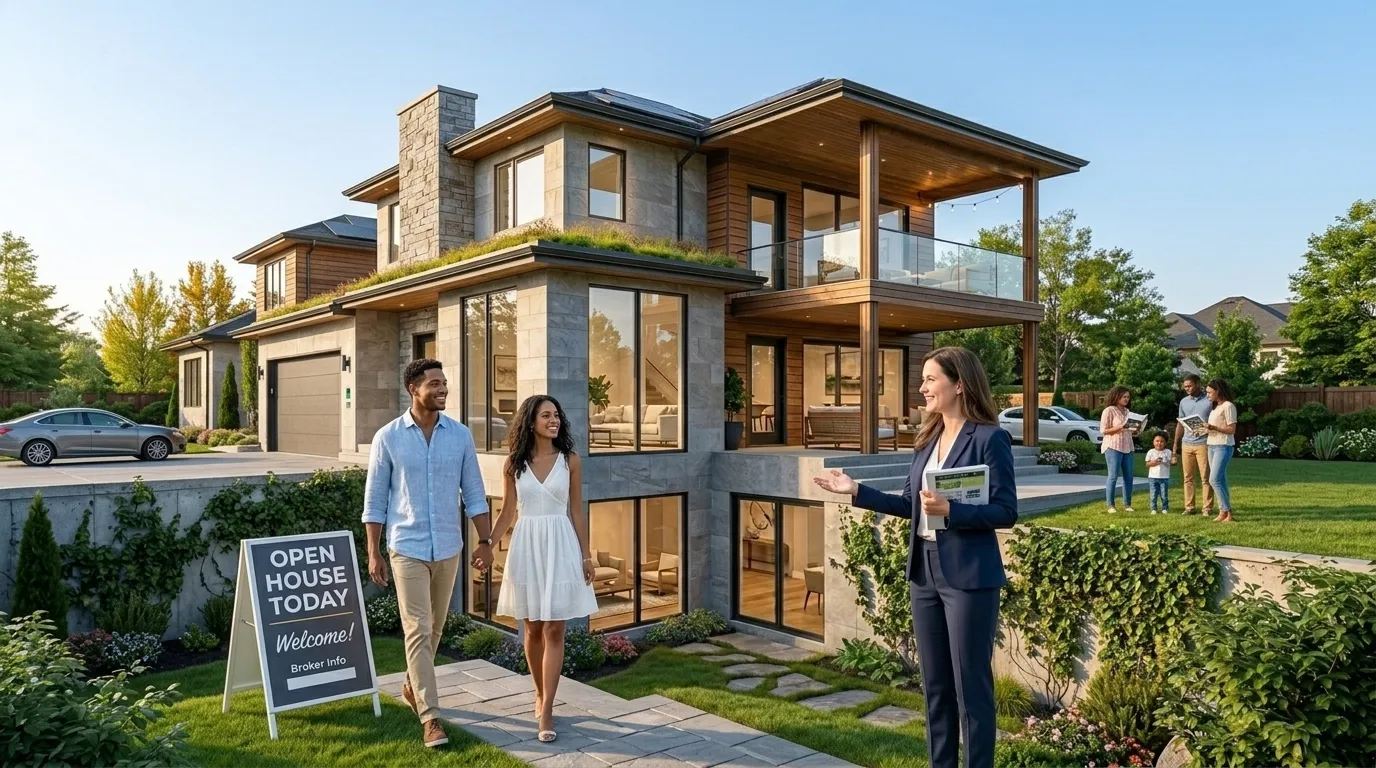
In the first time that I really tried search for open house near me and I did something very foolish. I tried to attend to eleven open houses in one day on a Saturday all around a city in a random order, and then got late for some, missed two open houses, and could not even remember what the kitchen in the third house looked like. My friend, who is an estate agent, laughed at my efforts when we met over coffee the next week. She said, “Open houses are not a scavenger hunt, but a tool. And most people learn how to misuse the tool before someone tells them how to use it properly.”
And that is true. The difference between proper usage of the tool and misusage proved to be more significant than I thought initially. After I figured out how to search and find open houses properly, plan the way properly, and ask relevant questions there, everything became easier.
Where Open House Listings Actually Come From and Why That Matters for Your Search:
All the open house listings you see can be traced back to the same initial source – the MLS database or the multiple listing service used by real estate agents to post houses for sale on their website. While you cannot access the MLS directly, most large real estate portals get their information from the MLS, which is why you’ll find almost identical information when searching for “open house near me.”
Best Platforms to Find Open House Listings:
Zillow, Redfin, Trulia, and Realtor.com remain the four platforms most people default to, and each refreshes its open house listings on a short cycle some update every fifteen minutes so checking again later in the week often surfaces newly scheduled events that weren’t there when you first searched. Homes.com, Movoto, Rocket Homes, and Xome offer similar national coverage with slightly different filtering tools, and if you’re searching specifically in New York City
StreetEasy is worth adding to your list since it specializes in that market’s rental and sales listings in a way the national platforms don’t always match. Compass Real Estate and RE/MAX both maintain their own listing search tools as well, useful if you already know which brokerage is active in your target neighborhood. For Texas specifically, HAR.com runs a dedicated Open House Finder tool that searches REALTOR-listed properties across the state directly.
Technology Behind the Listing Platforms:
Behind all of these sits the technical infrastructure. Most house hunters never think about Internet Data Exchange, commonly shortened to IDX, is the system that lets a broker’s own website display listings pulled from MLS GRID or a regional service like RLS REBNY Listing Service in New York or NJMLS in New Jersey. This is why the same property sometimes shows up with slightly different details across different sites one platform’s data refresh may simply be a few minutes behind another’s, and disclaimers about information not being independently verified exist precisely because of this multi-source structure.
Beyond the Big Apps: Where Open Houses Hide From Search Engines
Finding the off-market open houses and how to find the open houses before they hit the market are some of the most useful things one can learn as a house hunting individual because not all open houses get equal publicity on all the platforms. The realtors have access to such open houses before everyone else does since they are made aware of them through their networks even before they go public.
Hidden Places to Find Open Houses:
Following local agents and community groups on Instagram and Facebook is a legitimately underused tactic searching the hashtag #openhouse alongside your city’s name on Instagram surfaces listings that haven’t yet made it into a national search aggregator. Nextdoor is another channel agents use to promote open houses directly to a neighborhood audience, which is particularly useful if you’re house hunting in a specific area rather than searching broadly across a whole city. In smaller communities especially, some agents still place open house ads in local newspapers, a channel that’s become rare but occasionally surfaces listings that never make it online at all.
The oldest method remains genuinely effective too:
Driving through neighborhoods you’re interested in on a Saturday or Sunday afternoon. Agents place open house signs and yard signs on busy corners specifically to catch the attention of people who aren’t actively scrolling a real estate app that day, and a drive-by viewing can turn up a listing your saved search missed entirely. If you haven’t yet chosen a buyer’s agent, stopping by a local real estate office in your target area and simply asking what open houses they have coming up remains one of the most direct ways to get information that hasn’t been filtered through an algorithm first.
Planning Your Route Without Wasting an Entire Weekend:
Open house route planning app tools and a bit of manual planning are the difference between an efficient Saturday and the chaotic mess my first house-hunting weekend turned into. Before you leave the house, look closely at listing photos, square footage, home layout, and home price for every property on your list if a home clearly doesn’t meet your basic criteria for size, price, or location, it’s not worth a visit, no matter how good the listing photos look.
Plan Your Open House Route:
Sort your shortlist of properties according to their geographic location, not according to their list order, and be careful when reviewing open house dates, since while weekends are the most common periods, there might still be some realtors who would choose to organize open houses during weekdays for buyers whose schedules conflict with regular Saturdays and Sundays.
It would also be beneficial to use search and open house notifications from at least one source so that any listings matching your criteria would be automatically notified to you without having to search for them yourself each few days. Make sure to track favorite listings, as details of different homes will start merging in your mind after visiting just four or five of them in one day.
For house hunters working specifically with new construction, searching separately for new build open house near me and model home open house near me listings is worth doing these often follow a slightly different schedule and sales process than resale open houses, frequently requiring you to register with an on-site sales representative rather than simply walking in.
What to Actually Do Once You’re Standing in the House:
Most open houses ask visitors to complete an open house sign-in sheet at the door this is standard practice, used both so the listing agent can follow up afterward and so the seller has a record of who toured the home, and there’s no need to be wary of it. Whether you can attend open house without an agent is a question worth settling before you go: you absolutely can attend solo, and doing so is common, but bringing a buyer’s agent along has real advantages, since they’ll often ask questions about the property, neighborhood, and recent updates that wouldn’t occur to a first-time visitor on their own.
Take Notes as You Tour:
Carry a notebook along or use your mobile phone to make notes for each room separately, based on your immediate observations rather than recalling from memory once done; noting natural lighting, storage capacity, overall condition of the house, and anything distinctive regarding its layout that you did not find in the pictures. Make photos if you get permission from the listing agent.
Which will most probably be granted since it is common practice; this way you will find comparing different houses much more convenient, once you have looked at several of them in one day. Feel free to pose questions to the listing agent regarding the history of the house, reason for selling it, time it has been listed, and other things of interest; such questions should be expected and answered.
Be Respectful During Your Tour:
Be mindful of other visitors moving through the house at the same time, and respect that you’re walking through someone’s actual home rather than a showroom. Whether you’re touring a condo open house or a house open house, the same basic etiquette applies: don’t open closets or drawers uninvited, keep conversation reasonably quiet, and treat the space the way you’d want a stranger to treat yours.
Making Open Houses Actually Useful for Your Decision, Not Just a Weekend Activity:
Is it worthwhile to attend open houses even when I am not planning to make an offer? The simple answer is yes; even though you may be months away from making an offer on a home, open houses allow you to gain a feel for what you really like, compare neighborhoods first hand, and help determine your real budget range based on what different price ranges really get you in terms of size and condition. It also does not matter whether you are deciding on attending open houses vs. private showings or whether you will visit the property in person or go with a virtual tour.
Once you have visited some homes, spend time going through your notes and comparing them. Look at layouts, look at neighborhoods, and take a second look at your photos before making a decision. Contacting your agent or if you went to the homes alone the listing agent, right after the visit you liked will keep things moving in a market that allows very little time for hesitation on great properties.
The bigger picture worth remembering through all of this:
Open houses are one part of a much larger home buying process, not a replacement for it. They’re an extremely efficient way to explore homes in person, get a feel for the neighborhood, and discover hidden gems that didn’t stand out in listing photos but the actual decision still depends on the same fundamentals it always has: location, condition, price, and whether the home genuinely fits how you actually live.
Smart House Hunting:
House hunting through open houses works best when you treat it as a system rather than a series of unrelated Saturday errands. Know where the listings actually come from, look beyond the obvious platforms for what hasn’t surfaced yet, plan your route before you leave the house, and walk through each property with real questions ready rather than just wandering the rooms. Do that consistently, and what felt like chaos on my first weekend of house hunting becomes exactly what it should be: useful, comparative research that gets you closer to the right home, one open house at a time.
Conclusion:
Searching for an ideal open house involves more than just filling up one’s weekend agenda; it requires proper evaluation of all the houses that one visits. Utilization of reputable listing sites, efficient routing, effective questioning, and comparison of the properties according to the set priorities are the ways that can give the best result and allow one to get a clearer picture of the real estate market. With these tips in mind, you will be well-prepared to find the right house eventually.
FAQs
An open house is a scheduled period when potential buyers can tour a property for sale, usually without arranging an individual appointment. It gives buyers a practical way to compare layouts, neighborhoods, condition, and pricing before deciding which properties deserve further attention.
Start with major property platforms such as Zillow, Redfin, Trulia, or Realtor.com, then check local agents, brokerage websites, social media, and neighborhood groups for additional listings. Checking more than once during the week can help because new open houses may be added as schedules are updated.
Open houses are useful for viewing several properties efficiently and getting an initial feel for homes and neighborhoods. Private showings offer more time and privacy, so they may be more suitable once you have identified a property you are seriously considering.