
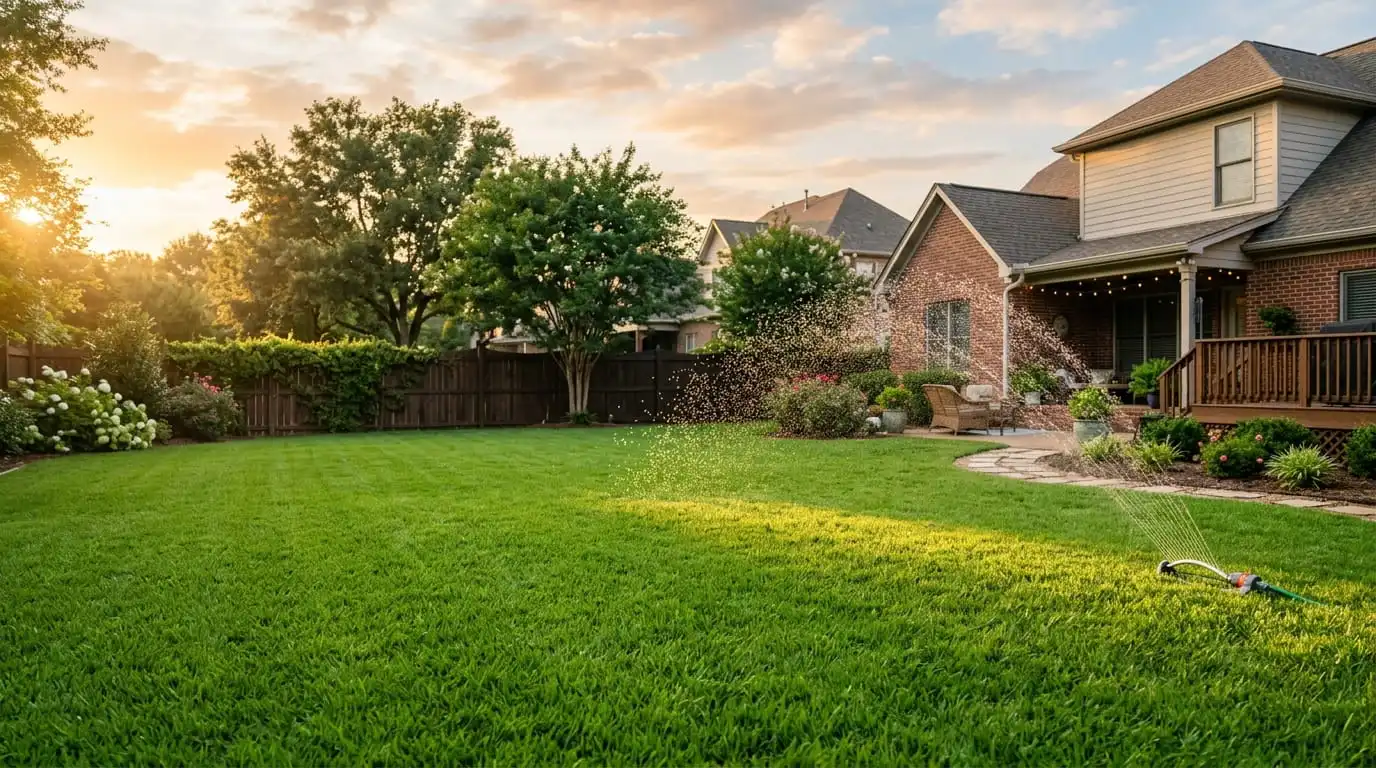
Bermuda grass is a very common warm-season grass throughout the south of the USA and all through the tropics around the world. I’ve used Bermuda grass my entire life, and no other grass can compete with its tolerance to heat, drought, salinity, and foot traffic.. First brought to the U.S. from Western Africa around 1751 on ships carrying hay, it started as forage and by the early 1900’s became a go-to turf grass for golf courses, lawns, sports fields, and parks. Historical documents show it was already one of the primary grasses in southern states by 1807 From the Atlantic coast to California, it has become a widely grown grass type in arid areas with irrigation and in tropical and subtropical locations around the globe.
The most distinctive characteristic that this perennial grass possesses is the manner in which it develops and survives. This plant has a unique growth form because it has both aboveground creeping stems known as stolons and underground creeping stems known as rhizomes that enable it to regenerate quickly after being damaged in areas that receive heavy traffic. Its roots extend down deep into the soil as far as six feet, surpassing the first six inches in depth. In cool weather, it goes dormant in the months of October to April and remains green in the summer months.
It needs full direct sun and has a high light requirement, making it less suitable for shaded conditions. In relation to Zoysia grass, tall fescue, Centipede grass, and other cool-season grasses, Bermuda is more heat-resistant, more salt-resistant, more humidity-resistant, and has better cold resistance in the areas south of the transition zones, thus becoming an excellent choice for lawns throughout the South.
Seeding Steps That Actually Work
The most cost-effective way to grow a bermuda grass lawn is from seed. I always tell people — timing matters most The planting activity should begin at the beginning of spring, after the risk of frost subsides, and during days that record a maximum temperature of 80s degrees. At this time, the daily temperature will definitely be above 75°F, which is ideal for successful seed germination. The seed is extremely small in size, and germinates quite fast, therefore the low seeding rate compared to other grass seeds. In the case of hulled seed, the seed coat or sheath will have been stripped off by means of conditioning. It costs 30% more expensive but contains 30% more seed per pound, making it worth it in warmer weather. The unhulled form is better in cooler weather as it can survive until conditions become favorable. First, lightly rake the soil, loosening it to ensure good seed contact with the soil surface. Scotts spreader may also be used to spread Scotts Turf Builder Starter Food for New Grass as directed by the manufacturer since this starter food is essential in ensuring that your new grass seedlings have the best possible chances of growing healthy. Place Bermuda grass seed on the area, then use a rake and tamper/roller to level the soil surface.
Once seeding is done, ensure that irrigation is carried out three to four times daily and that ⅛ inches of water is applied with each irrigation.
This supports steady growth without washing away your seed. Do not use straw to cover new Bermuda grass— instead, use a weed-free mulch covering less than 50 percent of the ground if you need to protect against erosion Once the plant grows, one should be aware that any temperature below 50° is sufficient to turn the grass into dormancy where it changes into brown color. Temperatures lower than 30° can cause damage to the leaves and stems of the plant which will grow back once temperatures rise. In areas where it is hot, the grass maintains its green color although it grows more slowly. Once it reaches its maturity stage, one sees the true characteristics of the Bermuda grass plant, including high growth speed, stolons and rhizomes growth, providing the grass excellent durability and regrowth capabilities. Both the Pennington Smart Seed Bermuda grass and Pennington Smart Seed Texas Bermuda grass Seed and Fertilizer Mix, especially tailored for use in the Lone Star state and other southern states, have coated seeds that germinate faster and produce a much better grass in comparison to normal Bermuda grasses.
How and When to Water for Best Results
From my own experience, getting the watering schedule right after germination is what separates a patchy lawn from a thick, healthy one After germination of your bermuda grass seeds, maintain your watering regime frequently, twice daily, with emphasis on the watering of the top layer of the soil to help the development of your seeds into young grass plants. When the young grass is one-inch-tall, continue watering it once daily, providing quarter-inch of water. Be sure never to exceed the soil absorption rate, because excessive irrigation leads to the problem of erosion. Once the Bermuda grass lawn is fully established, lower the frequency to two times per week, with the emphasis on deeper watering up to one-inch per irrigation. In the East, which is characterized by relatively abundant rainfall, you do not have to irrigate your lawn on a regular basis; in that case, rainfall is enough. The signs that your lawn needs to be watered are its gray appearance and inability to regain its firmness once you step on it. In case of an established Bermuda lawn, you need to provide it with up to 1 to 1 1/2 inch of water per week. As bermuda grass is very tolerant to droughts, it will neither die in dry periods nor in droughts, yet it will become dormant without irrigation Consistency when it comes to providing water during the various stages of growth from the initial stage of germination right up until full growth will be vital in ensuring
The Right Cut for a Stronger Lawn
In my experience, mowing is where most people go wrong with bermuda grass. Wait until seedlings from your newly planted bermuda grass lawn reach 2 inches high before the first cut. After that, maintain your lawn at 1 to 1 1/2 inches — a shorter height than most other lawn grasses — which keeps the turf maintenance on point and encourages thick, dense growth. During peak growth, mow frequently, sometimes once per week or more, to stay on top of the growth period. The golden rule I always follow: never remove more than one-third of the grass height — that means no more than ⅓ of the grass height in a single mowing. Too many blades removed at once puts the grass under stress. The cutting and mowing heights should be kept steady during the active period by making several mowing cycles depending on the rate at which the grass is established. At the end of the season, you have to make frequent mowing of 1-2 inches since the grass would not be growing anymore but going into dormancy. The frequency of mowing is crucial for maintaining the turf.
Feed, Weed, and Over seed the Smart Way
Due to its rapid growing nature, the Bermuda grass will require constant fertilization throughout the season to keep it lush and strong. This will be initiated four weeks from using the starter food where I will use Scotts Turf Builder Southern Lawn Food. From there, I stick to a solid feeding schedule — fertilize every 6 to 8 weeks through the growing season for steady nutrient application and consistent growth rate. For a stronger approach, Pennington Full Season Lawn Fertilizer 32-0-5 keeps feeding your lawn with reliable seasonal fertilization right through peak growth and into early fall as grass slows growth. Four to five weeks prior to your fall frost date, you should begin treating your broadleaf weeds and crabgrass using Pennington Full Season Weed & Feed with Crabgrass Control 25-0-8 while your grass and weeds are actively growing. If you want to have some colors during the winter season, over seed your Bermuda grass lawn with either Pennington Smart Seed Perennial Ryegrass Grass Seed & Fertilizer Mix or Pennington Annual Ryegrass Grass Seed, which is a great choice for cool-season grasses that provide temporary coloring during the winter months. Do not over seed until nighttime temperatures drop to below 65°F, and do not use any weed killer for at least three weeks prior to over seeding.
Conclusion
If there was ever a grass that was worth considering for the Southern part of the country and warm seasons, it would be Bermuda grass seeds. This grass performs well when there is high temperature, it copes with drought and regenerates quickly under pressure from people. All the actions related to proper seeding time, watering, mowing and fertilizing of your lawn will lead to a perfect result – healthy, green and durable lawn. When you need to handle low temperatures that will put the grass into dormancy in the wintertime, or you just want to have the lawn green all year round, there is a proper solution for everything using Bermudagrass. In my opinion, the grass needs only consistent maintenance – regular mowing, fertilizing and watering.

3 thoughts on “The Ultimate Guide to Bermuda Grass Seed for Southern Lawns”