
DrHomey Advice on Designing
The first room I ever designed for someone other than myself, I made every beginner mistake in one project. Bought the sofa before I’d measured the wall it needed to sit against. Picked a paint color under store lighting that looked nothing like it did at home. Filled every shelf because empty space felt unfinished, when actually the empty space was doing more work than half the objects I’d crammed onto it. Nobody tells you these things until you’ve already paid for the mistake. That’s the entire premise behind drhomey advice on designing — getting the lessons before the expensive version of them happens to you.
The global interior design market reached $152.33 billion in 2026. We spend roughly 90% of our time indoors. Those two facts together explain why design advice has become such a crowded space online — everyone has an opinion, but not everyone has actually sat with a client through the moment a mood board doesn’t match what they imagined, or watched a room come together wrong because the sequence was off. Drhomey advice on designing is built from that sequence, not from inspiration photos alone.
Where Every Good Design Actually Starts
Define the Concept Before Touching a Single Swatch
Most people start designing a room by buying things. Drhomey advice on designing starts somewhere else entirely: define the concept first. What emotion should this space evoke calm, cozy, energizing, luxurious? That single question, asked honestly, does more to prevent design regret than any amount of Pinterest scrolling. Design vision and design direction come from answering it specifically, not vaguely. “I want it to feel nice” isn’t a concept. “I want this room to feel like the calmest hour of my day” is.
Gather inspiration after the concept, not before. Visual inspiration pulled before the emotional target is set tends to be scattered a velvet sofa here, a minimalist kitchen there, nothing that actually relates. Once the concept is clear, inspiration gathering becomes selective rather than overwhelming, and that’s where Pinterest inspiration and Designspiration genuinely earn their place in the process rather than becoming a time sink.
Build the Mood Board the Way Professionals Actually Use It
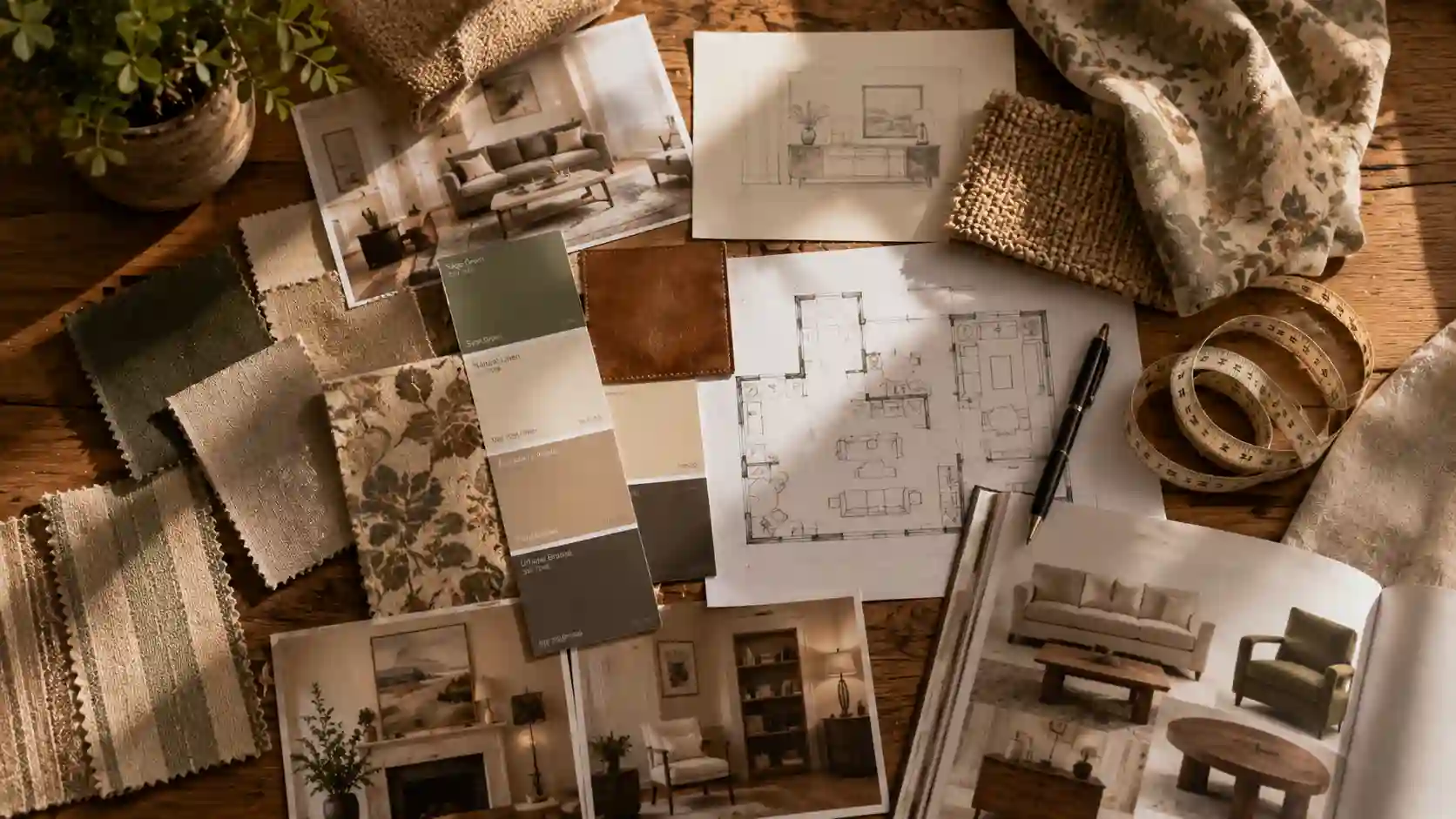
Mood board creation is where drhomey advice on designing diverges sharply from generic “make a vision board” content. A mood board isn’t a collage of pretty pictures it’s a strategic tool that communicates a concept clearly enough that someone else (a partner, a contractor, a future version of yourself standing in a paint aisle) understands exactly what you’re going for.
Whether you build a digital mood board in Canva or Milanote, a physical mood board with paint swatches and fabric samples on a foam board, or a hybrid mood board combining both, the principle is the same: start with foundation elements paint colors, flooring, large furniture then layer on mid-sized elements like fabrics, lighting, and art, then add smaller details last, like hardware and accessories.
Keep one hero image that represents the entire vibe. Limit the color palette to 2 to 3 dominant colors, following something close to the 60-30-10 color rule one dominant color, one secondary, one accent. Group visuals into clear sections: color, furniture, lighting, decor. A cluttered mood board with too many competing images produces a cluttered room, because the confusion in the planning stage transfers directly into the execution stage.
The Principles That Separate a Designed Room From a Decorated One
Space Planning and the Architecture Underneath Every Decision
Drhomey advice on designing treats space planning as the unglamorous backbone of every project. Architecture and space the actual dimensions, the window placement, the structural realities of a room determine far more about what will work than style preference does. A floor plan, even a rough one, and ideally a 3D floor plan if the tools are available, prevents the single most common and most expensive design mistake: buying furniture that doesn’t fit the actual proportions of the space. Using a perspective grid when building out a room rendering keeps everything in scale, so a sofa that looks right on screen actually looks right on the floor.
Design principles balance and contrast, color harmony, design proportion, design scale, design rhythm, design emphasis, design unity sound academic until you see them missing. A room with no focal point feels directionless. A room with too much symmetry feels sterile. Design repetition of a color or texture across a few key pieces creates design cohesion; scattering one of everything creates visual noise instead. Texture, pattern, line, and form are the actual vocabulary of design elements, and drhomey advice on designing always returns to these basics because they’re what makes a room feel intentional rather than assembled.
Choosing a Style Without Getting Lost in Trends
Interior design style selection is where most beginners freeze. Shabby chic, Tuscan style, mid-century modern, industrial style, Scandinavian style, farmhouse style, minimalist style, maximalist style, transitional style, eclectic style, coastal style, biophilic style each comes with its own design elements, window treatments, and wall art style, and trying to absorb all of them at once is overwhelming by design. A style quiz or simple style discovery process looking at what you’re drawn to repeatedly rather than trying to commit to a label gets further than memorizing style definitions. Style cohesion matters more than style purity; most real rooms blend two or three influences rather than committing fully to one Pinterest category.
Budget, Lighting, and the Functional Decisions That Actually Matter
Spending Wisely Without Cutting the Wrong Corners
Spend carefully is advice everyone gives and almost nobody explains properly. Drhomey advice on designing breaks it down practically: identify your big-ticket items first the visually heavy items like sofas and beds that draw the most attention and need to look right and prioritize purchases there. Splurge pieces and investment pieces belong in that category. Accent items, DIY home decorating projects, and smaller decorative touches can fill in the gaps afterward at a fraction of the cost. Design priorities set this way mean the budget goes toward what’s actually seen and used most, not toward decorative items that get bought first because they’re cheap and easy.
Budget-friendly design doesn’t mean compromising the concept it means sequencing the spending so the cost-effective design choices happen where they won’t be noticed, and the investment happens where it will be. Knowing where to splurge and where to save is, in practice, most of what separates a room that feels expensive from one that doesn’t, regardless of the actual total spent.
Lighting Advice That Gets Skipped Far Too Often
Lighting advice deserves its own section because it’s consistently the most underbudgeted part of any design project. A beautifully designed room can be undermined entirely by poor lighting design. Natural light and window placement should factor into furniture layout decisions before color scheme selection does a reading chair in a dark corner is a design failure no matter how well it matches the palette. Ambient lighting, task lighting, and accent lighting working together as layered lighting is what makes a room function properly across different times of day and different uses. Light fixtures and the overall lighting plan deserve their own line item in any design budget planning, not an afterthought once everything else is purchased.
Functional design advice and ergonomic design advice room functionality, livability advice are what drhomey advice on designing prioritizes over pure aesthetics every time, because a beautiful room that doesn’t function for daily life becomes a room people stop using.
Avoiding the Mistakes That Cost the Most to Fix
The Errors That Show Up After It’s Too Late to Undo Cheaply
Common design mistakes follow a predictable pattern. Scale mistakes and proportion mistakes furniture too large or too small for the room top the list, which is exactly why measuring before buying and mock-up with painter’s tape are not optional steps in drhomey advice on designing, they’re mandatory ones. Color mistakes happen when paint is chosen under artificial store lighting rather than tested at home across different times of day. Lighting mistakes compound color mistakes, since the same paint reads completely differently under warm and cool light sources.
Cluttered design and overcrowded rooms happen when every surface gets filled because emptiness feels unfinished but negative space is doing real visual work, and removing rather than adding is often the actual fix. Dated design features get identified in hindsight far more easily than in the moment, which is why drhomey advice on designing leans toward elements with proven longevity genuine design principles over chasing whatever trend is dominating search results that particular month.
Using Modern Tools Without Losing the Fundamentals
AI design tools and AI interior design platforms have genuinely changed what’s accessible to a complete beginner photo upload design tools that generate instant room redesigns, beginner-friendly design software with step-by-step guidance and in-app tips, room planner apps that build design confidence before a single dollar is spent. These tools are valuable for design exploration and design iteration. But drhomey advice on designing treats them as accelerants for the fundamentals above, not replacements for them an AI tool can generate a beautiful image, but it can’t measure your doorway, and it doesn’t know what emotion you actually want the room to evoke until you’ve defined that concept yourself.
Conclusion
Drhomey advice on designing comes down to sequence: define the concept before buying anything, build a mood board that actually organizes your thinking, understand space planning and design principles before chasing a style, budget with intention rather than impulse, treat lighting as essential rather than optional, and learn from the common mistakes before making them yourself. Every beginner makes some version of the wall-measurement mistake I made on my first project. The point of drhomey advice on designing isn’t to make the process perfect it’s to make sure the mistakes you do make are the small, fixable kind, not the expensive ones that mean starting over.
FAQs
DrHomey advice on designing focuses on creating functional, intentional spaces by following the right process before buying furniture or decorations. It helps beginners avoid common mistakes by starting with concepts, planning, budgeting, and understanding how each design decision affects the final room.
The best starting point is defining the feeling and purpose you want the room to create before choosing colors, furniture, or accessories. Creating a clear mood board with a limited color palette, key materials, and inspiration images helps turn ideas into a practical design direction.
Space planning is the foundation that makes a style work because furniture size, room dimensions, windows, and movement flow determine what will actually fit. A beautiful style can still fail if the furniture proportions and layout do not match the room.

2 thoughts on “DrHomey Advice on Designing: 6 Steps That Turn an Empty Room Into One You’ll Actually Love”