
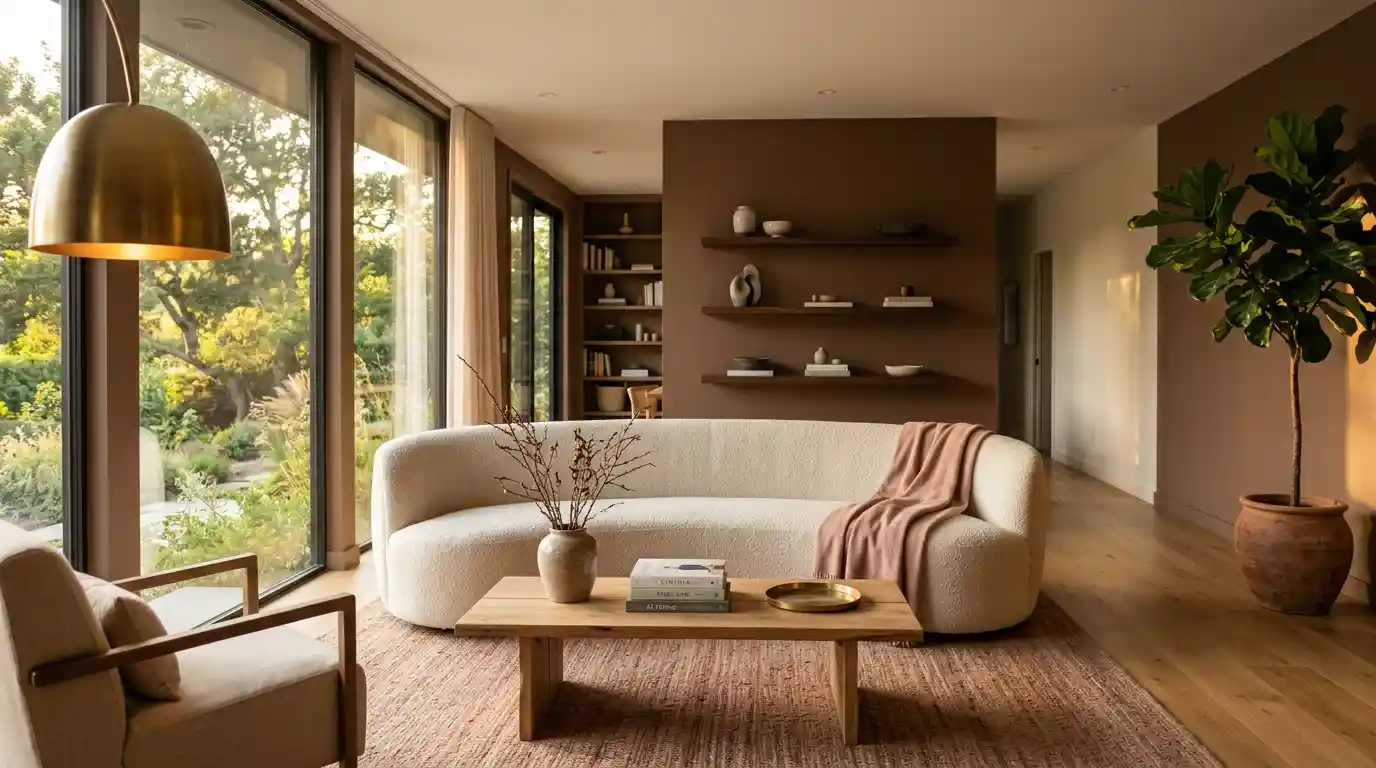
Most people approach interior design backwards. They buy the sofa first something they saw on a Pinterest board or in a showroom that felt right in that moment and then spend the next two years trying to build a room around a piece that was never meant to anchor that particular space. I’ve seen this happen in London flats, Canadian open-plan homes, terraced houses in the north of England, and compact apartments across every major city. The furniture isn’t wrong. The process was. drhomey interior design starts from the opposite end: figure out how the room needs to function first, choose your anchor piece second, and let everything else follow the logic those two decisions create.
That sequence sounds simple. It isn’t, because most people haven’t been taught to think about interior design as a system of decisions that build on each other rather than a collection of individual purchases. This guide walks through that system, room by room, with the honesty that the design process actually requires.
The Design Styles Question Everyone Asks Too Late — and Why Your Answer Changes Everything
Before a single piece of furniture gets chosen, before a color scheme gets pinned to a mood board, you need to know which design style you’re actually living in. Not the one you find aspirational. The one you’ll actually still want to live in six months from now that’s the filter. Not the one that photographs well or scores well on a style quiz. The one that suits how you actually move through a home on a Tuesday.The interior design styles worth knowing in 2025 aren’t endless. A few clusters do most of the work.
Minimalist luxury takes modern minimalism and elevates it with sustainable oak, marble surfaces, and brass finishing clean lines, open spaces, a less-is-more approach that reads expensive precisely because it resists accumulation. Scandinavian interior design and its evolved hybrid Japandi style share a similar discipline: warm wood tones, organic fabrics, negative space used deliberately, nothing on the shelf that doesn’t earn its place. These styles work particularly well in UK and European homes where rooms tend to be smaller and spatial flow matters more than square footage.
On the warmer, more layered end: organic modern style, coastal farmhouse style, and modern farmhouse interior design. Organic modern is the one I’d point most homeowners toward in 2025 it’s approachable, forgiving of mixed pieces, and the warm color palette it operates in (terracotta, mocha brown, clay pink, olive green) lands well in natural light conditions across the US, Australia, and southern European interiors. Modern farmhouse continues evolving away from the shiplap-and-mason-jar version that saturated the previous decade and toward something more refined wall paneling over shiplap, linen over burlap, curved silhouettes replacing the boxy farmhouse aesthetic.
Hybrid design styles are genuinely useful for people who don’t sit cleanly in one category. Scandinavian minimalism is the cleaner version of this the restraint of Scandinavian interior design but warmer, with more texture allowed in. Rustic glam goes the other direction. You start with rattan, wicker, reclaimed wood, the whole organic modern vocabulary then brass comes in, warm metallics, a proper statement light, and suddenly it reads elevated rather than rustic.
Quiet luxury style sits at the premium end of transitional interior design and is the aesthetic most associated with understated elegance right now in European and American high-end residential design. The key to any hybrid is picking an anchor one coherent design story and filtering every subsequent purchase through it.
Color, Texture and the Palette Decisions That Make or Break a Room
Color is the cheapest intervention in any interior and the one most people get wrong most consistently. Not because they pick bad colors but because they pick colors in isolation a paint chip that looked right in the store, a throw pillow chosen for the sofa, a rug selected for the bedroom without considering how those colors talk to each other across a room.
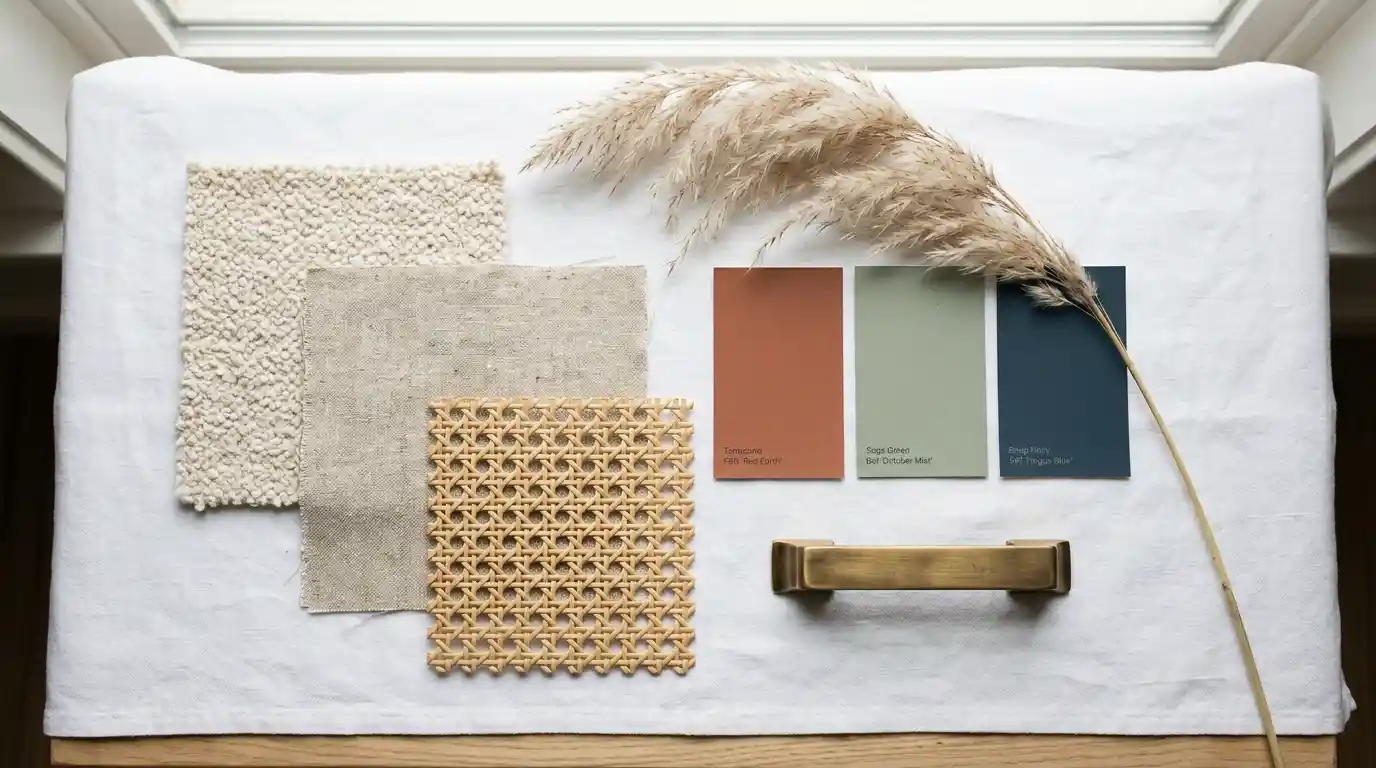
The 2025 earthy color palette that’s running through almost every design conversation right now deep navy, terracotta, chocolate brown, saturated green, burgundy and its close relatives dark wine and oxblood works because it’s grounded. These colors don’t need each other to be perfect. They need to share warmth, and warm earth tones do that naturally. Mocha brown on the walls reads quiet and serious. A clay pink accent cushion or curtain in the same room suddenly makes the whole space feel considered rather than heavy. That relationship between anchor tone and accent color is the design story and once you have it, every other decision becomes faster.
Color drenching is the technique that’s gained the most ground recently and the one most misunderstood. It’s not shock value it’s using a single hue in varying shades to create cohesion in a room that would otherwise feel fragmented. Done well, everything pulls from the same color family walls, ceiling, woodwork, the textiles and the room stops feeling like a collection of decisions and starts feeling like one deliberate thing. Half-painted walls or a painted ceiling gets you part of that effect without the full commitment. Worth doing in a hallway or bedroom before you go all-in.
Texture layering sits alongside color in terms of impact. Boucle against linen, warm wood tones against stone, marble against brass these pairings work because they create tactile interest without visual noise. In a minimalist interior the texture is often doing more work than the color. In a maximalist design or eclectic interior, the texture relationships keep the room from looking chaotic. Jewel tones emerald green, sapphire blue, amethyst purple carry their own texture in how they absorb and reflect light, which is why they keep returning to interior design color trends regardless of the dominant palette of any given year.
Furniture, Layout and the Anchor Piece Logic That Professionals Actually Use
Here’s the part most people skip entirely: measuring before buying. A proper designer will sketch a scaled floor plan — every outlet, every doorway, every window before a single piece of furniture gets chosen. That drawing prevents the most expensive mistake in home design, which is buying something that doesn’t physically fit where it was supposed to go.
The anchor piece logic works like this. One piece per room drives everything else. Statement sofa in the living room. Bed frame in the bedroom. Dining table in the dining room. Once that piece is in, every other choice is just a conversation with it does this complement its scale, does it echo the material, does it fill the gap it leaves without crowding it. A curved furniture anchor rounded sofa, arched mirror, boucle ottoman signals a softer, more fluid design story. A rectilinear anchor in dark wood or brass-finished metal signals something more structured. Neither is better; they just require different supporting pieces.
Multifunctional furniture is not a budget compromise it’s a design decision that often produces more interesting rooms than single-purpose pieces. A coffee table with hidden storage, a convertible dining bench, modular furniture that reconfigures for different uses these are genuinely smart choices in any home where rooms need to serve multiple functions across a day. The home office that doubles as a guest room, the family room that becomes a homework space, the open concept living area that needs to be both entertaining space and quiet reading corner these functional realities are what drhomey interior design addresses before aesthetics, not after.
Curves are worth talking about separately because what’s driving them isn’t really a trend it’s a correction. Arched doorways, curved bar designs, fluted cabinetry details, rounded furniture. The decade before this one was all hard edges and strict geometry and a lot of those rooms ended up feeling cold in ways that were hard to name. People noticed. Softness crept back in. That shift is visible now across US, UK, European, and Australian residential design without distinction.
Lighting, Layering and the Finishing Details That Separate Good Rooms from Great Ones
Lighting gets left until last in most design projects and it probably has more effect on how a finished room actually feels than everything that came before it. A room with good furniture and a solid color palette can feel wrong if the light is wrong. One overhead source throwing flat even light everywhere is the most common version of this problem and layered lighting is the fix.
Ambient lighting sets the room’s overall brightness. Task lighting handles the functional side reading lamp by the armchair, under cabinet lighting in the kitchen, a proper desk lamp in the home office rather than just overhead glare. Accent lighting is different: it’s a wall sconce beside a gallery wall, LED strip lights under floating shelves, a sculptural lamp pointing at a corner that would disappear without it. Dimmable lights across every layer is the thing that changes a room most dramatically morning versus evening, working versus unwinding, those feel like different rooms when the light adjusts for them.
A statement light earns its place when it’s part of the room’s story, not just sitting in it. An oversized pendant in brushed brass over a dining table, a sculptural chandelier in a contemporary interior those pieces do two things simultaneously. They light the room and they give it something to look at. The best ones you’d want in the room even if they weren’t on. That’s the standard worth holding statement lighting to, whether it’s in a living room, dining room, or entryway.
Low-VOC paint, organic fabrics on the cushions and curtains, reclaimed wood on the shelves, bamboo in the smaller accessories, a few proper indoor plants treated as biophilic elements rather than afterthoughts none of these individually changes a room. Together they produce something that reads as genuinely considered rather than just styled. Biophilic design has solid research behind it now. People feel measurably better in spaces with natural elements present. A living green wall is the dramatic version. An air-purifying houseplant on a floating shelf next to a window costs eighteen dollars and does more for how that corner feels than most people expect.
Conclusion
Drhomey interior design isn’t a style it’s a sequence. Get the function right before the aesthetics. Choose the anchor piece before the accessories. Sort the lighting last, not as an afterthought but as the thing that determines whether everything else actually works the way it was supposed to. The homes that feel genuinely considered the ones that read as designed rather than just furnished aren’t usually the ones with the biggest budgets.
They’re the ones where somebody made decisions in the right order, held a consistent design story across every room, and resisted the urge to fill every gap the moment they noticed it. That restraint, more than any single material or color trend, is what drhomey interior design is actually about.
FAQs
DrHomey interior design focuses on creating spaces through a structured decision process rather than simply decorating a room. It starts with understanding how the space should function, then builds the style, furniture, colours, and details around that purpose.
The right interior design style should match your lifestyle, daily habits, and long-term preferences instead of only following trends. Styles such as minimalist luxury, Scandinavian, Japandi, organic modern, and modern farmhouse can be adapted based on how you use your space.
The anchor piece approach means selecting one main item that defines the room, such as a sofa, bed, or dining table, and making other design choices support it. This creates a more balanced room because furniture, colours, and accessories follow one clear design direction.

6 thoughts on “Drhomey interior design — Style, Color and Layout Done Right”