
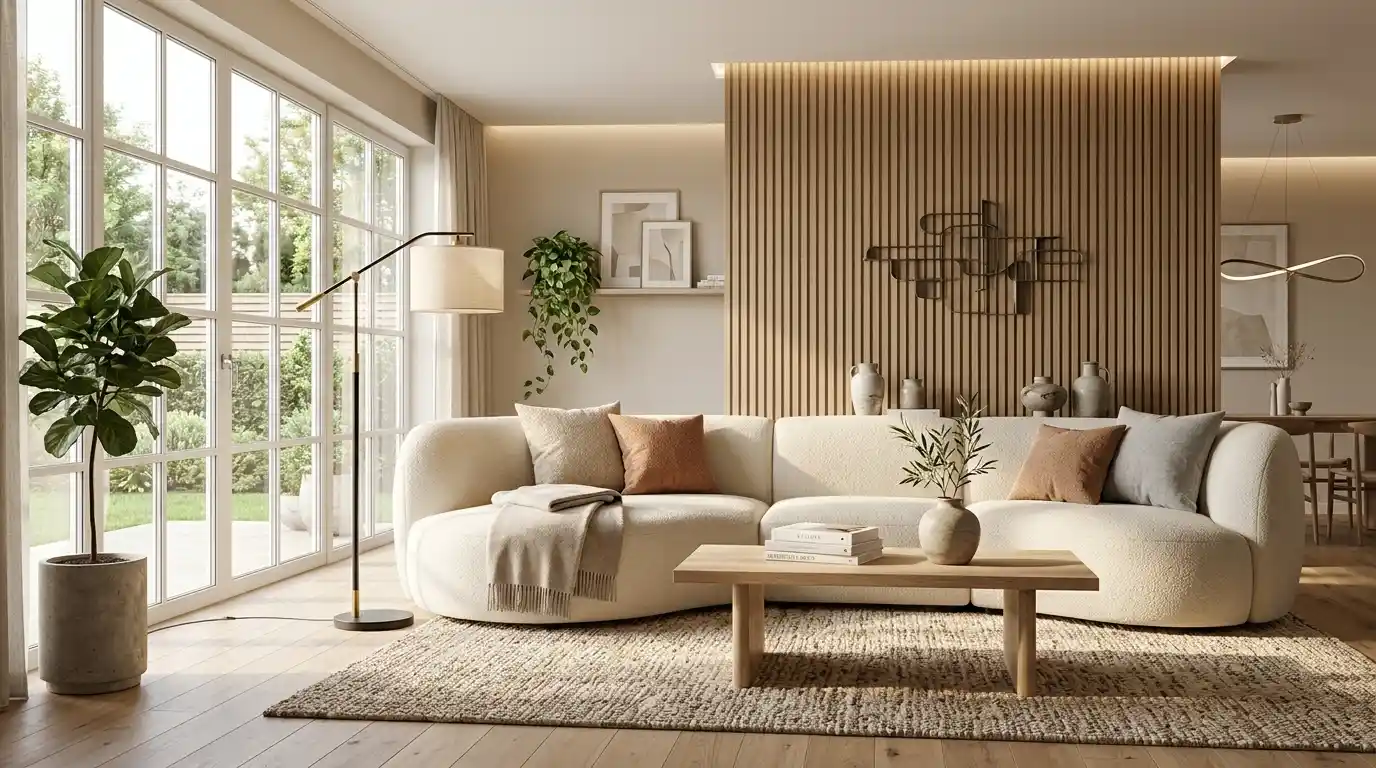
My living room has gone through three redesigns before I got it right and each failure was a valuable lesson which is missing in the glamorous pictures. Living room design ideas have nothing to do with blindly copying a showroom set-up. It means learning to detect what makes a living room lifeless and solving the problem itself rather than adding one more cushion on top of it. The following guide provides the necessary information regarding color palette, materials, furniture, layout and lighting.
Color Palettes That Define Living Room Ideas in 2026:
Color is what dictates the emotional atmosphere of a room even before one has sat down. This is the most affordable tool that can be used at a very fast speed.
Warm Neutrals Replacing Cool Grays:
Gray and white color combinations have been ruling the living room designs for last ten years; nevertheless, this phenomenon is fading quite quickly. The warm neutral colors like mushroom colors, beige, and warm taupe have emerged as the rulers. These colors seem bright during daytime but warm during the evenings. Terracotta, warm sand, deep ochre, burnt sienna, and dusty clay have become actual design elements instead of safety nets. In addition, designers incorporate such greenish colors as olive green, moss green, chartreuse, and khaki tone with the bronze tone undertone.
Muted teal and dusky plaster pink also occur quite often, along with deeper sage green backgrounds. Charcoal appears popular as a foundation element, combined with lighter textures. Last year, I changed the color of my own room to the warm taupe one, and the change in the ambiance of my living room at the nighttime has appeared quite surprising. If you are looking for modern living room ideas, then looking at Pantone Color of the Year or Benjamin Moore Color of the Year can save you much time since both of these elements signalize where tonal palette trends are going.
Bold Color Drenching and Atmospheric Palettes:
It takes dedication on an entirely new level when it comes to color drenching. Or, put simply, instead of designing an accent wall with a certain paint, all walls, molding, doors, even the ceiling are painted in one and the same color. This technique is called the technique of atmospheric colors, as the color becomes not only a characteristic of appearance but also a source of required emotions. Moreover, other interior decorations, like carpets, drapes, and ceramic items, are integrated into the entire palette design as well, forming a unified tonal zone. It looks rather strict in theory but very calm in execution.
Natural Materials Shaping Modern Living Room Ideas:
Materials do quiet, structural work that paint alone can’t be achieve. Once you start noticing texture, you can’t unsee a room that’s missing it.
Wood, Stone, and Biophilic Textures:
Trends in biophilic designs have progressed from just being buzzwords to becoming integral components of current interior designs. Examples of designs based on the concept of bringing nature indoors include live-edge wood coffee tables, oak planks floorings, and reused wood components. Lighter materials such as rattan and jute fabric textures complement heavier materials such as a stone coffee table or stone decor elements, creating balance in the interior.
Terracotta pot plants connect the color palette to the already discussed warm earth tones. Research proves the positive effect of nature-oriented interior design on people’s health, reducing stress hormone levels and increasing concentration ability. These elements are not just a buzz phrase but real wellbeing design proven by scientific research. Metal and wood turned side tables add another texture element to the room interior.
Glass, Metal, and Tactile Accents:
Colorful glass plays an important role in the 2026 living room décor, and I never thought that I would get to appreciate it so much. The fused glass or laminated glass tabletop uses several different colors in creating depth. The pendant lighting in the form of amber glass, cobalt glass, or emerald glass changes the coloring of the entire room depending on the changing daylight. Small glass pieces on the shelves accentuate the color scheme while not requiring any effort from the viewers. Glass works perfectly together with natural stones and wood.
Furniture Trends Behind the Best Living Room Ideas:
Furniture shapes how a room actually functions, not just how it looks in photos. Choosing pieces with intention pays off every single day you use the space.
Sofas, Seating, and Statement Shapes:
Module sofas and sectionals rule in today’s living room trends due to their flexibility. The curved sofa makes the sharp angles of the room look softer and looks great when photographed against the straight lines of other furniture pieces. Tufted sofas and skirts on furniture revive the warmth that has been missing due to all the minimalist square shapes for years. The barrel chairs and wing chairs add personality to the room without occupying any space unnecessarily. The use of low seating helps in maintaining an unblocked view in small spaces which is very significant in apartments.
Tables, Storage, and Multifunctional Pieces:
A reliable coffee table remains the anchor of most seating arrangements, full stop. Console table placement near entries handles keys, mail, and everyday clutter effortlessly. Storage ottoman and nesting side table pieces deliver function without sacrificing style. Unmatched shelving and a bookshelf create functional decor, also known as a library wall. Asymmetrical shelves and a bookshelf that is incorporated directly into the walls provide storage that becomes decorative, also known as a library wall. In fact, the practice of book drenching, whereby one submerges the shelves from the ceiling to the floor in books with spines that share the same color, has become an accepted design practice.
Living Room Layout Ideas That Actually Work:
Even gorgeous furniture fails if the layout fights the room’s natural shape. Layout is honestly where most people get stuck.
Small Living Room Layout Solutions:
The first step while arranging the furniture in the living room would be to determine the focal point in the room, which could be anything from the fireplace to the television set, or even windows having adequate light. Circles seating arrangements will do wonders for rooms whose primary purpose is socializing and make conversations easy. In addition, the U shape design enables more seating while ensuring that the passageway is kept open. In lieu of arranging all pieces of furniture against the wall, floating furniture will immediately make the room look bigger.
Open Concept and Narrow Room Layouts:
Open concept living room areas require the use of rugs and furniture arrangement for demarcation in the absence of walls. The natural separation of the two spaces is possible through arranging the sofa back to the kitchen. The long thin living room area requires the arrangement of the sofa along the longer wall and the use of a narrow console table. The difficult aspects in designing the layout of the living room can easily be tackled by using the corner sectional. The L shaped sofa makes use of the narrow footprint but with lots of seating.
Texture, Pattern, and Personality in Living Room Ideas:
Texture is what separates a styled room from a truly lived-in one. This is the layer most beginners skip entirely.
Layering Textiles and Pattern Mixing:
Texture layering through tactile textiles gives depth that paint and furniture alone can’t provide. Bouclé fabric and patterned pillows introduce softness against harder surfaces like wood or stone. Pattern layering mixes floral pattern and geometric pattern motifs within one cohesive color palette. The tapestry prints come with a vintage botanical beauty that is reminiscent of something collected versus bought all at once. Wood mixing and metal mixing was once considered design taboo but is now almost necessary.
Vintage Finds and Collected Looks:
Vintage furniture and antique furniture add authenticity no catalog piece can replicate. Thrift store finds and estate sale finds bring genuine patina finish and history into a room. This collected look is central to nearly every trend report on personality-driven design this year. The old minimalist grid, everything matching and symmetrical, now reads as sterile minimalism rather than sophistication. All-gray interior schemes and matching furniture sets feel dated compared to rooms built from pieces gathered over time.
Lighting and Acoustic Comfort:
Lighting and sound are the invisible variables most people forget until a room feels off. Fixing both usually solves problems of furniture alone never could.
Layered Lighting Systems:
Statement lighting and layered lighting replace the old single overhead fixture completely. There is a time for the floor lamp, table lamp, ambient light, and task light. In the morning, one needs bright and stimulating light while in the evening one needs warm and dim light. The floor lamp with an arch design next to the reading chair is both functional and sculptural.
Acoustic Design and Sound-Absorbing Textiles:
The acoustic design aspect is constantly ignored, especially in living rooms that adopt the open-concept approach. This room reverberates due to its hard surfaces and therefore appears cold regardless of how aesthetically pleasing it looks. The remedy for this lies in sound absorbent elements such as fabric and rugs.
Wellbeing, Function, and Sustainable Living Room Ideas:
The most lasting living room ideas balance beauty with genuine daily livability. Function should never feel like an afterthought.
Biophilic Wellbeing and Indoor Plants:
Indoor plants and greenery tie directly back to wellbeing design and measurable stress reduction. This isn’t just aesthetic preference; it’s backed by real research on human comfort.
Smart Storage and Sustainable Updates:
Smart storage and hidden storage matter enormously for family-friendly living room and pet-friendly living room households. IKEA sofa covers and a good slipcover extend furniture life without buying anything new, which supports sustainable decorating. Decluttering remains free, effective, and often the very first step toward small space solutions that actually work.
Living Room Ideas Conclusion:
The concept for your living room should be developed based on the problem that is to be solved in this space rather than simply imitating any current trend. Begin with choosing the colors first and then proceed with using textures and natural materials; arrange your furniture only when all the other things are completed. Whether it be in the USA, the UK, or any country in Europe, the principles are the same all over the world.
FAQs
Float furniture away from walls, choose a clear focal point, and use multifunctional furniture like storage ottomans to maximize every inch.
Warm neutrals, terracotta, olive green, and deep charcoal are replacing cool grays and stark whites with most current living room ideas.
Utilize an area rug and furniture arrangement by putting a sofa that faces opposite to the kitchen.