
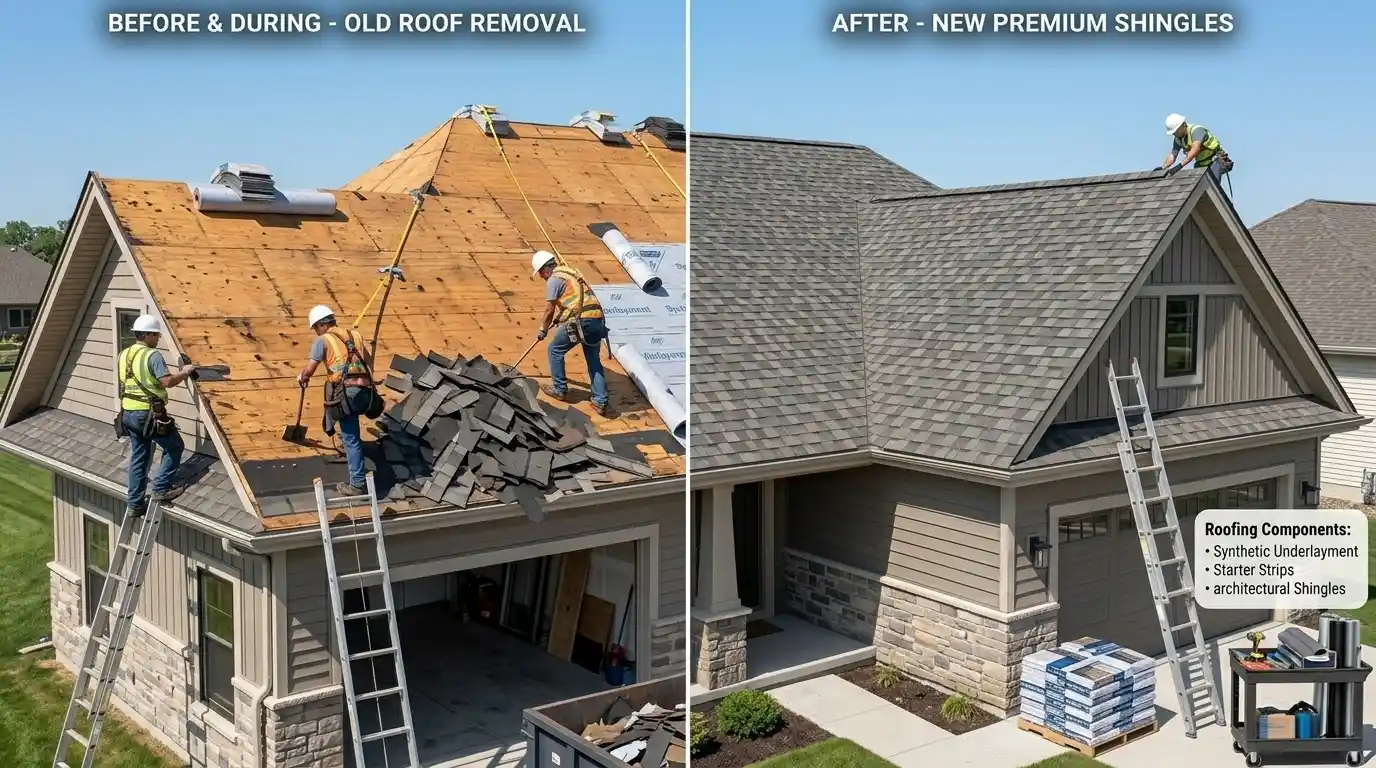
I got three roof quotes last spring, and they were nowhere close to each other. One contractor said $8,200. Another said $14,600 for the exact same house. The third guy just sighed and said “it depends,” which felt like the most honest answer of the three. If you’ve ever typed how much does a new roof cost into Google at midnight while staring at a water stain on your ceiling.
You already know the frustration. The numbers online swing wildly, and none of them explain why your neighbor paid half what you’re being quoted. This guide breaks down the real math behind roof replacement cost in 2026, across both the US and UK markets, so you walk into your next contractor meeting with actual leverage instead of guesswork.
How Much Does a New Roof Cost in the US and UK Right Now?
Before delving into material costs or labor costs, it is important to get yourself grounded with the actual national costs. All companies who do roofing for you would quote you in different ways, but in reality, their estimates are all based on the same averages estimated by the industry. The more you know about these figures, the better you could catch any fraud.
The Average Roof Replacement Cost in the US Right Now:
In the USA, the cost of roof replacement generally comes to $9,500 on an average basis. The range goes from $5,800 for the lower end to as high as $47,000 on the upper side. The location is extremely crucial in this regard. A homeowner in Atlanta might pay near the national average, while someone in coastal California often pays far more.
Cedur’s California breakdown puts small roofs between $7,000 and $15,000, with large roofs climbing past $20,000 before labor is even added. New York City sits in its own bracket too, with average roof replacement cost hitting $8,690 and a per-square-foot rate around $5.40. Labor alone often eats more than half of any roofing contractor’s invoice, so don’t be surprised when the crew’s hourly rate becomes the biggest single line item on your estimate.
What UK Homeowners Are Actually Paying Per Square Metre:
In the UK, the cost structure is different but has a similar narrative. A good many people will have to spend somewhere between £90 and £220 per square metre to install a new roof, while an average three-bedroom property will end up costing anywhere between £7,000 and £16,000. London and South East areas of the country usually have the highest prices that could even rise above £18,000. The average figure in the UK according to Checkatrade is estimated at £8,000. However, if it is a difficult-to-install slate hip roof, the costs can rise even further and be close to £19,000.
Materials: The Single Biggest Lever on How Much Does a New Roof Cost
Nothing swings your final number more than the material sitting on top of your house. Roofers will tell you this upfront, and honestly, it’s the first question I’d ask before anything else. Choosing wisely here affects not just the invoice today but the lifespan of the whole structure.
Asphalt Shingles, Metal, and the Mid-Range Materials Battle:
Asphalt shingles remain the most common and affordable roofing material in both markets, and for good reason. They’re budget-friendly upfront and widely available from nearly any roofing contractor. Metal roofing costs more but lasts considerably longer, sometimes 50 to 100 years depending on the type of metal used. Aluminum roofing tends to run cheaper than steel roofing, while copper roofing sits at the premium end of the metal category. Standing seam metal roof systems have grown popular for their clean look and durability against wind and hail damage. In the UK, EPDM rubber roofing and GRP fibreglass roofing dominate flat roof projects, particularly on extensions and garages.
EPDM generally comes at a cost of £45 – £100 per m2 and lasts significantly longer than conventional felt roof solutions. At the same time, torch-on felt and built-up felt roofs represent the most economical choice for flat roofs, but due to their 10-20 year serviceable life you will have to redo them eventually. Selecting between such intermediate materials involves a clear decision: either save money today, or save money in the long term. There is no single answer here, only the right choice for you.
Slate, Tile and the Premium Roofing Materials Worth the Splurge:
Roofing installation with slate is clearly on top of the price range, and after seeing it up close, you’ll know why. Natural slate is capable of surviving over a century, which makes the expensive upfront investment on the roofing materials worthwhile in the long run. Clay and concrete tiles belong to the same high-end category for their elegance and longevity. There’s also composite slate and artificial slate as a less costly option to replicate the look of the natural variety. Tile roofing generally provides excellent noise isolation too, which matters more than people expect until they live under one during a storm.
Traditional thatched roofs cost between £90 to £225 per square meter based on difficulty levels. Green roofs and solar roofs provide another innovative type of roof which involves sustainability and savings in energy costs but not necessarily the protection against the weather. They are not an option if you need to resell your home shortly after building it. However, for a forever home, the math often works in your favor once you account for decades of avoided replacements. Whenever someone asks me how much does a new roof cost in premium materials, I always remind them to calculate cost per year of expected lifespan, not just the sticker price sitting on the quote.
Roof Size, Shape and the Geometry That Quietly Inflates Your Quote:
Two houses with identical square footage can still receive wildly different quotes. The reason almost always comes down to shape and pitch rather than raw size alone.
Square Footage and Square Metre Pricing Explained:
Roof size drives cost more directly than almost any other factor, and it’s simple math on the surface. A larger roof needs more raw materials, plus additional labor hours to cover it.Whereas the average 1,400 sq ft house in New York will have roofers require 1,600 sq ft of roofing material when overhang and pitch are taken into consideration, many homeowners get shocked at how much the difference between the actual roof surface area and the plan area can be. In the UK, similar calculations apply, just in square metre units.
Whereas the standard London terrace has a plan area of 50-70 square metres, its actual pitched roof area can be anywhere from 80 to 110 square metres. Do the multiplication according to your material’s rate per square metre, and you will easily see the increase in quotes. This is precisely what makes the question about how much does a new roof cost per square foot valid, yet not sufficient. One way or another, you should have someone measure your roof’s actual surface area, taking all slopes into account. Otherwise, you risk getting your initial quote completely revised once the work actually starts.
Gable, Hip, Mansard, and Flat Roofs: Complexity Costs Money:
Roof shape adds another layer of pricing complexity most guides gloss over entirely. Despite being easy to recognize with their distinctive two-slope construction, gable roofs are still the most affordable kind to construct or repair. Hip roofs have four sloping sides that converge to form the ridge at the roof top, meaning additional material and labor is needed. The mansard roof and the gambrel roof represent specialist installations, suitable mostly for period buildings with specific needs regarding the structure. Despite being the easiest option to visualize, flat roofs are costly because of specialist waterproofing.
Which raises the material price per square metre of the roof considerably. Additional structures like dormers, multiple valleys, and difficult access may cost many thousands of extra money. On MyBuilder website a gable roof can cost £5,000-£8,000, while a hip roof is likely to reach £8,000-£12,000 for the building of the same size. Complex roofs with multiple hips and chimneys may raise labor costs up to 60 percent of the whole roofing project budget. This is an enormous difference depending on the type of geometry only, not on the material used or the roof size. Always remember to check whether the contractor considered the roof complexity when offering the price.
Labor, Location, and the Hidden Costs Nobody Warns You About:
Materials get all the attention, but labor and location quietly decide the final number on most invoices. This is where regional differences and sneaky add-ons really start to show up.
Roofing Labor Rates by Region:
Roofing labor rates vary enormously depending on where you live, and this alone explains a huge chunk of quote differences. In the US, roofers typically earn around $130 per hour, while general roofing laborers work closer to $35 per hour.The cost of living regionally is also very big, which is why cities located on the coast, such as Los Angeles and San Francisco, have higher pricing compared to smaller ones that are found inland. In the UK, the rates charged per day by roofers for work in London and South East are £220 – £300 per day, whereas in the North and Wales it is cheaper.
A standard job would require about five days of working time for a crew of three roofers.That extra time adds up fast, sometimes pushing labor costs beyond £8,000 on complex projects alone.The changing nature of demand is another factor that influences prices. During late spring and summer, there is maximum demand and higher prices, but during autumn and winter seasons, lower prices might be available due to hungry roofers. If your time can allow you to do so, then using an off season will help reduce your overall cost. Make sure you ask your roofing company directly about how many workers will be doing the job and what their price per day will be.
Scaffolding, Permits, and the Extras That Sneak Onto Every Invoice:
Scaffolding alone can add $800 to $1,800 to a UK roofing project, and it’s genuinely unavoidable on most two-storey homes. Permit costs, meanwhile, typically range from £50 to £300 depending on your local council and property type. Waste disposal and skip hire for the old roofing material often adds another £100 to £1,000 on top of everything else. If your home affects a shared wall, a party wall agreement might be required too, with surveyor fees running £700 to £1,200 per neighbor involved. Structural repairs represent the biggest wildcard of all. Rotten rafters or damaged decking discovered mid-project can add thousands beyond your original estimate without warning.
Insulation upgrades, while optional, often make sense to bundle in while the roof is already exposed. Chimney flashing repairs and skylight installation both add specialized costs too, since they require extra sealing and detailing work around each penetration point. None of these extras are scams; they’re simply real costs that base quotes frequently exclude. Before putting any pen to paper, ensure you know the specifics that are covered and those that are not covered by the overall quote. An effective way of avoiding having an invoice that far exceeds your expectations is through obtaining a detailed list of the work involved.
Signs Your Roof Needs Replacing (Before It Costs You More)
Timing your roof replacement correctly can save serious money in the long run. Catching problems early almost always costs less than waiting until a full failure forces your hand.
Leaks, Missing Shingles, and Structural Red Flags:
Most roof problems do not happen suddenly; you’ll always have some clues that something is going on. Signs of water damage and damp patches in your loft space are usually early warnings that there is a problem. When shingles or tiles are missing or slipping, it allows water to get under the roof cover, and it will start to rot the decking and rafters over time. When an asphalt roof starts losing its granules, as seen by gritty residue in the gutter.
This shows that it has reached the end of its life. When a roof is sagging as you look at it from outside, you need to look out for more serious problems than just aesthetics. You cannot neglect the cracking and broken tiles, no matter how few of them there are after a heavy rain. Letting small things go can make your costs skyrocket. It would cost you somewhere between $150 and $400 to hire a roof inspector.
Roof Age and Insurance: Timing the Investment:
Most roofs have an estimated realistic life span that is dependent entirely on the materials used. Asphalt shingles have an estimated life span of about 20 to 30 years, clay and concrete tiles have a life span of about 25 to 40 years, while natural slates and high quality metal roofs can easily exceed 50 to 100 years when properly maintained. When nearing the estimated life expectancy of the roof, it would be better to replace than repair the roof. Insurance coverage for replacement may be available when the claim is based on storm damages especially wind and hail damages. However, general wear and tear will not be covered by insurance coverage.
How to Get an Accurate Roof Replacement Cost Estimate:
Once you understand the variables, actually getting a trustworthy number becomes much easier. This final stretch is about protecting yourself during the quoting and hiring process itself.
Getting Multiple Quotes Without Getting Burned:
Always collect multiple quotes before committing to any single roofing company. A price that’s dramatically lower than the others often signals corner-cutting or lower-grade materials hiding somewhere in the fine print. Check contractor reviews and online reviews carefully, paying attention to how companies handled disputes or delays. Ask each roofing contractor for references from recent, similar-sized jobs in your area. A confident, established company will happily provide this information without hesitation.
Financing, Warranties, and Protecting Your Investment:
Most roofs installed today come with a limited warranty for free, but not usually covering the whole life of the roof. Warranties would cost from $500 to $5,000, depending on material costs and duration of coverage. Financing is now more convenient than ever, enabling the homeowner to cover the costs gradually. Whichever strategy is preferred, always remember that it is important for all things to be done in writing.
Conclusion:
But, how expensive will a new roof be in 2026? In all honesty, there is no single answer to this question, and those people who tell you the exact price without any questions do not take several steps. The price you will receive at the end will depend on the materials used, the size of your roof, its design, the local labor costs, and several secret factors that appear only when the old roof is removed. The main thing I understood from my own three completely different prices is that knowledge is power.
Frequently Asked Questions
A new roof in the US averages around $9,500, although actual costs can range widely depending on materials, roof size, location, and complexity. In the UK, an average three-bedroom home may cost roughly £7,000 to £16,000, with London and complex roofs often costing more.
Yes, asphalt shingles generally have a lower upfront cost and remain one of the most affordable roofing options. Metal roofing costs more initially but can last considerably longer, so the better value depends on your budget and how long you expect to keep the property.
Ask several roofing contractors for detailed written quotes based on the actual roof surface area, material choice, roof shape, labor, and any additional work. The estimate should also clarify whether scaffolding, waste disposal, permits, flashing, and possible structural repairs are included.
Replacement becomes more sensible when the roof is approaching the end of its expected lifespan or shows widespread issues such as recurring leaks, missing materials, sagging, or deterioration underneath the covering. Repeated repairs can become less economical when several parts of the roof are failing at the same time.