

Whole home renovations sit in a completely different category from single room remodels. The complexity, the coordination, the sequencing, and the sheer number of decisions involved make this one of the most demanding projects any homeowner can undertake. Having worked alongside general contractors, architects, and design build firms on complete house renovation projects across the UK, USA, Australia, and Canada, I have watched the same patterns emerge repeatedly. The whole home renovations that finish on time and on budget share specific planning habits. The ones that derail share equally specific planning failures. This guide covers both honestly.
Where to Actually Start With Whole Home Renovations
Most homeowners begin whole home renovations by thinking about kitchens and bathrooms. That instinct is understandable these rooms generate the strongest emotional response and the clearest renovation ROI. However, starting with cosmetic renovation before addressing structural renovation, roof renovation, rewiring renovation, and plumbing renovation is the single most common and expensive mistake in full house remodel projects.
The renovation sequence matters enormously. Getting it wrong means opening walls twice, damaging completed finishes, and losing money on work that has to be redone.
The Correct Renovation Order of Work
Professional renovation contractors follow a consistent renovation phases order for whole home renovations that protects both the budget and the timeline. Demolition phase comes first full strip out, down to stud renovation, or selective structural renovation depending on property condition. Following this, structural engineer sign-off on any load-bearing wall removal, open plan conversion work, or loft conversion and basement conversion structural changes.
First fix renovation covers all hidden services rewiring renovation, plumbing renovation, HVAC renovation, and underfloor heating renovation before any walls close. Second fix renovation handles all visible installations kitchen cabinets, bathroom fixtures, electrical sockets, lighting fixtures, and smart home renovation connections. Plastering, skimming, and dry lining renovation follow second fix. Flooring renovation, interior painting, decorating renovation, and snagging renovation complete the sequence. This renovation sequence protects finished work from damage by later trades and prevents the costly renovation overspend that comes from disrupting completed rooms.
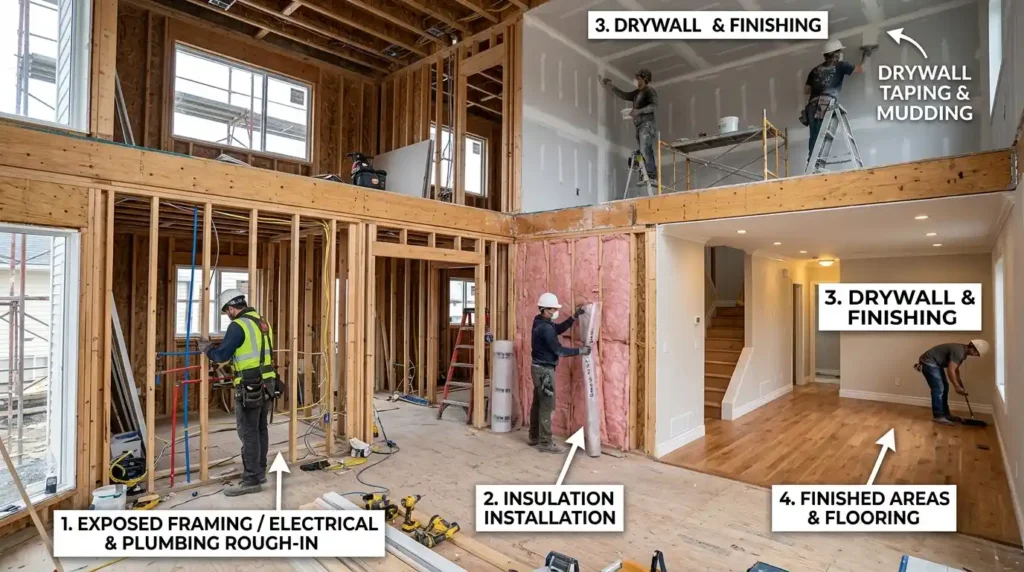
Structural and Essential Systems Renovation First
Before any cosmetic renovation begins, whole home renovations require honest assessment of the property’s hidden condition. Building survey findings, asbestos survey results, damp survey reports, electrical survey documentation, and EICR certification all inform the renovation priority list. A Victorian house renovation, Georgian house renovation, Edwardian house renovation, or 1930s house renovation almost always reveals additional structural renovation requirements once strip-out exposes the fabric.
Consumer unit upgrade, whole home rewire cost, and whole home replumb cost represent significant but non-negotiable expenditure in aging residential stock. Similarly, roof renovation whether flat roof renovation, pitched roof replacement, or roof insulation upgrade must precede interior renovation work. Cavity wall insulation, external wall insulation, and loft insulation installed during whole home renovations deliver EPC rating improvement outcomes that affect both running costs and resale value renovation results permanently.
What Do Whole Home Renovations Cost in 2025?
Whole home renovation cost is the question every homeowner asks first and the question with the widest legitimate answer range. Cost per square foot renovation and cost per square metre renovation vary dramatically based on specification level, property type, location, and scope. Understanding renovation cost breakdown honestly before committing prevents the renovation budget overrun scenarios that derail so many complete home renovation projects.
A realistic renovation estimate requires professional input not online calculators alone.
Renovation Cost by Country and Property Type
Whole home renovation cost UK for a standard terraced house renovation typically runs £40,000 to £120,000 for a comprehensive renovation including kitchen renovation, bathroom renovation, rewiring renovation, and new flooring throughout. Semi-detached house renovation cost sits in a comparable range. The cost of renovating a detached house or bungalow can vary considerably depending on the property’s size, layout, and level of specification. Victorian house renovation and period property renovation consistently run 20 to 30 percent above equivalent modern property renovation due to heritage material requirements and structural complexity.
Whole home renovation cost USA for a complete house renovation averages $100,000 to $400,000 depending on home size, location, and gut renovation depth. Renovation cost New York and renovation cost California both sit well above national averages. Whole home renovation cost Australia in Sydney or Melbourne runs AUD $150,000 to $500,000 for a comprehensive residential renovation. Whole home renovation Canada sits broadly comparable to USA pricing adjusted for provincial variation. Always build a 15 to 20 percent contingency fund into whole home renovations budgets renovation contingency fund discipline separates projects that complete successfully from those that stall.
Phased Renovation as a Budget Management Strategy
Phased renovation is the most practical approach for homeowners who cannot fund complete home renovation in a single programme. Room by room renovation allows whole home renovations to proceed over two to five years while maintaining a liveable property throughout. Renovation phases order in a phased approach prioritises structural renovation, roof renovation, rewiring renovation, and plumbing renovation in phase one. Kitchen renovation and bathroom renovation typically follow in phase two. Bedroom renovation, living room renovation, hallway renovation, and staircase renovation complete later phases.
Phased whole home renovations require a master plan developed at the outset not a series of disconnected decisions made one room at a time. A quantity surveyor or QS producing a comprehensive schedule of works and bill of quantities at the planning stage ensures each phase connects correctly to the next. This approach prevents the costly scenario where phase three work requires undoing phase two completions because sequencing was not planned holistically from the beginning.
Choosing the Right Contractor for Whole Home Renovations
The contractor decision is the most consequential single choice in any whole home renovations project. A turnkey renovation delivered by a reputable design-build firm with an experienced project manager reduces coordination risk dramatically compared to managing multiple subcontractors independently. However, not every design-build firm suits every whole home renovation brief and vetting matters enormously at this scale.
Licensed contractor, insured contractor, and bonded contractor status represents the minimum acceptable threshold. Renovation portfolio review, renovation case study examination, and renovation testimonials from comparable complete house renovation projects provide meaningful evidence of capability.
Vetting a Renovation Contractor Properly
FMB Federation of Master Builders accreditation in the UK provides strong quality assurance for whole home renovations. NARI and NAHB membership carry equivalent weight in the USA market. RIBA architect renovation credentials, RICS surveyor renovation qualifications, and structural engineer professional indemnity all matter for complex whole home renovations involving structural renovation, loft conversion, basement conversion, or home extension work.
Platforms including Checkatrade, MyBuilder, Rated People, TrustATrader, Which Trusted Traders, Angi, HomeAdvisor, Bark.com, and Houzz all provide contractor reviews and renovation testimonials. However, personally speaking the most reliable source remains direct personal recommendation from someone who has completed a comparable whole home renovation with the same contractor within the last two years. Request renovation photography documentation of completed projects. Review JCT contract terms carefully before signing. Confirm stage payments renovation structure, renovation deposit amount, renovation guarantee coverage, and workmanship guarantee renovation terms in writing before any demolition phase begins.
Smart Technology, Sustainability, and Design in Whole Home Renovations
Whole home renovations present a unique opportunity to future-proof a property in ways that individual room renovations cannot. Whole home renovations provide the ideal opportunity to install smart home infrastructure. Features such as home automation, smart lighting, security systems, CCTV, and EV chargers are most cost-effective when added during the first-fix stage, while walls are open and wiring is easily accessible. Likewise, solar panels, heat pumps, and both air source and ground source heating systems are far easier and more economical to integrate during the initial renovation than to retrofit later.
Sustainable renovation decisions made during whole home renovations compound over the building’s entire future lifespan.
Eco-Friendly and Energy-Efficient Renovation Choices
Green renovation and low carbon renovation material specifications are increasingly standard in whole home renovations briefs across UK, USA, Australian, and Canadian markets. Reclaimed materials renovation, low VOC paint renovation, biophilic renovation elements, and natural materials renovation all support sustainable renovation outcomes without requiring premium specification budgets. Embodied carbon renovation decisions particularly around structural renovation materials, flooring renovation choices, and insulation specification affect net zero renovation credentials permanently.
Whole home renovations financing through green loan renovation products, ECO4 renovation funding, green homes grant renovation programmes, and renovation subsidy schemes across different markets meaningfully reduces the upfront cost barrier for energy efficiency renovation investment. VAT on renovation UK at reduced rate VAT renovation of 5 percent applies to certain qualifying whole home renovations scenarios always confirm VAT treatment with your renovation contractor and accountant before finalising renovation budget figures. Renovation tax credit availability in the USA and renovation rebate programmes in Australia also deserve investigation during the whole home renovations planning stage.
Interior Design and Finishing Across the Whole Home
Interior design renovation decisions made holistically across whole home renovations produce more cohesive results than room by room decorating decisions made independently. A unified colour scheme renovation, consistent flooring renovation specification whether hardwood flooring whole home, engineered wood flooring whole home, or LVP flooring whole home and coordinated lighting renovation design create a whole home renovation transformation that photographs beautifully and lives even better. Renovation mood board development, renovation Instagram documentation, and renovation Pinterest boards all support design consistency across the full renovation timeline. Before and after renovation photography at project completion provides both personal documentation and practical evidence for any future resale value renovation conversations with estate agents.
Conclusion
Whole home renovations represent the most comprehensive and transformative investment a homeowner can make in a residential property. The whole home renovations that succeed that come in on budget, finish on schedule, and genuinely transform every room share consistent characteristics. They plan the renovation sequence correctly from the outset. They build realistic renovation contingency funds. They choose licensed, insured, accredited renovation contractors with verifiable renovation portfolios. They address structural renovation and essential systems renovation before cosmetic renovation.
And they make sustainable renovation and smart home renovation decisions during first fix renovation when integration costs the least. Whether you are planning a gut renovation of a 1930s house, a phased renovation of a semi-detached house, or a complete house renovation before selling, the principles remain identical. Plan carefully, vet thoroughly, sequence correctly, and whole home renovations deliver returns financial, practical, and personal that no other property investment can match.
FAQs
Whole home renovation cost UK for a standard terraced house renovation typically runs £40,000 to £120,000 for a comprehensive programme including kitchen renovation, bathroom renovation, rewiring renovation, new flooring throughout, and interior painting. Period property renovation and Victorian house renovation consistently run 20 to 30 percent above this range. Always add a 15 to 20 percent renovation contingency fund to your baseline renovation estimate before committing to a renovation budget.
The renovation order of work for whole home renovations follows a consistent sequence structural renovation and roof renovation first, then rewiring renovation and plumbing renovation during first fix renovation, followed by plastering and dry lining renovation, then kitchen renovation and bathroom renovation during second fix renovation, and finally flooring renovation, interior painting, and snagging renovation to complete. This renovation sequence protects finished work and prevents costly disruption to completed rooms.
Whole home renovation timeline depends significantly on property size, scope depth, and whether the approach is a complete gut renovation or a phased renovation. A comprehensive whole home renovations programme on a standard three-bedroom semi-detached house typically runs four to nine months from demolition phase to snagging renovation completion. Phased renovation stretches this across two to five years while maintaining a liveable property throughout the renovation project.
Living through renovation is possible during phased whole home renovations where one section of the property remains habitable. However, during gut renovation, down to stud renovation, or whole home rewire and replumb phases, temporary accommodation renovation whether staying with family, renting during renovation, or short-term rental is strongly recommended. Dust management renovation and noise management renovation during demolition phase make the property genuinely uncomfortable and potentially unhealthy for extended occupancy.