
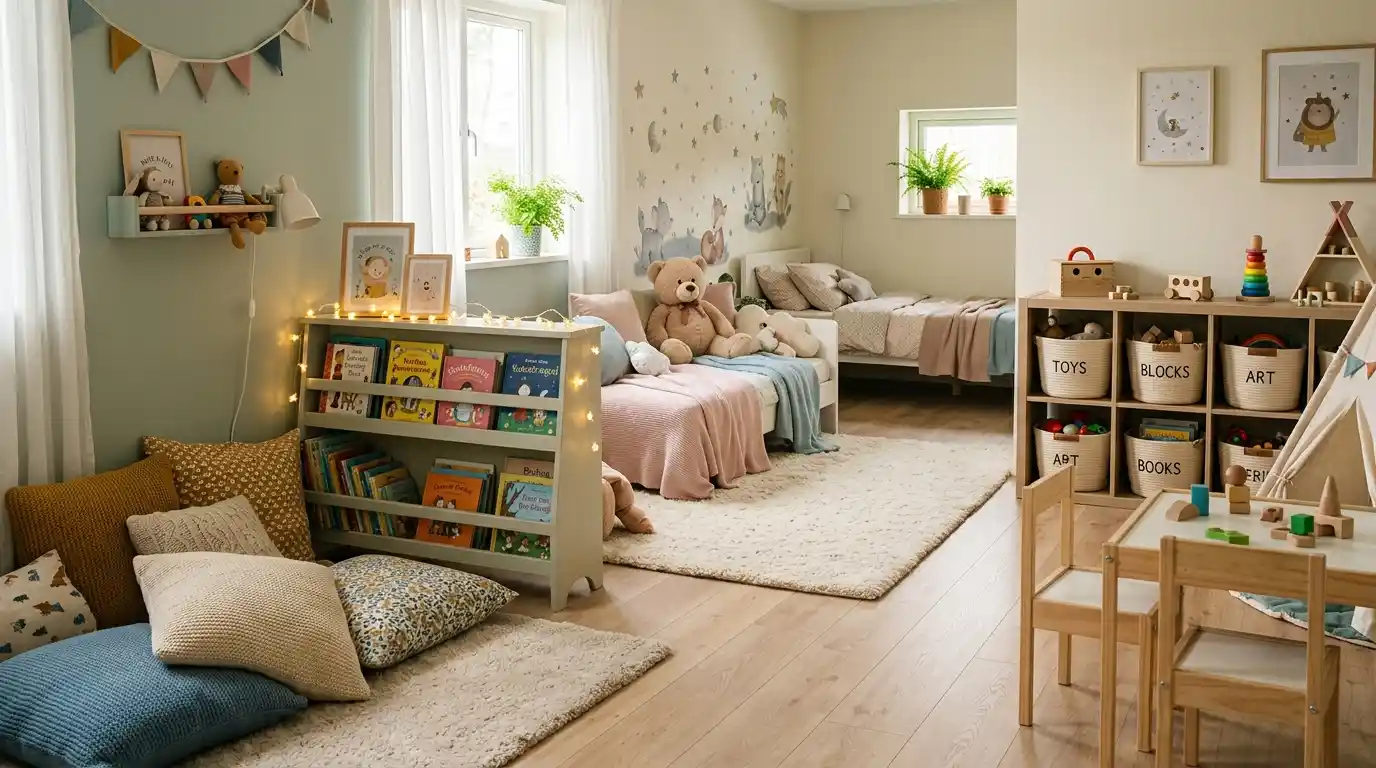
Most parenting advice treats the home as background noise a place where the “real” parenting advice happens to occur. Not something that actually shapes how kids develop. DrHomey.com parenting content takes a different angle. Pairing gentle parenting philosophy with practical guidance on room layout, routines, and household life skills.
Here’s the core idea worth understanding upfront: the house itself how a child’s room is arranged. What routines structure the day, how chores get assigned isn’t separate from parenting strategy. It’s part of it. This article walks through five specific ways that connection plays out, from co-parenting communication to childproofing without losing function. So you can actually use this instead of just nodding along to it.
What Is DrHomey.com Parenting Content Actually About?
DrHomey.com covers parenting the way most modern parenting sites do gentle discipline, communication strategies, developmental stages. But it consistently threads home environment into that content rather than treating it as a separate category. A post about toddler tantrums might reference room layout. A post about teen transitions might touch on giving a teenager more control over their own space.
That’s not a small distinction. Plenty of parenting content assumes the physical environment is fixed and only the parent’s behavior is adjustable. DrHomey.com parenting material pushes back on that a bit, treating the home itself as a lever you can actually pull.
What Age Groups Does This Content Cover?
Coverage spans from toddlers through teens, with distinct guidance for each stage rather than generic “kids” advice applied uniformly. Toddler content leans into tantrum management and safety. Teen content shifts toward communication and autonomy a reasonable split given how different those developmental stages actually are.
How Does This Differ From Typical Parenting Blogs?
Most parenting blogs focus on either practical parenting advice or home design inspiration. But few successfully combine both in one place. DrHomey.com’s category structure (Parenting sitting alongside Home Improvement, Family Living. And Home Design) suggests a deliberate choice to blend the two rather than treat them as unrelated verticals.
How Does Home Environment Actually Affect Child Development?
This is worth grounding before going further. Because it’s easy to wave your hands at “environment matters” without saying anything useful. Child development researchers have long pointed to three overlapping dimensions physical safety, emotional support, and intellectual stimulation as the baseline conditions a home needs to provide. That’s a widely cited framework in developmental psychology (you’ll find versions of it referenced by organizations like the American Academy of Pediatrics), not something unique to any one parenting blog, but it’s a useful lens for thinking about why room layout and routine actually matter beyond aesthetics.
A cluttered, chaotic space doesn’t just look messy it can make it harder for a young child to self-regulate, since visual and physical chaos adds cognitive load on top of whatever emotional regulation a toddler is already struggling with. That’s not a controversial claim; it’s a pretty standard finding in early childhood environment research.
Does Room Layout Really Impact a Toddler’s Behavior?
Yes, to a meaningful degree. Clear zones for specific activities a defined play area, a separate calm-down space give toddlers visual and physical cues about what’s expected in each spot, which reduces the ambiguity that often triggers frustration. This isn’t about buying more furniture; it’s about intentional arrangement of what you already have.
What About Teenagers Does Environment Still Matter?
Absolutely, though the mechanism shifts. For teens, environment is less about sensory regulation and more about autonomy having a space that’s genuinely theirs to control (within reasonable safety limits) supports the independence-building that’s developmentally appropriate at that stage. Micromanaging a teenager’s room while asking them to demonstrate more responsibility sends a mixed message.
How Should Co-Parents Align on Home and Parenting Decisions?
Co-parenting adds a layer of complexity that single-household parenting content often skips entirely. When two parents married, separated, or navigating a court-ordered custody arrangement are trying to keep some consistency across two homes, or even two rooms within one home, communication has to be explicit rather than assumed.
What Should Go Into a Co-Parenting Communication Plan?
At minimum, a workable plan covers three things: shared expectations around discipline approach, consistent household routines where possible, and a clear channel for resolving disagreements before they play out in front of the kids. Court-ordered parenting classes, which some jurisdictions require as part of custody proceedings, typically cover exactly this ground not as a punishment, but because inconsistent expectations between two households genuinely confuse kids and increase behavioral friction.
How Do You Handle Different Rules Across Two Households?
Perfect consistency isn’t realistic, and pretending otherwise sets everyone up to fail. What actually helps is agreement on the handful of things that matter most safety rules, screen time boundaries, bedtime windows while accepting that smaller stylistic differences between households are fine. Kids adapt to different environments more easily than parents often assume, provided the big things stay stable.
What Does Positive Discipline Actually Look Like in Practice?
“Gentle parenting” gets thrown around loosely enough that it’s worth being specific about what it actually means in a real household, not just as a philosophy on a blog post. Positive discipline isn’t the absence of boundaries it’s boundaries enforced without shame, paired with clear, predictable consequences a child can actually understand.
Is Gentle Parenting the Same as Permissive Parenting?
No, and this confusion trips up a lot of parents. Permissive parenting has few consistent boundaries; gentle or authoritative parenting has clear boundaries enforced with empathy rather than punishment. The distinction isn’t about how strict you are it’s about whether consequences are predictable and explained versus arbitrary and shame-based.
How Do You Handle a Toddler Tantrum Without Punishment?
Name the emotion, hold the boundary, and stay calm in that order. Saying “you’re frustrated because we’re leaving the park” acknowledges the feeling without conceding the boundary, and staying regulated yourself (genuinely hard in the moment) models the emotional control you’re actually trying to teach. This isn’t a magic fix; toddlers still tantrum. It just changes what they’re learning while they do it.
How Do You Build Life Skills Into Everyday Household Routines?
Chores and household tasks aren’t just about getting the dishes done they’re one of the more reliable ways kids build competence and independence over time. A child who’s genuinely responsible for something, even something small, tends to develop a different relationship with responsibility than one who’s simply told to “be more responsible” in the abstract.
At What Age Should Kids Start Doing Household Tasks?
Earlier than most parents assume toddlers around age two or three can handle simple tasks like putting toys in a bin, and capability scales up steadily from there. The specific task matters less than the consistency of having some ongoing responsibility tied to their developmental stage.
How Do Chores Actually Build Independence?
Chores work because they create a genuine feedback loop: the task needs doing, the child does it, and the outcome is visible and real rather than hypothetical. That’s meaningfully different from being told “you should be responsible” without anything concrete attached to it abstract advice doesn’t build a skill the way a repeated, tangible task does.
Is DrHomey.com Worth Following for Parenting Advice?
Depends on what you’re looking for. If you want parenting content that treats the physical home as part of the strategy rather than incidental to it, the combination here is genuinely less common than you’d expect, given how obviously the two topics overlap in real family life.
Who Gets the Most Value From This Kind of Content?
Parents actively renovating, reorganizing, or rethinking a living space alongside a parenting challenge a new baby, a co-parenting transition, a kid moving from toddler to school-age are probably the best fit, since that’s exactly where the home-and-parenting overlap becomes practically useful rather than theoretical.
Conclusion
DrHomey.com parenting content works because it refuses to separate two things that were never actually separate: how you raise a kid and the physical space you’re raising them in. Room layout affects toddler regulation. Household routines build independence. Co-parenting communication has to extend into shared expectations about the home itself, not just discipline philosophy. None of this replaces professional guidance for serious behavioral or custody concerns but for everyday parenting decisions, treating your home as an active tool rather than passive backdrop is a genuinely useful shift in thinking.
FAQs
It covers the full range, from toddler-specific content like tantrum management through teen-focused material on communication and autonomy, rather than treating “kids” as one uniform category.
Clear, defined zones for play, calm-down time, and other activities reduce the ambiguity that often triggers toddler frustration, since kids get visual cues about what’s expected in each space without needing constant verbal reminders.
Gentle parenting keeps clear, consistent boundaries but enforces them with empathy instead of shame; permissive parenting lacks consistent boundaries altogether. The difference is about how consequences are delivered, not about how strict a parent is.