
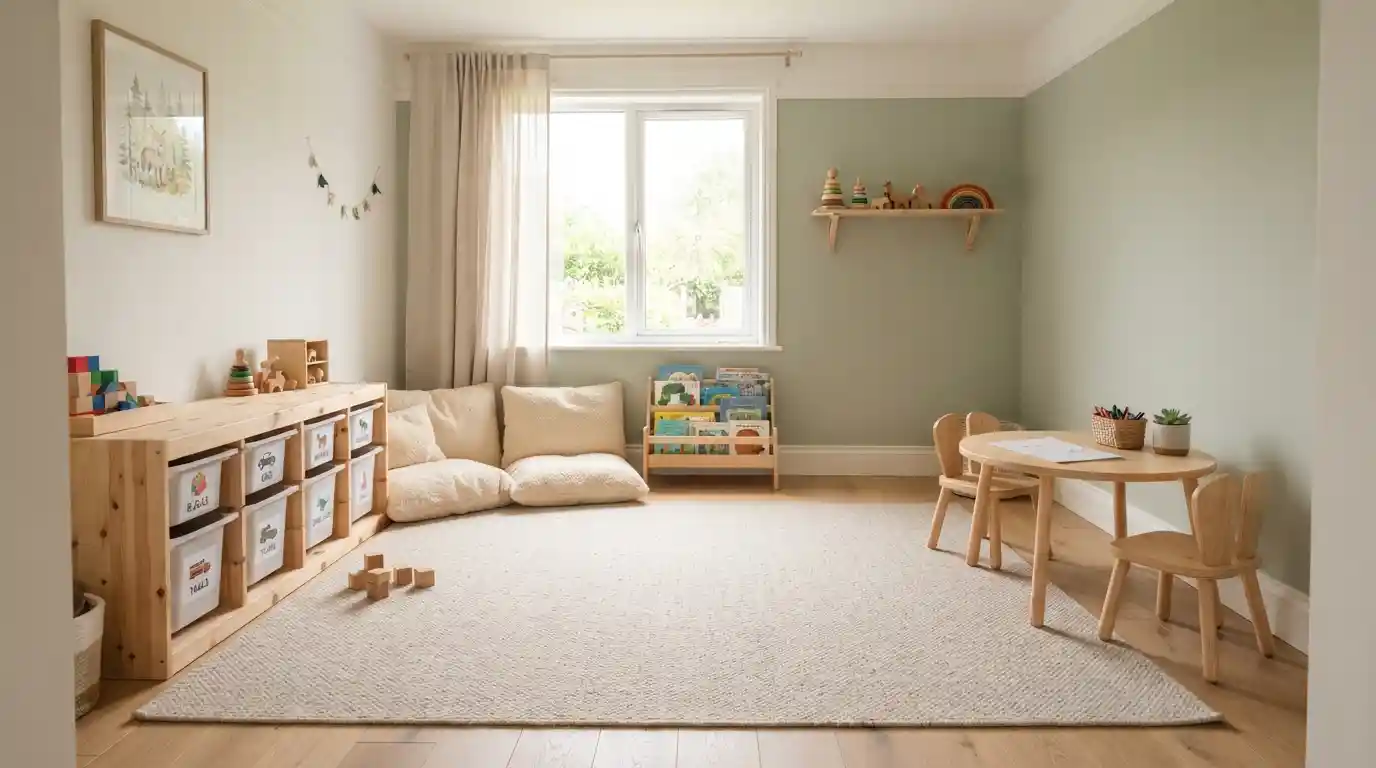
A friend of mine spent four hundred dollars on a playroom makeover last spring, a rug, a teepee, three storage bins, and a wall decal set from the same online cart. Her kids used it for exactly one afternoon. The teepee turned into a blanket closet by the following weekend, and the rug mostly just sat there looking nice under nobody’s feet. She wasn’t careless about it either, she just did what most of us do: pick the decor first and figure out the layout as we go.
That’s backward, and it’s the single biggest reason playroom playroom projects quietly fail. The room gets a weekend of decorating and an afternoon of actual planning, when really it should be the other way around. Get the zoning and storage height sorted before anything gets ordered online, and the rest tends to fall into place on its own.
Why Playroom Playroom Projects Fail Before the Fun Stuff Even Arrives
When a playroom sits empty, the furniture is rarely to blame. The room usually photographs fine. What it’s missing is a plan for how a kid actually moves through it on a normal Tuesday, not a plan for how it looks in a single wide shot.
Getting the Layout and Zoning Right First
Most playrooms that work well end up with somewhere between three and five separate zones, whether or not anyone planned it that way from the start. Reading, building, crafts, pretend play, and a quiet spot to decompress cover most of what kids actually gravitate toward indoors. Each of those needs its own patch of floor, even a tiny one, because kids tend to sort themselves into defined corners rather than dig through one big undivided heap of toys. I once helped a neighbor rearrange a playroom where every single category, dolls, blocks, art supplies, puzzles, had been stacked onto the same shelving unit against one wall.
It looked cluttered no matter how nice each individual piece was, and her daughter mostly ignored the whole shelf. Once we split the same room into a reading corner, a small craft table, and open floor for blocks, the difference showed up almost immediately in how long her daughter actually stayed occupied. Open floor space matters here too, and it’s easy to shortchange. Kids need room to roll around, climb, and stretch out, not just narrow gaps between furniture legs. Before ordering a single storage bin, stand in the empty room and picture where each activity will actually happen. .
Choosing Between a Dedicated Room and a Shared Space
Not every home has a spare bedroom waiting around to become a playroom. A garage corner, a slice of the living room, or part of a bonus room can all do the job, as long as the same zoning thinking still applies underneath. Having a room with a door means going all in on kid sized furniture and loud color without worrying who else sees it. A shared setup asks for more discipline. Cabinets and armoires that actually close hide the mess fast, which matters a lot more in a living room than behind a dedicated playroom door that stays shut most of the day anyway.
A cousin of mine converted an unused dining nook into a play corner using nothing more than a low IKEA shelf and a rug from a clearance rack, and it works better than some full rooms I’ve seen. Basements are worth a separate word here, since they tend to run colder and darker than the rest of the house. A couple of warm lamps and a lighter wall color fix most of that without touching the walls structurally. Whichever setup a family ends up with, the same question applies first: what is each part of this room actually for? Answer that before shopping, not after.
Playroom Playroom Furniture That Actually Earns Its Floor Space
Furniture for a playroom has to do more than look good in a listing photo. It needs to survive a five year old using it unsupervised, five days a week, for years.
Storage, Shelving and Seating Kids Can Actually Use
Open, low shelving wins over a tall closed cabinet almost every time when the room is built for younger kids. A child has to see the toy to want it, and reach it without calling for help, which is really the whole argument behind Montessori style shelving. Fabric bins on cube shelving handle small scattered pieces reasonably well, and a floating shelf that shows off book covers instead of spines pulls a kid toward reading in a way a normal bookshelf just doesn’t. The play table earns its keep more than almost anything else in the room, since crafts, puzzles, snacks, and the occasional argument over crayons all happen there.
A couch works fine for adults, but bean bags and floor cushions suit a five year old’s actual posture better, and they wipe down easier after a juice box disaster. A storage ottoman looks great in a dedicated room, though I’d steer away from it in a shared living room setup, since a squishy top makes puzzles slide right off. Wall mounted shelving frees up floor room once square footage has already gone toward an open play zone. None of it needs to be expensive furniture. It just needs to hold up to daily use instead of falling apart the way a lot of cheap plastic organizers do within a year.
Toy Rotation and the System That Actually Prevents Overwhelm
Buying another storage bin rarely fixes a messy playroom on its own. A toy rotation does far more, keeping a small curated selection out at any given time while the rest waits in a closet somewhere. Most Montessori guides land around eight to ten activities out at once, swapped every week or two based on what a kid is actually reaching for. Fewer choices out at a time tends to hold attention longer than a toy chest stuffed with everything a child owns, and that’s held true in pretty much every house I’ve watched try it.
Labeled bins pull a lot of weight here, since even a three year old can put something back in roughly the right spot without an adult standing over them. Open baskets work best for the daily favorites, stuffed animals especially, since a kid always reaches for the same three or four no matter how many technically live in that basket. Rolling carts suit craft supplies that need to travel from the shelf to the table depending on whatever project came up that afternoon. A corner hammock keeps stuffed animals visible without taking up any shelf space at all.
Playroom Playroom Flooring, Safety and Everyday Practicality
Nobody pins flooring choices to a mood board, but the floor shapes how a playroom actually feels far more than the wall color does, especially once toddlers start spending hours down there.
Flooring Choices That Handle Real Daily Wear
Foam tiles remain a go to for a reason. They’re soft to sit on, wipe clean fast, and if one section gets ruined, only that piece needs replacing rather than the whole floor. A washable low pile rug does a similar job over hardwood in rooms where foam tiles would look a little too much like a daycare. Interlocking carpet tiles offer that same spot repair advantage while looking closer to normal flooring. Laminate or wood with a soft rug layered over it gives a bit of both worlds, a durable base underneath and something comfortable for actual floor play on top.
How well a floor hides stains matters more than most people budget for going in, since crayon, marker, and the occasional spilled juice box will find that floor eventually. A lighter, neutral tone hides everyday dirt better than a bold pattern does, which sounds odd until you’ve actually lived with both for a year. I’d steer clear of anything deep pile in a playroom specifically, since Lego pieces and tiny puzzle bits disappear into it and vacuuming becomes a genuine hassle. Reconfiguring the room later is easier too with tiles you can just lift and rearrange instead of ripping out a whole rug. .
Childproofing and Safety Details Worth the Extra Effort
Bolting shelving to the wall probably matters more in a playroom than in any other room in the house, simply because kids climb on absolutely everything low enough to reach. Rounded table and shelf edges cut down on the bumps and bruises that come with toddlers who haven’t quite mastered walking yet. Non toxic materials matter for both furniture and toys, particularly anything small enough to end up in a mouth at some point, and it will. Outlet covers seem obvious on paper, yet they’re one of the first things that gets forgotten once decorating takes over the priority list.
Anchoring shelves to wall studs stops the kind of tip over accident that happens more often than most parents expect until it happens to them. It’s worth doing a specific pass through the room checking for small parts that wandered in from an older kid’s toy box, since those are easy to miss in a general tidy up. Wipeable surfaces on tables and walls save real time during an art project gone slightly out of bounds. Doing the safety pass before furniture goes in its final spot beats doing it after, since nobody wants to drag a bolted bookshelf across the room twice.
Playroom Playroom Design That Grows With Your Child
A room built purely around a two year old runs out of use fast, and replacing all of it every couple of years gets expensive quickly. Thinking ahead from day one avoids most of that cost later.
Montessori Principles and Age Appropriate Design
A Montessori style playroom sticks to child height furniture, a limited toy selection, and materials like wood over plastic wherever that’s realistic on a budget. Kids pick their own activity and put it back on their own, mostly because everything sits within easy reach instead of up on a shelf an adult controls. Wooden blocks, simple art supplies, and open ended toys hold attention noticeably longer than the battery powered toys that light up and make noise without needing a child to do much of anything. A Pikler triangle, or even a basic climbing frame, gives a toddler somewhere to burn off energy indoors, which becomes especially handy once winter cuts outdoor play short.
The same low shelving and open floor layout keeps working as a toddler grows into preschool age, with the activities on the shelf simply swapped out over time. What actually changes as school age approaches is the addition of a proper desk and some real task lighting, alongside craft materials that get a bit more complicated. Keeping the room’s bones the same, the zones, most of the shelving heights, the open patch of floor, saves both money and hassle compared to redoing the whole room every couple of years.
Transitioning the Room as Kids Get Older
At some point a playroom quietly stops being a playroom, and that shift works out better as a slow handoff than a single weekend gut job. The play table often turns into a homework desk once school starts eating up more of the afternoon. A bean bag chair rarely needs replacing at all when a room slides into teen hangout territory, it just keeps being useful. Craft and board game storage tends to grow rather than shrink, since older kids still want somewhere for their hobbies even after the dollhouse and dress up bin are long gone.
A basement playroom especially tends to slide naturally into a media room or games room for teenagers, since the open layout and tough flooring already suit whatever comes next. I’d hang onto the wall shelving through that whole shift too, since trophies, books, and hobby gear take over those shelves just as naturally as toys once did. The mistake I see most is treating this transition like a single weekend project instead of spreading it out, a new lamp here, a swapped out shelf there, over a year or more as a kid’s actual interests shift.
Conclusion
A playroom that actually gets used rarely comes down to one standout piece of furniture or a perfectly matched wall color. It comes down to sequence zoning the room before anything gets bought, picking storage a kid can use without help, choosing flooring built to survive real daily life, and leaving room for the space to grow alongside the child using it.
Buying the fun stuff first, the murals, the themed decals, the teepee, before sorting out the structure underneath is exactly how a beautifully decorated room ends up empty within a year. Handle the zones, the storage height, and the basic safety checklist early, and the decorating part turns into the easy, enjoyable stage it was always supposed to be.
Frequently Asked Questions
There’s no real minimum size. A large closet or a defined living room corner can work just fine as a play space. What matters more than the square footage is fitting in two or three distinct zones along with some open floor for movement. A converted bonus room or a bedroom sized space usually handles reading, crafts, and building zones comfortably, while a smaller space just needs tighter, more deliberate choices.
Most Montessori style guidance points to somewhere around eight to ten activities out at a time, with everything else stored away and rotated in on a schedule. It’s not a strict rule, but a smaller visible selection does tend to hold a kid’s attention longer than a room where every toy owned is out at once.
Foam tiles and washable low pile rugs both handle daily wear reasonably well, since spills and general roughhousing are pretty much guaranteed. Laminate or wood flooring with a soft rug on top works as a solid middle ground too, giving you a durable base with some cushion for floor based play.