
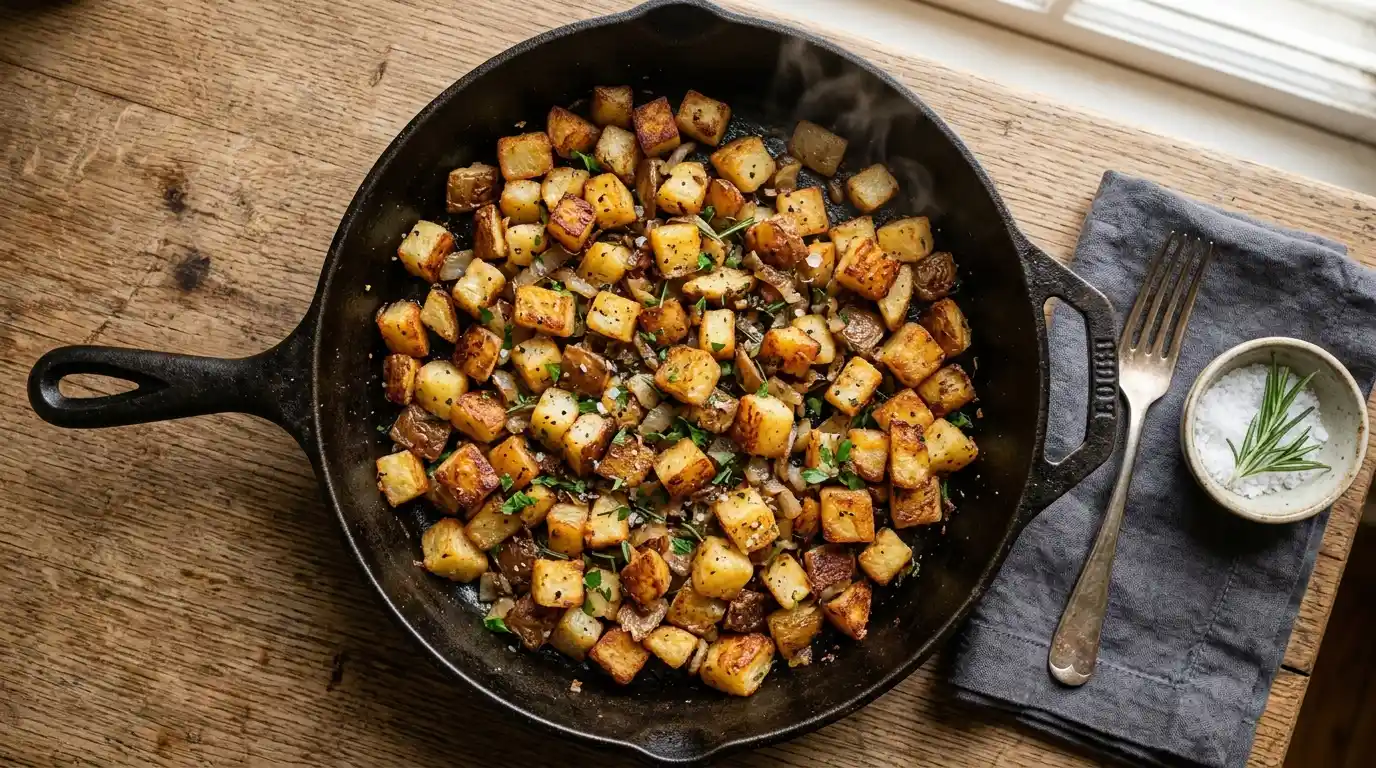
Soggy home fries almost always trace back to one mistake. Not the oil, not the heat moisture you never dried off in the first place. That’s really the whole story, honestly, and most of what follows here is just different ways that one problem shows up. This guide gets into why it happens, the pre-cooking methods that actually prevent it, and the kind of timing that gets you a genuinely crisp, diner-style exterior instead of pale steamed mush.
You’ll also get the onion and seasoning order that keeps everything from turning to mush together, plus a few honest fixes for when a batch still goes wrong anyway, because sometimes it just does. Made home fries that looked right in the photo and came out nothing like it? Yeah. This should close that gap.
Why Home Fries Turn Soggy Instead of Crispy
Almost every soggy batch comes down to the same root cause. Too much surface moisture hitting a hot pan at once, which drops the pan’s temperature and steams the potatoes instead of browning them. And once they start steaming instead of searing, you’re fighting an uphill battle for the rest of the cook there’s not really a way to recover mid-process without just pulling everything out and starting the crisping over.
Overcrowding makes it worse. Packed-in potatoes trap steam against each other with nowhere for it to actually escape. Cast iron and heavy-bottomed stainless steel hold heat better than a thin nonstick pan does, and that matters more than people think, because a pan that bounces back to temperature fast after potatoes hit it sears them instead of steaming them. The fix, once you get the actual mechanism behind it, isn’t complicated: dry your potatoes properly, give them real space in the pan, and don’t stir every thirty seconds out of nervous habit. Stirring releases moisture too. It also breaks up whatever crust is trying to form underneath.
Why does this keep happening no matter what you try? Excess surface moisture, paired with an overcrowded pan. That’s basically it, nearly every time. Both problems drop the pan below the temperature where potatoes actually brown, so they steam in their own moisture instead of crisping the way they’re supposed to.
Should You Parboil, Microwave, or Just Skip Pre-Cooking?
Pre-cooking genuinely changes the final texture. Which method you pick shifts both the timing and how forgiving the whole process ends up being for someone doing this the first time. Skipping it entirely is possible too people do it but it asks more of you in terms of attention, and it takes longer to get the center properly tender without torching the outside first.
Parboiling works well because it partially cooks the potato through before any browning even starts. Cubed potatoes, salted water, somewhere around five to eight minutes until just fork-tender but still holding their shape. What people skip, though, is the step right after: steam-drying in a colander for a couple minutes. That matters nearly as much as the boil itself. It lets whatever moisture’s still clinging to the surface actually evaporate instead of sabotaging the crisping step that comes right after it. Microwaving is the shortcut version ten to fifteen minutes, similar partial-cook effect, a lot less cleanup though it’s a little less consistent since microwave wattage and potato size both throw off the result more than a pot of boiling water ever does.
Do you actually have to boil the potatoes first, or can you skip that? You can skip it. Cook them raw, straight in the skillet. It just takes longer twenty minutes or more, typically and the center’s more likely to stay a bit underdone if your pieces are cut too big. Parboiling or microwaving first is just the more forgiving route if you don’t want to babysit the pan that whole time.
Cube Size and Why the Order You Cook Things In Matters
Cube size throws off cooking time more than people account for, and it’s a big reason a recipe’s stated timing sometimes just doesn’t match what happens in your actual kitchen. A half-inch cube cooks noticeably faster than a full inch, and mixing sizes in one batch just guarantees some pieces finish early while others sit raw.
Half-inch to one-inch, kept consistent that’s really the whole rule, more important than the exact number itself. Russets give you the fluffiest interior because of their higher starch content. Yukon Golds hold their shape a bit better and lean creamier, if that’s more your thing than maximum fluff. Skin on or off is mostly a texture preference at this point leaving it on adds a rustic bite and saves you prep time, and it holds together fine structurally as long as you’ve actually scrubbed the potatoes first.
Building Flavor Without Steaming Everything Back Down
Onions and peppers add real flavor, sure, but timing them wrong quietly undoes the crisping work you already did. Vegetables release moisture as they cook. Toss them in raw alongside the potatoes from the start and you flood the pan right when it can least afford it.
Sauté the onions on their own first. Let them soften and start to caramelize, then pull them out and set them aside until the potatoes have already built a solid crust add them back in during the last few minutes, not before. Garlic and most dried spices work the same way. Paprika, smoked paprika, garlic powder, black pepper all of it goes in after the potatoes have browned, since garlic burns fast over high heat and turns bitter well before the potatoes are actually finished. Bell peppers can go in a touch earlier than onions and survive fine, but if maximum crispness is the goal, keep them in that same final five-minute window alongside the onions coming back in.
So when do the onions actually go back in? Near the end. After they’ve been sautéed separately and set aside while the potatoes crisp on their own, without anything else competing for pan space or releasing extra moisture too soon.
Rescuing a Batch That’s Already Gone Soft
Even with decent technique, sometimes a batch just comes out softer than you wanted an overcrowded pan, a moment of distraction, whatever it was. Doesn’t mean starting completely over.
Spread the soft potatoes into a single layer in a very hot, dry skillet and just leave them alone. No stirring, several minutes, let the dry heat do its thing. It drives off whatever moisture’s left and gives the surface starch one more shot at forming a crust basically finishing what the first pass didn’t. This works a lot better than dumping in more oil to try to fix it, since more oil just makes things greasy without touching the actual problem, which was never about fat in the first place.
Conclusion
Crispy home fries really come down to controlling moisture the entire way through: dry the potatoes properly, don’t crowd the pan, hold off on onions and garlic until later rather than earlier, and leave the crust alone while it’s forming instead of stirring out of habit. Parboil, microwave, or skip pre-cooking entirely doesn’t matter much, the same core idea holds across all three. Get that part right and everything else, cube size, seasoning, which pan you reach for, comes down to preference rather than something that decides whether the dish works at all.
FAQs
Usually 20 to 30 minutes total five to eight minutes of parboiling, then 15 to 20 in the skillet, give or take depending on cube size and how hot your pan actually runs. Skip the pre-cook and you’re looking at 20 minutes or more just in the skillet alone.
Russets, for the fluffiest interior, thanks to more starch. Yukon Golds are a solid alternative if you want something a bit creamier and firmer-holding instead. Either works fine as long as your cube sizes stay consistent across the batch.
Yes, though it takes longer 20 minutes or more in the skillet and needs closer attention to avoid an underdone center. Parboiling or microwaving first is just more forgiving if you don’t want to hover over the pan the whole time.
Restaurant kitchens run hotter, use more oil, and cook on bigger, well-seasoned flat-tops that hold their heat better than a home burner does all of which builds a deeper, more even crust. A well-preheated cast-iron pan, not crowding it, and actually being patient before flipping gets you a lot closer at home.