
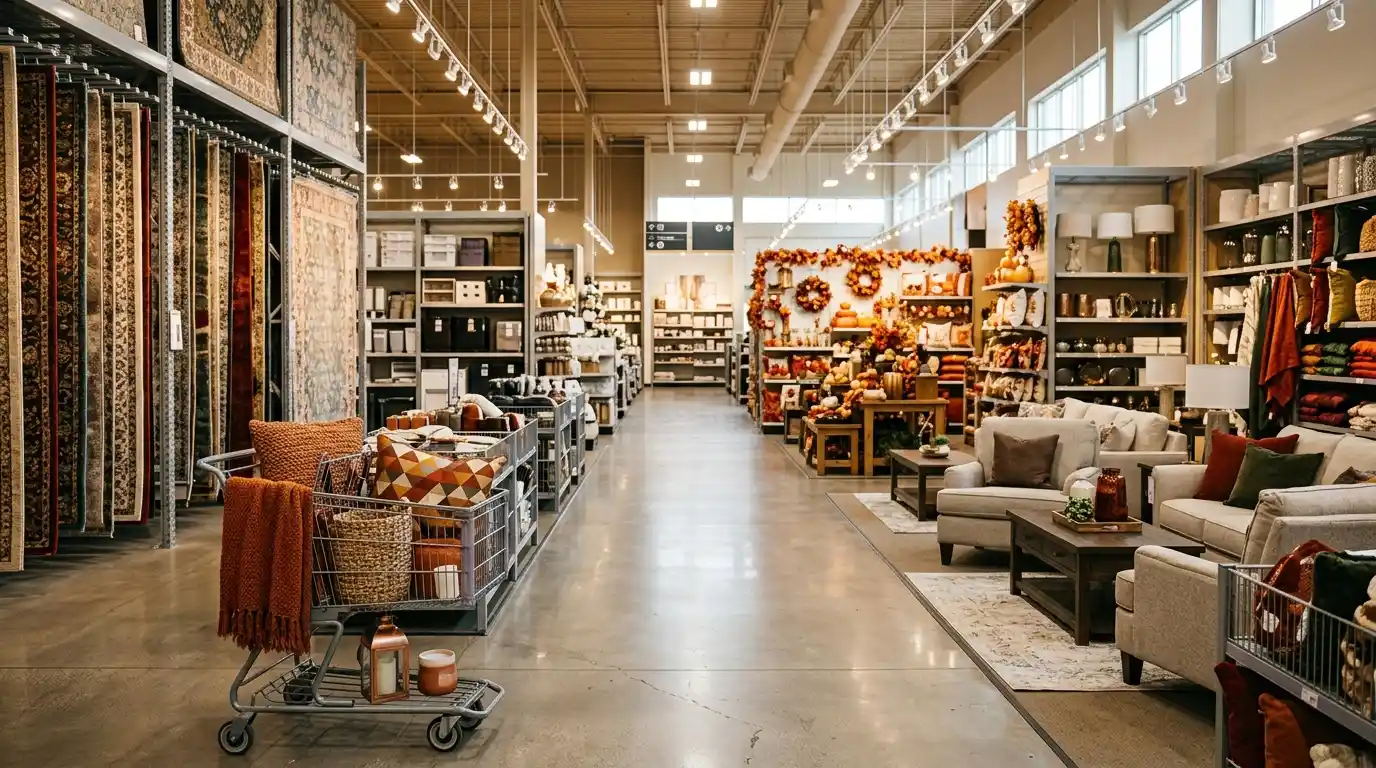
Searching “at home near me” pulls up a map full of pins. Doesn’t tell you which one actually has what you’re after, whether it’s open right now, or if delivery makes more sense than driving out at all. At Home runs as one of the bigger home decor superstores out there, and that size most locations are considerably larger than your typical home goods shop genuinely changes how you should approach a visit compared to some smaller boutique down the street.
This gets into how to search smarter, what actually separates a big-box decor store like this from somewhere like HomeGoods, and the checks worth running before you drive anywhere. Skip the guessing. Here’s how to actually search this instead of just clicking whatever pin happens to sit closest.
Why Store Size Changes How You Should Search
At Home stores run noticeably larger than most competitors in this space, often spanning tens of thousands of square feet under one roof. That scale matters more than people realize going in, when they’re deciding which nearby location is actually worth the drive versus which one’s just closest.
Bigger generally means broader coverage in a single visit. Furniture, rugs, seasonal decor, wall art, outdoor pieces, all under one roof instead of hitting three different specialty shops across town. But it also means a longer, more overwhelming trip if you’re only after one specific thing, since navigating a genuinely large floor plan eats real time you might not have. Shopping for something narrow? Check the website for item availability first. Saves you from wandering a massive store hunting down a single lamp for twenty minutes.
Is At Home actually bigger than most other home decor stores, or does it just feel that way? Genuinely bigger, yes At Home stores tend to run considerably larger than typical home goods retailers, often stocking a wider range of furniture and decor categories under one roof than a standard-sized competitor would. That scale’s part of the core appeal. It also means a visit takes longer if you’re browsing broadly instead of hunting one specific item.
Getting Accurate Hours Before You Go
Store hours vary by location and shift around major holidays, which makes checking directly before a trip worth the extra minute it costs you. Relying on an outdated hours listing from some third-party site is one of the more common reasons people show up to a closed store happens constantly.
Google Maps, Apple Maps, and the retailer’s own official store locator are generally your most reliable sources for current hours, since aggregator directory sites sometimes lag behind real changes at a specific location by weeks. Most large home decor retailers stay open the vast majority of the year, closing only for a small handful of major holidays, but exact closure dates and any seasonal hour adjustments are worth confirming directly rather than just assuming a standard schedule applies everywhere you go. Planning around a specific closing time? A quick call ahead is worth it for anything genuinely time-sensitive.
How At Home Compares to Similar Retailers
Understanding where At Home actually sits relative to HomeGoods, Homesense, or a specialty retailer like CB2 or Pottery Barn helps you pick the right store for what you’re actually shopping for. Not just whichever one happens to be closest on the map.
At Home leans broad and budget-conscious across nearly every home category, with a real emphasis on seasonal and holiday merchandise that rotates through the year. HomeGoods and Homesense run more of a treasure-hunt model instead constantly rotating inventory sourced from overstock and closeouts, less predictable, but you’ll occasionally stumble on sharper deals on higher-end brands that way. Specialty retailers like CB2, Pottery Barn, or Anthropologie sit at a higher price point generally, trading affordability for a more curated, design-forward, editorially consistent look. Budget and broad selection matter most? Large-format store. Want a specific, curated aesthetic instead? Specialty retailer, even at the higher price.
So how’s At Home actually different from HomeGoods, in practice? At Home generally offers more predictable, broad-category inventory across furniture and decor in a bigger store, while HomeGoods runs on that constantly rotating, treasure-hunt model sourced from overstock and closeouts instead. Shopping for something specific you can plan around? Large-format store’s more reliable. Enjoy unpredictable browsing for a potential deal? HomeGoods’ rotating stock suits that better, honestly.
Checking Delivery and Pickup Options Before You Drive Out
For furniture and larger decor pieces specifically, checking delivery and pickup options ahead of time saves you a genuinely frustrating trip. Especially if you’re shopping for something too big to fit in a typical car.
Many large-format home decor retailers offer both local delivery and in-store pickup, though availability and cost vary by item size, location, and sometimes by specific ZIP code too. Before driving out for something bulky like a sofa or dining table, check the website for delivery eligibility at your address could save you the trip entirely if the piece is available for delivery anyway. For smaller decor items, in-store pickup after ordering online is often the fastest route, letting you skip a browsing trip if you already know exactly what you want.
Does At Home actually offer local delivery for furniture, or is that hit or miss? Many locations do, though availability depends on your specific address and the item’s size worth checking directly on the retailer’s website before assuming delivery is or isn’t available where you live. For smaller items, in-store pickup after ordering online usually beats waiting around for delivery scheduling anyway.
Making the Most of a Large-Format Store Visit
A little planning turns a trip to a large home decor superstore from an overwhelming wander into something genuinely efficient. Especially given how much floor space these stores typically cover.
Go in with a rough sense of which sections you actually need. Furniture, seasonal decor, rugs. Rather than trying to browse the entire store in one go, since that alone can eat well over an hour in a genuinely large-format location. Shopping for furniture or a rug? Measure your space first and bring those numbers with you, since return policies on larger items tend to be less flexible than on small decor pieces a rug that’s the wrong size is a much bigger hassle to return than some candle you grabbed on impulse. Checking recent customer reviews for a specific location, when they’re available, can also give you a rough sense of typical wait times and how well-stocked that particular store tends to actually run.
Conclusion
A smart at home near me search goes past clicking the closest map pin. Checking current hours through an official source, understanding how this large-format model differs from a treasure-hunt retailer like HomeGoods, confirming delivery or pickup before you drive out for something bulky all of it adds up to a considerably better trip. Given how much floor space these stores cover, going in with a rough plan for which sections you actually need saves real time over wandering the whole place. A little prep turns a potentially long, overwhelming visit into an efficient one.
FAQs
Search “At Home near me” on Google Maps or Apple Maps, or use the retailer’s own official store locator for the most accurate, current results. Third-party directory sites can sometimes show outdated hours or list closed locations, so an official source is generally more reliable.
Most large home decor retailers, including stores like this, stay open the vast majority of the year and only close for a small handful of major holidays. Confirm exact holiday closures for your specific location directly through the store’s official listing, since exact dates can shift by year.
Many locations offer in-store pickup after online ordering, which is often faster than waiting for delivery, particularly for smaller decor items you already know you want. Availability can vary by location and item, so checking the website before your trip confirms whether pickup is an option for the specific product.
Depends on what you’re shopping for a larger-format location generally means broader selection across more categories, worth the extra distance if you’re browsing widely or hunting for something specific. For a quick, focused purchase, the closest location’s usually just as good, since core inventory tends to stay fairly consistent across a chain’s stores.