
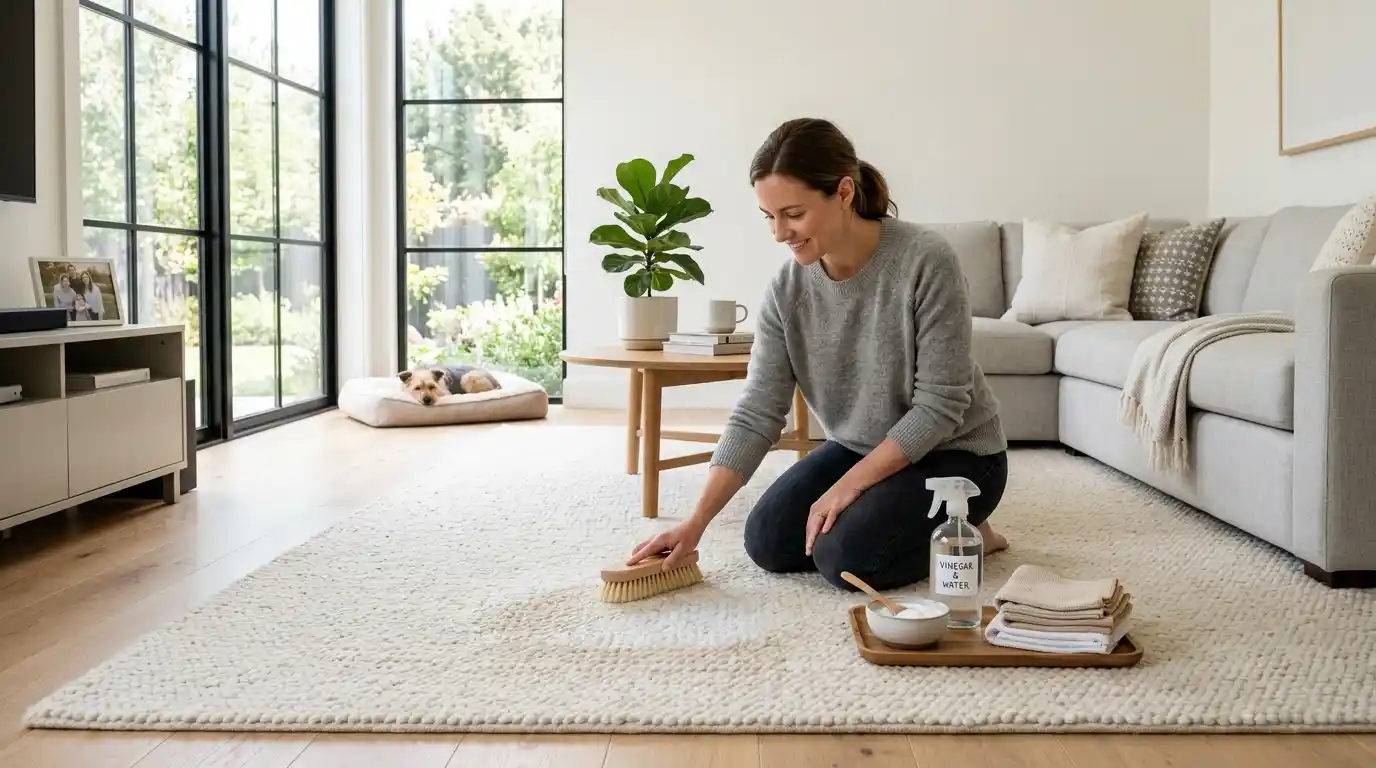
Rugs go through abuse that no one tells you about until you are too late. I have had a wool rug go through a toddler, a couple of dogs, and coffee spills galore until I got the right do it yourself diy rug cleaner solution remedy. While carpeting can all be the same thing, rugs come in a variety of types that will require their own method. You get it wrong, you are looking at damage beyond repair, like shrinkage or even discoloration.
If you get it right, you can solve any spill problem for a handful of pennies from your kitchen cabinet. Every family that has either a pet or children should know the do it yourself rug cleaning remedy.
Choosing the Right diy rug cleaner solution for Your Rug Material
Not every rug tolerates the same treatment. Before mixing anything, identify what your rug is actually made from.
Natural Fiber Rugs Need Extra Caution
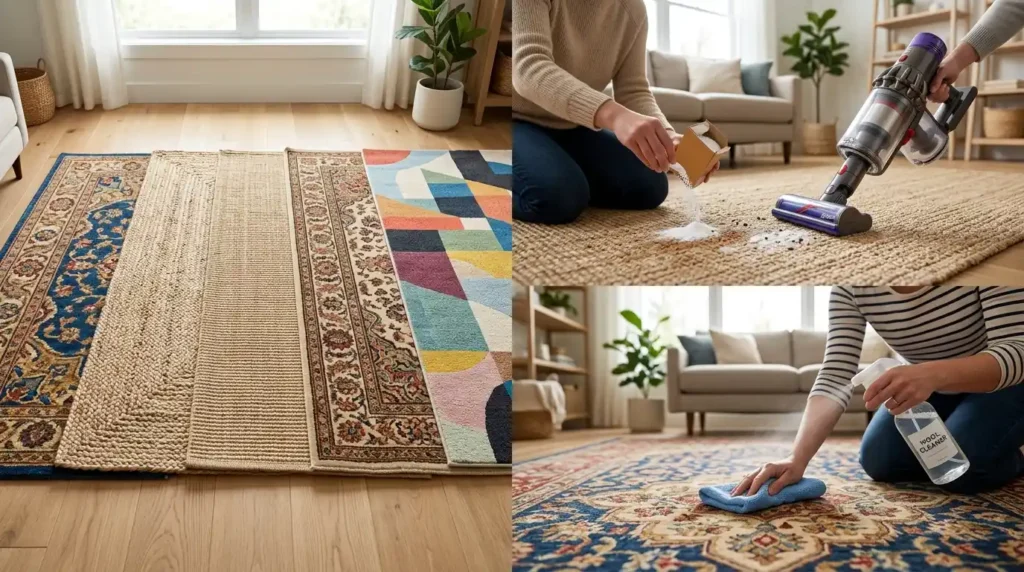
These four different types of materials used to make rugs jute rug, sisal rug, seagrass rug, and bamboo rug all have one important rule in common: do not get wet at all. All these different kinds of rugs are made from plant fibers, such as agave sisalana, hemp grass, and mountain grass. Therefore, they shrink and become dark colored when they get wet. There is only one good diy rug cleaner that works for these materials; it uses dry shampoo instead of soaking the rug in water. First, sprinkle baking soda or cornmeal liberally over the surface, and leave it there for an hour. Then vacuum up the substance with an attachment, and not a beater bar.
Do not brush the jute rug or sisal rug fibers harshly as it is far better to be patient than harsh in this situation. Binding on the rug and the fringe need to be gently vacuumed as well as the suction can cause the threads to loosen up. In case of red wine or coffee stain, you should act quickly with a dry cloth as it is better to prevent the spill than to treat it later on. A good quality door mat will prevent many dirt from entering into your house.
Wool, Silk, and Oriental Rugs Demand Gentle Handling
Materials for wool rugs, silk rugs, hand-knotted rugs, and oriental rugs tend to be rather costly and sensitive. It is important to perform spot testing on all antique rugs and vintage rugs before any cleaning process. A blend of warm water and white vinegar should be used in equal amounts for general reviving. But vinegar should not be used with silk rugs because it might affect the luster and dye.
Applying Your diy rug cleaner solution Safely and Effectively
Once you know your rug material, application technique becomes the next priority. Getting this step wrong can undo all your careful material research.
Mixing Ingredients the Correct Way
Mix white vinegar, warm water, and a little bit of mild dish soap in a spray bottle to refresh your rug regularly. You may use baking soda as an independent ingredient when the solution with vinegar dries completely. Do not mix hydrogen peroxide and vinegar because of the production of harmful fumes during their chemical reaction. I remember this warning from an informative comment section and took it to heart. In case you need to eliminate odors, the sodium bicarbonate alone is enough for this purpose without using any acid-containing mixture at all.
Such essential oils as lavender oil and lemon oil may seem as a good idea of giving your rug some pleasant smell, however, these liquids will leave stains which are impossible to wash out. They will be absorbed by rug fibers forever. Occasionally corn starch can be added to the paste of baking soda to remove stubborn stains from your rug. First of all check the colorfastness of the material on a tiny spot on the rug before using the treatment method for the whole thing.
Spot Treating Common Stains
The combination of vinegar and water with baking soda works well on stains and urine from pets. Blotting rather than rubbing is vital regardless of what kind of stain it may be. Ink stains, blood stains, and grease stains could require hydrogen peroxide mixed with mild detergent.
Preventing Damage and Knowing When to Call Professionals
Even the best diy rug cleaner solution has limits worth respecting. Recognizing those limits protects your investment long term.
Signs You Need Professional Rug Cleaning
Mold removal and mildew removal become a priority when you notice any fuzzy stains on a rug. The rug cleaning service takes care of stubborn stains that cannot be taken care of by using DIY solutions at home. It is necessary to use a dry cleaning or dry extraction process for cleaning rugs made of natural materials. In case you have a polypropylene rug or a nylon rug that gets shrunk during washing, then you need to seek professional assistance to avoid more harm to your rug. It is not at all embarrassing to admit that your DIY rug cleaning formula has exhausted its potential for a specific rug.
Everyday Habits That Protect Your Rugs
Besides regular cleaning practices, little habits in our lives increase the longevity of our rugs. Rotating our rugs helps ensure an even distribution of wear due to the movement of our feet on them. Having mats at the entrances of rooms prevents dirt from getting into our rugs in the first place. Regular vacuuming with the right equipment is important for each type of rug material.
Conclusion
A good diy carpet cleaning formula is economical and ensures that any chemical does not affect your home. Choose a suitable way to clean your rug depending on its material. Always do a trial first.
Frequently Asked Questions
Would the diy rug cleaner work on all rug materials?
No, since natural fiber rugs would need dry methods while the wool and synthetic rugs could handle mild liquid cleaners.
Is vinegar safe to use on wool rugs?
Yes, but white vinegar is only safe to use on wool rugs; however, it should never be used on silk rugs.
How can I eliminate pet odor from a rug using natural means?
Just apply the vinegar-water mixture then add some baking soda after the carpet dries.
In what situations should I not consider DIY rug cleaning?
You should opt for professional rug cleaning services if your rug is antique, heavily stained, or moldy.