
The carpet in the first house I owned properly not rented, owned, which changes how much you care about things was a mid-tone beige that showed everything. I cleaned it the way most people do initially a supermarket foam spray on visible stains, a borrowed carpet cleaner when things got bad enough to bother. It looked fine after each clean. The residue I was leaving behind wasn’t visible it just sat in the pile and held onto whatever came next. Dust, foot traffic, pet hair. The dark patches near the sofa weren’t wear. They were the map of everywhere I’d previously cleaned with something that hadn’t fully come out.
That’s the problem that sits underneath most carpet cleaning frustration. How to clean a carpet isn’t really the question the question is how to clean it without making things worse in a way that only shows up six weeks later. A wool carpet hit with the wrong pH felts permanently. Laminate-backed carpet over-wetted from below buckles the backing. The residue problem, the moisture problem, the wrong-chemistry problem none of them announce themselves while you’re cleaning. They announce themselves later, when the result is worse than what you started with, and the cleaning gets blamed for something that was really a method problem.
Why the Cleaning Method Matters More Than the Product You Use
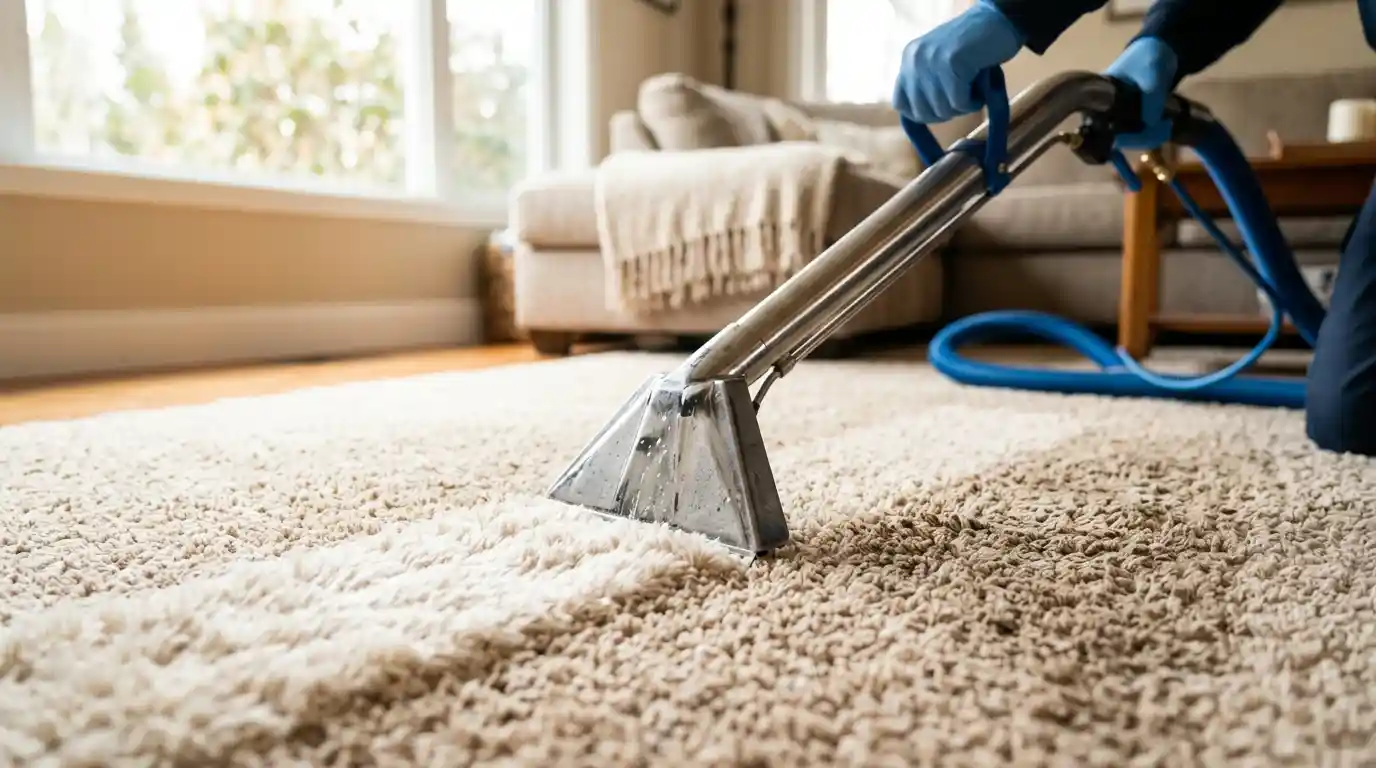
The method determines the result. Not the brand, not the price, not the label claims the physical process of how dirt is being removed from carpet fibers is what determines whether the carpet gets genuinely clean or just looks cleaner for two weeks before the problem returns. Hot water extraction commonly called steam cleaning, though the water is injected rather than steamed is the method the CRI and IICRC both recommend as the most effective for deep cleaning residential carpet. Water is injected into the carpet pile at high pressure, 100 to 450 PSI in professional equipment, which forces the cleaning solution into the fiber structure and dislodges embedded dirt from the carpet backing upward.
Powerful suction then extracts the solution along with the suspended soil at 1 to 4 gallons per minute. The result is a genuinely deep clean that removes what surface methods leave behind dust mites, bacteria, allergens, and the embedded soil that causes high-traffic wear patterns. Most carpets need 6 to 12 hours to dry fully after extraction; in humid climates that window stretches because the ambient moisture in the air slows the evaporation the carpet needs to complete the process. Opening windows and running fans shortens it meaningfully.
Carpet shampooing uses detergent worked into the pile, which lifts visible staining effectively. The problem is what stays behind after the visible clean. Detergent molecules are designed to grip that’s what makes them effective at lifting soil. In a carpet, that same grip works on the next thing that comes along after the cleaning, whether it’s airborne dust, tracked-in debris, or shoe residue. Within a few weeks, the sections that were cleaned look noticeably worse than the areas that weren’t touched, because those cleaned sections are now holding onto new soil more aggressively than the untreated pile. The test worth doing before using any spot cleaner: rub a small amount between your fingers. Foam means residue. Residue means faster resoiling.
Dry carpet cleaning uses a powder or compound brushed into the pile, left to dwell, then vacuumed out. The powder absorbs surface-level soil and some oils, and the result is a fresher-smelling carpet with better appearance provided the issue was superficial. It doesn’t penetrate deep enough to remove embedded dirt, allergens, or any stain that’s worked its way past the surface fibers. The advantage is drying time: there isn’t any. For a quick refresh between proper deep cleans, it’s a reasonable option. For a high-traffic carpet or a pet household, it’s a holding measure rather than a solution.
Encapsulation cleaning crystallises soil particles in a polymer foam, which then vacuums out when dry. It’s faster than hot water extraction and leaves less moisture in the pile, making it popular for commercial environments where a carpet can’t be taken out of service for 6 to 12 hours. In residential use it sits between dry cleaning and hot water extraction better than powder for soil removal, not as thorough as proper hot water extraction for deeply embedded grime.
Bonnet cleaning is worth understanding because you’ll encounter it as an option and the description sounds thorough. A rotary machine with an absorbent pad, driven across the carpet after a detergent solution is applied it moves fast, it buffs the surface to a presentable finish, and it’s everywhere in commercial buildings precisely because it produces quick, visible results with minimal downtime. What it doesn’t do is reach the bottom two thirds of the pile where the actual soil accumulates. In a home where the goal is a genuinely clean carpet rather than one that photographs well, the bonnet method leaves most of the problem in place.
Stain-Specific Approaches That Hold Up in Practice
The instinct when a stain isn’t responding is to scrub harder. That instinct is wrong in a specific, measurable way harder scrubbing takes a contained stain and moves it sideways into clean fibers while pushing it down further into the pile at the same time. What started as a wine spill the size of a coaster becomes an oval twice the diameter sitting deeper in the carpet than before treatment started. A clean white cloth pressed down and lifted straight up, repeated on a fresh section of cloth each time, is the motion that actually removes rather than spreads.
Pet stains pet urine specifically involve two separate problems: the visible stain and the odor embedded in the backing below it. White vinegar diluted in water handles the visible part and begins breaking down the urine chemistry. Once the stained area has been blotted as dry as possible, baking soda applied dry over the damp spot absorbs what the vinegar solution lifted but didn’t fully extract. Leave it overnight, vacuum in the morning. That two-step handles most fresh pet accidents.
For urine that’s dried into the fibers the set-in stain that keeps reappearing after cleaning because the backing is saturated enzyme cleaner is the only chemistry that actually dismantles the urine compounds rather than covering them. Everything else is temporary. The odor eliminator spray that holds up long-term for pet households: water, white vinegar, baking soda, and a few drops of essential oil in a 12-ounce spray bottle. Shake before each use.
Organic stains coffee, red wine, food, mud have a treatment approach that sounds wrong enough that most people don’t try it until they’ve exhausted everything else. One ounce of clear ammonia combined with three ounces of hydrogen peroxide, no water, sprayed onto the stain and then covered with a plate to prevent evaporation. Leave it for 24 hours without disturbing it. The stain is typically gone without any scrubbing. If it’s still visible, the process can be repeated. It sounds passive to the point of being useless, but the chemistry ammonia opening the fiber structure while hydrogen peroxide oxidises the stain compounds works on natural stains that commercial spot cleaners have already failed on.
Blood stains punish the instinct to use warm water. Warm water denatures the proteins in blood and bonds them to carpet fibers in a way that makes the stain genuinely permanent the same process that sets a blood stain in fabric when you tumble-dry before checking the stain is gone. Cold water only, a small amount of dish soap, blotted patiently with a white cloth until no more transfers. For blood that’s already dried, hydrogen peroxide applied to an inconspicuous test patch first it lightens some carpet colours then applied to the stain and blotted off as it bubbles.
Grease stains and oil stains need a different approach from water-soluble stains. A dry-cleaning solvent applied to a dry towel, blotted onto the stain rather than rubbed, is what Shaw Floors and most carpet manufacturers specify in their care guidance. For a DIY version, dish soap a surfactant that binds to oil applied in a tiny amount with cold water and blotted repeatedly works on most household grease stains.
Shaving cream on a stain is one of those household tips that sounds like folklore until you test it. It works on a wide range of stain types because it’s essentially a dry foam that lifts soil from fibers as it sits squirt a small amount directly on the stain, leave it for 15 to 30 minutes, then scrub gently with a damp brush and blot off. Club soda poured immediately onto a fresh beverage spill wine, juice, coffee and blotted aggressively works on timing rather than chemistry: the carbonation lifts the liquid out of the fibers before it bonds with them.
Vacuuming Properly: The Part Most People Rush That Does Most of the Work
Regular vacuuming has a bigger impact on carpet longevity and indoor air quality than any other single maintenance habit bigger than professional cleaning frequency, bigger than the brand of spot cleaner used. The Carpet and Rug Institute recommends vacuuming at least twice a week in homes with normal foot traffic, more in high-traffic areas or homes with pets. What most people do is a quick once-over that removes surface debris and misses everything embedded in the pile.
Vacuuming slowly going over each section at least eight times gives suction time to pull embedded soil out of the fiber structure rather than just lifting what’s loose on top. Most people vacuum in one direction and move on. Running the machine from a different angle on a second pass physically lifts fibers that were lying flat and pulls out particles lodged in the spaces between them that the first pass pressed down rather than extracted.
The corners and edges and the narrow strip along every wall are the areas where dust consolidates most quickly and where a pass that covers the room’s center misses entirely which is also where allergen buildup tends to be highest in rooms with regular foot traffic.
A CRI-certified vacuum is worth specifying because the certification tests both cleaning effectiveness and whether the vacuum damages carpet fibers a vacuum with too-aggressive a beater bar lifts and splits fiber tips over time in a way that permanently degrades pile texture. For area rugs with fringe, the beater bar needs to be turned off entirely: use suction only, vacuum from the center toward the fringe rather than over it, and lift the rug edge to vacuum underneath the fringe rather than catching it in the machine.
Oriental rugs, Turkish rugs, and Persian rugs need specialist care beyond what any residential vacuum or DIY cleaning method should attempt. The IICRC maintains a directory of certified firms for imported and heirloom rugs where the dyes, fiber construction, and backing are sufficiently valuable or delicate that the risk of DIY damage outweighs the cost of professional cleaning.
When DIY Stops Being Enough — and What Professional Cleaning Actually Adds
The point where regular maintenance stops being sufficient is recognisable before it becomes obvious. A carpet that looks acceptably clean but carries a persistent musty smell has moisture or mold in the backing that surface cleaning doesn’t reach. Recurring dark patches in areas you’ve cleaned multiple times are almost always resoiling from residue a problem that resolves with a single professional soap-free hot water extraction and then stays resolved if you switch to residue-free spot treatments afterward. A carpet that’s visibly matted in high-traffic areas has embedded soil that’s abrading the fibers from within; at that stage, professional cleaning can restore appearance but the fiber damage from delayed cleaning is permanent.
Professional hot water extraction cleans a carpet with equipment that generates heat and suction levels no rental machine matches rental units lack the professional heat and suction power, and they’re not typically cleaned out between rentals, which means the previous tenant’s carpet soil can end up in your carpet. Professional cleaning every 12 to 18 months is the standard recommendation for most households. Homes with pets or children benefit from every 6 to 12 months. The cost is recoverable in carpet lifespan: a carpet cleaned correctly and regularly lasts significantly longer than one that’s neglected until visible deterioration forces the issue, and replacement is considerably more expensive than maintenance.
For move-out cleaning in rental situations, many landlords require professional carpet cleaning with documentation to meet lease obligations DIY cleaning, regardless of quality, typically doesn’t satisfy that requirement. The IICRC certification on a cleaning firm is the credential that most landlord and property management agreements specify as the acceptable standard.
Conclusion For (How to Clean a Carpet):
Carpet cleaning is rarely a single fix. The method you choose, the chemistry you apply, and how consistently you vacuum all add up over time in ways that show on the pile long before you’d think to trace them back to technique. Hot water extraction handles what surface methods leave behind. Enzyme cleaners resolve what odour sprays only mask. Slow, directional vacuuming does more for fibre health than any product on a supermarket shelf.
Get those three things right, bring in a professional every 12 to 18 months, and the carpet you have lasts considerably longer than one treated as an afterthought. How to clean a carpet well isn’t about effort it’s about understanding what you’re actually doing to the fibres each time you do it.
FAQs
For routine care, vacuum slowly and regularly to remove soil before it becomes embedded in the fibres. When deeper cleaning is needed, hot water extraction provides a more thorough clean because it removes dirt and cleaning solution rather than leaving significant residue behind.
Hot water extraction, often called steam cleaning, is better suited to deeply embedded dirt, allergens, and high-traffic carpets. Dry carpet cleaning is useful for a quick surface refresh when minimal downtime is important, but it does not clean as deeply.
Blot the stain with a clean white cloth instead of rubbing or scrubbing it into surrounding fibres. Work patiently from the affected area and use a treatment appropriate to the stain type, especially with protein, grease, or pet-related stains.

1 thought on “How to Clean a Carpet the Right Way — Method, Chemistry, and Timing”