
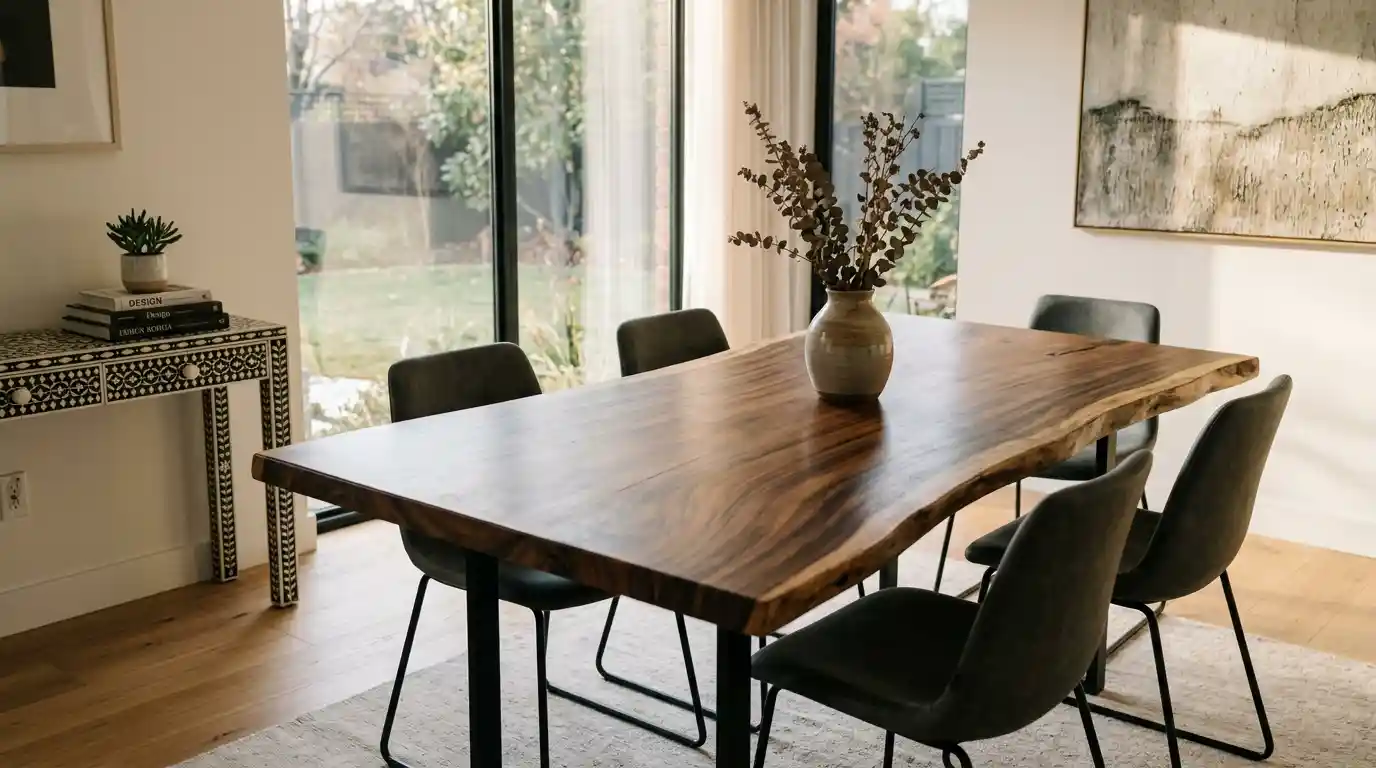
My uncle bought a live-edge suar wood dining table two years ago. Sight unseen, mostly, just photos from an online listing. It arrived warped along one edge, barely noticeable in pictures, obvious the second it sat under his dining room light. He’d skipped asking about moisture content entirely. That one mistake cost him a return shipment and a six-week wait for a replacement. This piece covers what actually matters when buying exotic home furniture. Based on his very expensive lesson and a few things worth checking before any of us make the same mistake twice.
What Actually Counts as Exotic Home Furniture
Not every dark, heavy wood piece counts as exotic, and a lot of listings stretch the term loosely. Real exotic furniture usually means a species that doesn’t grow domestically, teak, wenge, padauk, zebrawood, sourced from places like Indonesia, Brazil, or West Africa rather than a local sawmill. My uncle’s table used suar wood, native to Southeast Asia, genuinely exotic by any reasonable definition.
Price alone doesn’t confirm authenticity either. Some domestic hardwood gets stained darker and marketed with exotic-sounding names to chase the same buyers. Checking the actual species name on a listing, not just the marketing copy around it. Catches most of these substitutions before money changes hands. My uncle didn’t think to ask, and only found out afterward that suar wood specifically runs the risk of warping if it wasn’t properly dried before shipping.
What Makes Furniture Count as Exotic Wood?
Species origin is really the whole test. Wood that doesn’t grow in your own country or climate zone generally qualifies. Teak from Southeast Asia, mahogany from Central America, padauk from West Africa. Domestic hardwoods stained to look similar don’t count, even if a listing uses the word loosely to sell them anyway.
Sourcing and Sustainability Matter More Than People Think
A lot of exotic species sit under real trade restrictions, and checking this before buying isn’t optional. If you actually care where your furniture came from. CITES, the international convention regulating endangered species trade, covers several popular exotic timbers directly. Some rosewood and ebony species specifically require documentation to import legally at all.
FSC certification, Forest Stewardship Council, is the marker worth looking for on any listing claiming sustainable sourcing. My uncle’s table lacked this entirely, and he admitted afterward he never even thought to check. A seller who can’t produce chain-of-custody documentation for an exotic species is worth walking away from, no matter how good the piece looks in photos.
Is Exotic Wood Furniture Environmentally Sustainable?
Depends entirely on the specific supplier and species. Some exotic hardwoods come from responsibly managed forests with FSC certification backing every claim. Others get harvested illegally from protected regions, no documentation, no traceability, which is exactly the kind of purchase worth avoiding regardless of price or appearance.
Moisture, Warping, and Climate Considerations
This is where my uncle actually lost money, and it’s the part most buyers skip entirely. Wood that wasn’t properly kiln-dried before shipping continues losing moisture after it arrives, which causes warping, cracking, sometimes visible gaps along a seam within months of delivery. Live-edge slabs specifically, three to four inches thick in a lot of listings, are especially prone to this if the drying process got rushed.
Climate matters too, not just at the point of origin but wherever the piece ends up living. A humid coastal home stresses a piece differently than a dry inland one does. My uncle lives in Houston, genuinely humid most of the year, and his table’s warping likely had as much to do with acclimation as the drying process itself. Asking a seller directly about moisture content and drying method before buying catches this risk early.
How Do I Know If Exotic Wood Furniture Will Warp?
Ask about the kiln-drying process directly, and don’t accept a vague answer. Properly dried wood should sit around 6 to 8 percent moisture content for indoor furniture, a number any reputable seller should know off the top of their head. If a seller can’t answer that question specifically, treat it as a real warning sign rather than something to overlook.
Where to Actually Buy Without Getting Burned
Established retailers with real showrooms, Green Front Furniture being one example with multiple physical buildings you can actually walk through, offer a level of quality control online-only sellers usually can’t match. Seeing a live-edge slab in person before buying catches warping, color inconsistency, and grain issues that photos genuinely hide well.
My uncle’s next purchase, a wenge coffee table, came from a seller offering a real warranty, fifteen years in this case, backed by an actual return policy rather than vague promises buried in fine print. That single change, buying from someone willing to stand behind the piece, made the whole experience completely different from his first attempt.
Should I Buy Exotic Home Furniture Online or In Person?
In person when possible, especially for large statement pieces like a live-edge table or a bookmatched slab where grain and color vary piece to piece. Online works fine for smaller accent items, a bone inlay side table or a rattan chair, where the risk of a costly mismatch is lower. My uncle’s warped table is basically the textbook argument for seeing large exotic pieces before committing to one sight unseen.
Conclusion
Exotic home furniture rewards patience more than almost any other furniture category, checking species, sourcing documentation, and drying process before money changes hands. My uncle’s warped suar wood table cost him a return shipment and six extra weeks he didn’t need to lose. His second purchase, backed by a real warranty and proper documentation, held up exactly as expected. Ask the specific questions, moisture content, FSC certification, actual species name, before falling for a listing’s photos alone.
Frequently Asked Questions
What is considered exotic home furniture?
Furniture made from wood species that don’t grow domestically, teak, mahogany, padauk, wenge, sourced from regions like Southeast Asia, Africa, or South America. The term gets used loosely sometimes, so checking the actual species name on a listing matters more than trusting the word “exotic” alone.
Is exotic wood furniture worth the higher price?
Often yes, for genuine hardwood with real grain character and durability, though the price should reflect verified sourcing and proper drying rather than just the wood’s rarity. A poorly dried exotic piece can warp within months, making a cheaper, well-made domestic alternative the better value in that specific case.
How can I tell if exotic wood furniture is sustainably sourced?
Look for FSC certification and ask directly for chain-of-custody documentation before buying. A seller unable to provide this for a CITES-regulated species is a clear sign to walk away, regardless of how the piece looks in photos.
Does exotic wood furniture need special care?
Yes, most exotic hardwoods need periodic oiling and stable humidity to avoid cracking or warping over time. Placing a piece away from direct heating vents or extreme humidity swings matters more with exotic species than with common domestic woods that adapt more easily.