
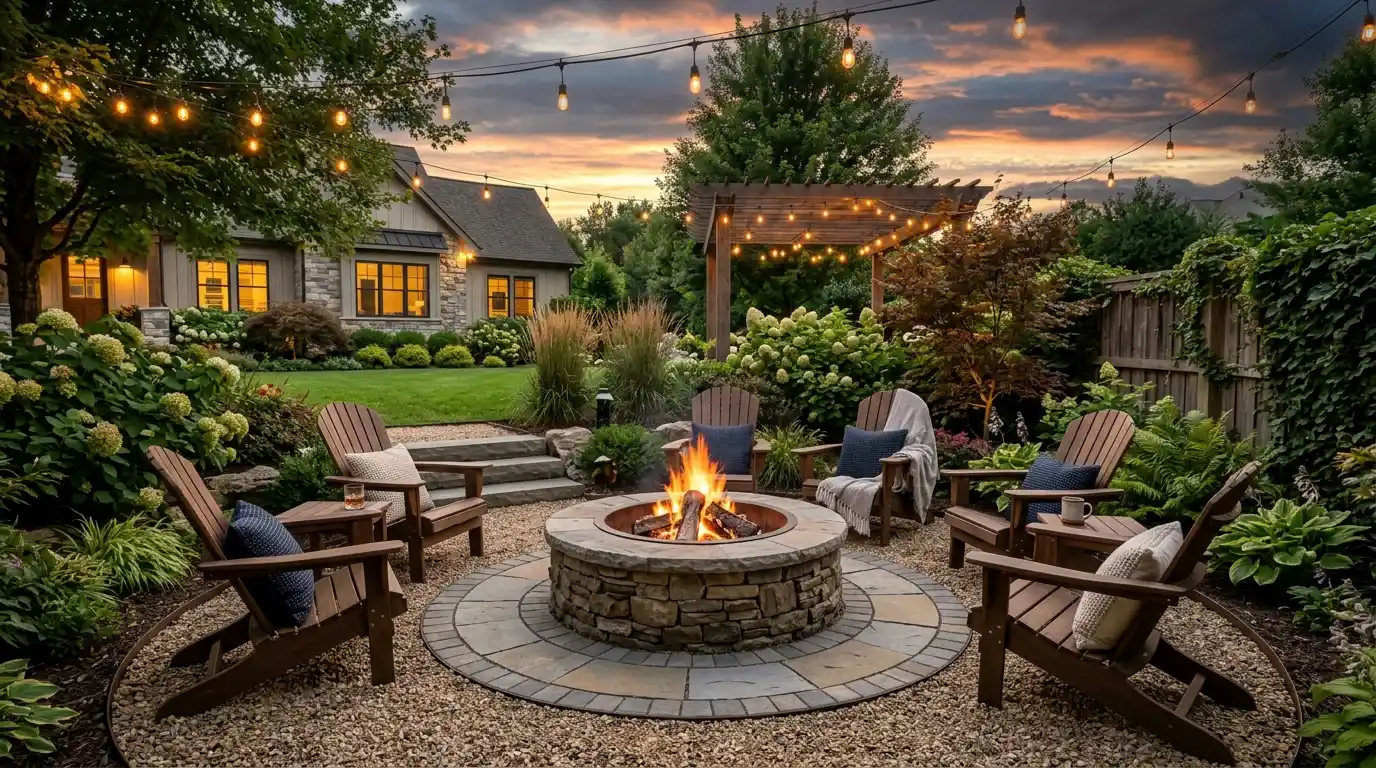
Learning how to build a fire pit is one of those outdoor projects that looks straightforward from a distance but hides several genuinely important decisions beneath the surface. I have helped homeowners build fire pits in backyard settings across the UK, USA, Australia, and Canada from simple dry stack stone fire pits on a $100 budget through to mortared brick fire pit builds with built-in seating walls and integrated cooking grates.
The projects that succeed share consistent planning habits. The ones that create problems overflowing ash pans, cracked mortar after the first winter, or sparks reaching nearby structures almost always share the same avoidable preparation failures. This guide covers how to build a fire pit correctly from location selection through to first fire.
Planning Your Fire Pit Build Before Purchasing a Single Material
Planning is where how to build a fire pit projects succeed or fail before construction begins. Fire pit location, fire pit dimensions, local fire pit regulations, and fire pit permit requirements all need resolving before you buy a single bag of refractory mortar or a single retaining wall block. Skipping this stage is the most consistent cause of fire pit construction problems and in some markets, legal problems too.
Every successful DIY fire pit build starts with honest answers to three questions where exactly, how big, and what am I legally allowed to build here.
Fire Pit Location, Setback Rules, and Safety Distance
Fire pit placement relative to structures is the most safety-critical planning decision in any fire pit project. The standard fire pit safety distance requires 10 feet from structures minimum including your house, fences, pergolas, garden buildings, and overhanging tree branches. Fire pit distance from house requirements vary by local fire pit regulations and fire pit code compliance rules, but 10 feet represents the minimum across virtually all jurisdictions. Additionally, fire pit grass clearance and fire pit mulch clearance around the perimeter prevent ember ignition of surrounding ground cover.
UK homeowners must check smoke control area UK designations before committing to a wood burning fire pit build. A smoke control zone fire pit must use smokeless fuel fire pit products or a smokeless fire pit design standard log burning fire pit construction is legally restricted in designated areas. Fire pit planning permission UK requirements vary by local authority. Australian homeowners need to check fire pit council rules for their specific state and territory.
Fire pit HOA rules and fire pit neighborhood rules add further local layers in US markets. Fire pit open burning laws and fire pit ban periods during high fire danger seasons apply across many US states, Australian states, and Canadian provinces always verify current fire pit local laws before your build date.
Fire Pit Size, Dimensions, and Drainage Design
Standard fire pit size for a comfortable backyard fire pit seating area runs 36 inches to 48 inches in diameter. A 36-inch fire pit suits smaller patio designs and intimate fire pit seating configurations. A 44-inch fire pit or 48-inch fire pit suits larger fire pit circle patio arrangements with fire pit bench seating or fire pit chairs around the perimeter. Fire pit wall height of 12 to 24 inches suits most above-ground fire pit designs lower walls suit the sunken fire pit aesthetic while taller walls retain more heat and provide better spark guard function.
Fire pit drainage is a genuinely underappreciated design element. Without fire pit drainage holes at the base and a 6-inch gravel base drainage layer beneath, rainwater collects inside the fire pit bowl, saturates the ash, and accelerates fire pit brick replacement and fire pit mortar repair cycles dramatically. Fire pit base depth should accommodate the gravel base foundation plus any fire pit sand base layer above it. Always excavate to the correct fire pit base depth before laying your first course of fire pit block or fire pit brick.
How to Build a Fire Pit Step by Step Materials and Construction
The actual how to build a fire pit construction process follows a logical sequence once planning is complete. Material selection stone fire pit, brick fire pit, concrete fire pit, or retaining wall block fire pit shapes every subsequent construction decision. Each material produces different thermal mass, different heat retention, and different aesthetic outcomes.
Firebrick lining and refractory mortar represent non-negotiable specifications for any mortared fire pit build.
Choosing Your Fire Pit Materials and Laying the Foundation
The most accessible how to build a fire pit material for most DIYers is the concrete block fire pit or landscaping block fire pit using retaining wall blocks from brands including Pavestone fire pit block, Oldcastle fire pit, and Belgard fire pit. These blocks require no mortar for a basic dry stack fire pit the weight and interlocking geometry hold the structure together adequately for most residential fire pit builds. However, a mortared fire pit using fire pit refractory mortar and firebrick lining delivers significantly better heat resistant fire pit performance and longer structural lifespan.
Natural stone fire pit builds using fieldstone fire pit, river rock fire pit, or stacked stone fire pit configurations create the most visually organic garden fire pit aesthetic. Flagstone fire pit and slate fire pit designs suit contemporary and Mediterranean fire pit ideas particularly well. For any fire pit using mortar, always specify fire pit refractory cement or fire pit heat resistant mortar standard building mortar cracks under thermal cycling and requires fire pit repointing after very few uses. High temperature brick or fire rated materials for the interior firebrick lining protect the outer decorative stone or brick fire pit from direct flame contact and dramatically extend the overall fire pit lifespan.
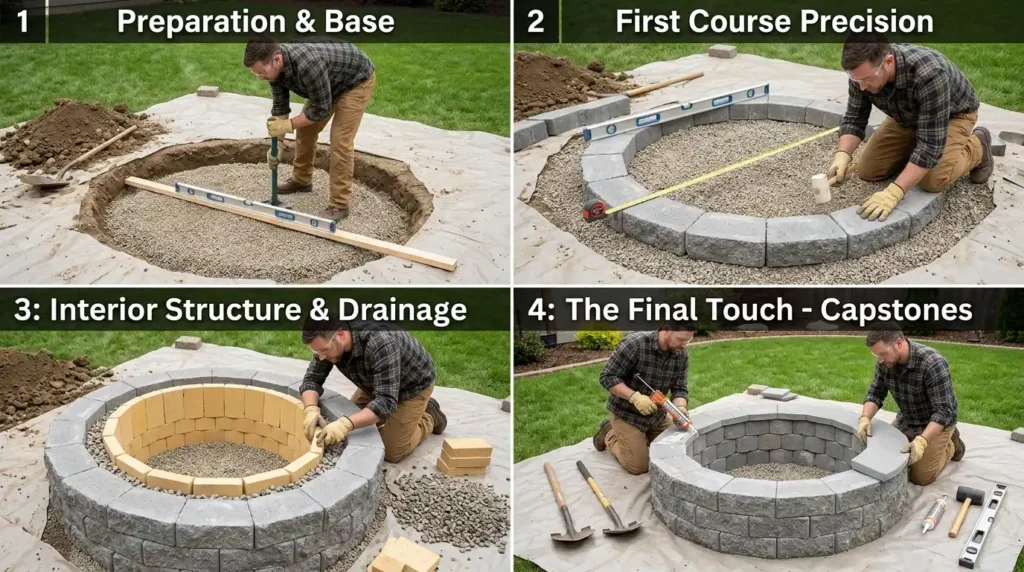
Start with your fire pit ground preparation mark the fire pit circumference with spray paint or a string line from a central stake. Excavate to the required fire pit foundation depth. Install your 6-inch gravel base drainage layer and compact it firmly. Lay your first course of fire pit block or brick on the compacted gravel base, checking level continuously.
Build each subsequent course using fire pit brick laying pattern staggered joints prevent structural weakness. Install fire pit air holes at the base course to ensure fire pit airflow and fire pit ventilation throughout the combustion zone. Cap the final course with fire pit capstone or fire pit coping that extends slightly beyond the wall face for a finished appearance.
Fire Pit Cooking, Accessories, and Finishing the Surround
Once the fire pit construction is complete, fire pit accessories transform a basic fire pit bowl into a genuinely functional outdoor room focal point. A fire pit cooking grate installed across the fire pit ring turns your build into a fire pit BBQ capable of grilling over hardwood coals. A fire pit rotisserie attachment expands the fire pit cooking capability further. Fire pit log grate elevation improves fire pit airflow under the firewood, producing a cleaner burn and better fire pit draft performance.
Fire pit spark screen and fire pit spark guard covers are essential safety additions particularly for fire pit child safety and fire pit pet safety around the build. A fire pit weather cover or fire pit cover waterproof protects the structure during wet weather and extends fire pit brick replacement and fire pit mortar repair intervals significantly. Fire pit tool set components including fire pit poker, fire pit tongs, and fire pit ash pan all belong within arm’s reach of any functioning fire pit seating area.
The fire pit area paving surround completes the overall fire pit patio design. Fire pit paver circle kits from Allen and Roth fire pit or Pavestone fire pit kit ranges provide pre-cut paver fire pit surround systems that produce professional circle patio results without complex cutting. Alternatively, fire pit flagstone surround or fire pit gravel surround installations suit more naturalistic garden fire pit aesthetics. Fire pit hardscaping and fire pit softscaping combined incorporating fire pit heat tolerant plants at the outer perimeter and fire pit lighting for night garden ambiance creates a complete fire pit outdoor living space that functions as a genuine extension of the home.
Wood Burning, Gas Conversion, and Fire Pit Fuel Choices
Understanding fuel options is an important dimension of how to build a fire pit planning. A wood burning fire pit using seasoned firewood produces the most authentic fire pit atmosphere and fire pit ambiance the crackle, smell, and visual quality of a log burning fire pit is genuinely unmatched. Use dry wood fire pit fuels hardwood fire pit options including oak firewood fire pit, ash firewood fire pit, and birch firewood fire pit all burn cleaner and longer than softwood fire pit alternatives. Fire pit teepee method, fire pit log cabin method, and fire pit upside down fire method all produce different combustion characteristics worth experimenting with once your build is complete.
Gas fire pit and propane fire pit conversions offer convenience, smokeless fire pit operation, and instant ignition through fire pit ignition and fire pit pilot light systems. Fire pit gas burner and fire pit gas ring installations require fire pit gas line connection by a qualified gas engineer never DIY a fire pit gas conversion without professional certification.
Fire pit BTU output determines heat production specify carefully for your fire pit size and intended use. Bioethanol fire pit and fire pit gel fuel options provide smokeless alternatives that suit smoke control zone fire pit restrictions without gas line infrastructure requirements. Fire pit lava rocks and fire pit fire glass provide decorative fire pit fuel bed aesthetics for gas and bioethanol builds.
Conclusion
How to build a fire pit successfully comes down to planning honestly before picking up a single tool. The how to build a fire pit projects that deliver years of safe, enjoyable use consistently share the same foundations correct location with proper fire pit safety distance observed, appropriate fire pit dimensions for the space and seating, legal compliance with local fire pit regulations and smoke control area UK or equivalent rules, proper fire pit drainage design, quality fire rated materials including firebrick lining and refractory mortar, and thoughtful fire pit accessories selection.
Whether you build a simple dry stack stone fire pit for $50 to $100 this weekend, a mortared brick fire pit with built-in seating wall for $500, or commission a professional fire pit contractor for a custom fire pit build at $1,000 and above, the principles remain the same. Build it right, maintain it properly, and a well-constructed fire pit becomes one of the most used and most loved features in any backyard or garden.
Frequently Asked Questions
Q1: How much does it cost to build a fire pit?
DIY fire pit build cost varies enormously by material and complexity. A simple concrete block fire pit or dry stack retaining wall block fire pit costs $50 to $150 in materials. A mortared brick fire pit with firebrick lining and capstone coping runs $300 to $600. A fire pit with built-in seating wall and fire pit paver circle surround typically costs $500 to $1,500 in materials. Professional fire pit installation by a fire pit landscaper or fire pit contractor adds $500 to $2,000 in labor depending on complexity and market. Fire pit cost UK, fire pit cost USA, fire pit cost Australia, and fire pit cost Canada all reflect local material and labor rate variations within these broad ranges.
Q2: Do I need a permit to build a fire pit?
Fire pit permit requirements vary significantly by location. Many residential jurisdictions permit a backyard fire pit without formal fire pit building permit requirements provided it meets fire pit setback rules and fire pit safety distance minimums. However, fire pit planning permission UK may apply in certain circumstances. Fire pit council rules Australia vary by state and territory. US fire pit HOA rules and fire pit neighborhood rules add local layers beyond municipal code. Always check your specific fire pit local laws before construction a five-minute call to your local authority prevents significant legal complications.
Q3: What is the best material for a DIY fire pit?
Retaining wall blocks from brands like Pavestone fire pit block, Oldcastle fire pit, and Belgard fire pit represent the best balance of cost, availability, and ease of construction for most how to build a fire pit projects. They require no mortar for a functional dry stack fire pit, cost less than natural stone fire pit alternatives, and produce a clean finished appearance. For longevity and heat resistant fire pit performance, a mortared firebrick lining inside any block or stone fire pit build significantly extends the structural lifespan by protecting outer decorative materials from direct thermal cycling damage.
Q4: Is a wood burning fire pit legal in the UK?
A wood burning fire pit in a smoke control area UK or smoke control zone fire pit designation is legally restricted. Standard log burning fire pit use in a designated smoke control area requires smokeless fuel fire pit products or a specifically approved smokeless fire pit appliance. Fire pit smoke control area UK rules are enforced by local councils and carry financial penalties for non-compliance. Outside smoke control zones, a garden fire pit in the UK operates under general fire pit regulations and responsible use guidance rather than specific licensing requirements though fire pit planning permission UK may apply in conservation areas or for permanent structures above certain dimensions.