
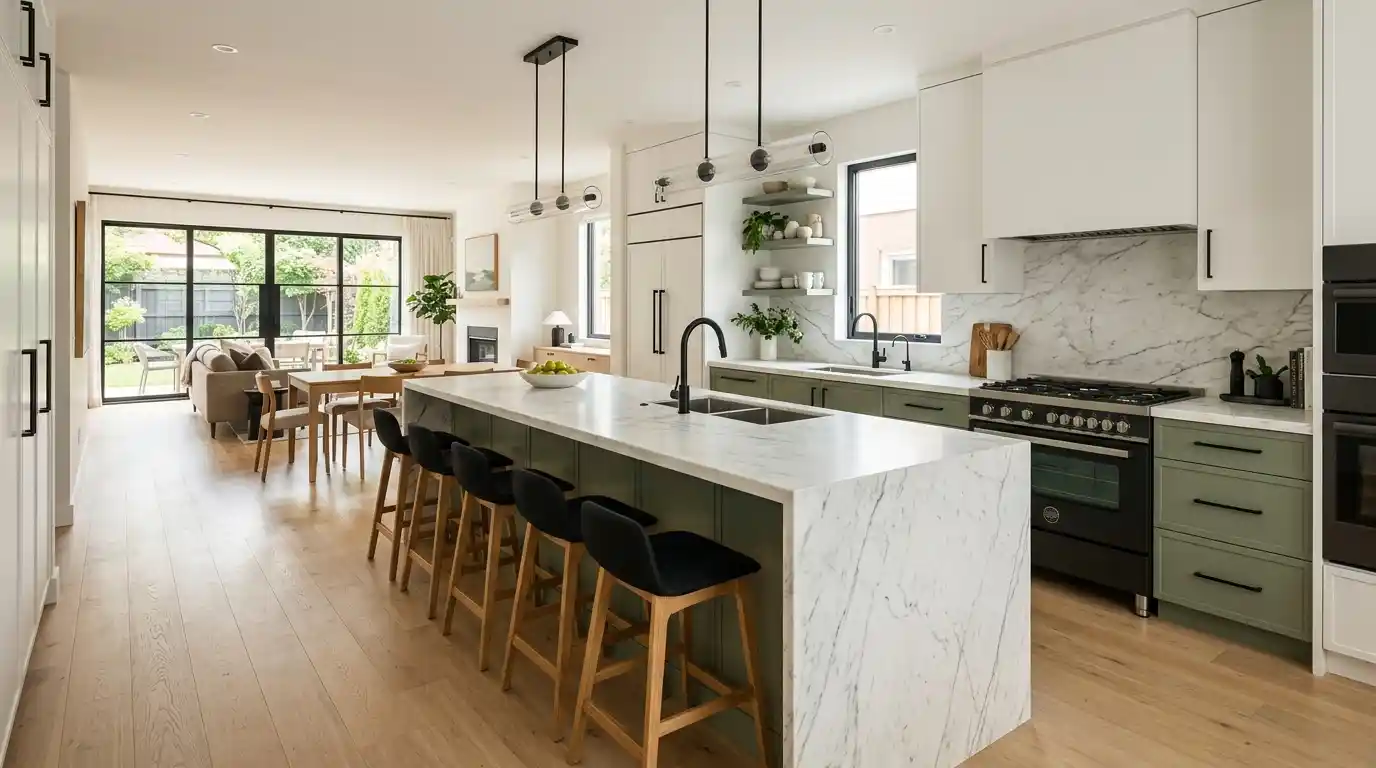
There is a moment in almost every kitchen renovation when someone asks the question what if the island was a different color? That single question is usually where two tone kitchen cabinets begin. Not with a mood board or a Pinterest scroll, but with a gut feeling that the kitchen could hold more personality than a single color across every surface allows.
And they are right. Done well, two-toned cabinetry is one of the most effective ways to inject life, depth, and genuine character into a kitchen without rebuilding it from the ground up.
What Are Two Tone Kitchen Cabinets
Tow tone kitchen cabinets just mean that the color of your kitchen cabinets depends on their placement. It usually implies that the color of your island cabinets differs from that of your upper and lower cabinets or base cabinets differ in color from those above the walls.
It operates according to a simple but elegant concept. Pick one dominant color from the following list blue, sage green, navy, charcoal, black, or any pastel that appeals to you and pair it with a single neutral hue white, off-white, vanilla, or wood to create harmony and balance. The former becomes the main accent while the latter maintains the design cohesively without conflicting with the dominant.
While this trend began in 2000, it shows no sign of stopping. In fact, what has changed over time is not the idea itself but the colors used. From the onset of the pandemic up until recently, shades of gray, beige, and other neutral tones took center stage. Now that folks have had enough of that monochromatic look, the two-tone kitchen design trend comes as a breath of fresh air.
Why Choose Two Tone Kitchen Cabinets
There are four genuinely good reasons to choose contrasting colors for your kitchen cabinets and none of them are purely aesthetic.
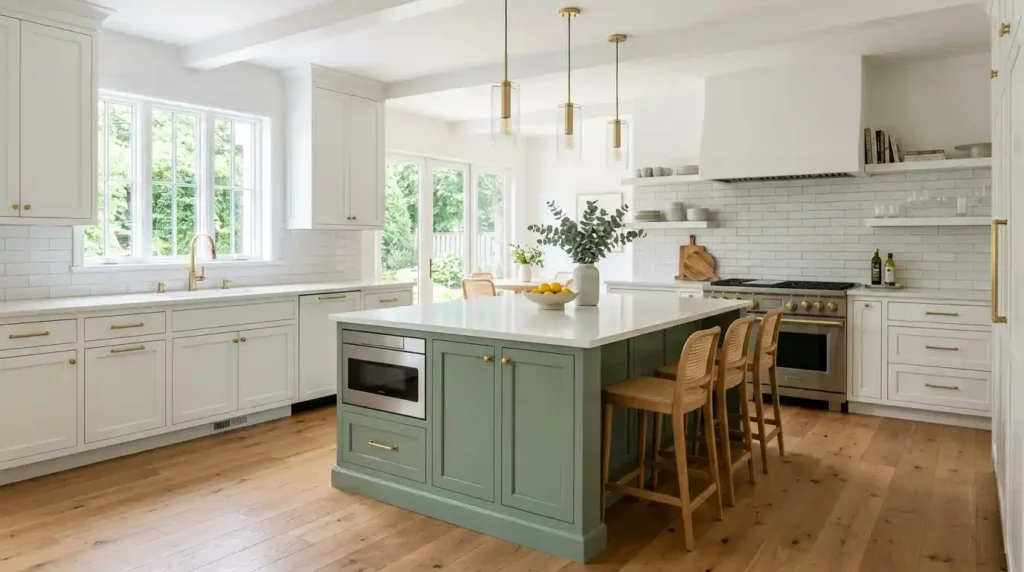
First, mixing and matching cabinet colors adds brightness and warmth to the room that a single flat color scheme simply cannot. Color genuinely affects mood a kitchen with a rich sage green island and white upper and lower cabinets feels more alive and inviting than the same kitchen painted the same shade throughout.
Second, it is an opportunity for personal expression in a room that is often dominated by purely functional decisions. Your kitchen is where you spend real time cooking, eating, talking. It should feel like yours.
Third, when two-toned cabinets are done correctly with professional help and the right color combination, they add measurable resale value. Buyers who walk into a well-executed two-tone kitchen almost always respond positively, especially when they haven’t encountered it done well before. It reads as design confidence rather than experiment.
Fourth and this one matters it is simply more fun to live in.
How to Choose Two Tone Cabinet Colors
Start with the question you feel most strongly about do you know the color you love, or do you know the neutral you want as your base?
If you already love white, you are in luck. White as your neutral works with almost any accent color you can name sage green, navy blue, periwinkle, sea blue, mint, turquoise, charcoal, black, and every pastel in between. If you are working with a designer, hand that decision to them and let their expertise drive the pairing. Designers are particularly good at knowing which colors will work together at scale and which will fight each other once the cabinets are installed.
Scandinavian Style Two Tone Kitchen Design
The color combination that is generating the most excitement right now is sage green island cabinets paired with white upper and lower cabinets on a Scandinavian natural wide plank wood floor. It is warm, confident, and genuinely beautiful. Close behind it are navy and white combinations, mint and vanilla pairings, and lighter tones set against black or charcoal accents particularly quarter-sawn oak mixed with a black stain in larger kitchens.
Once you have your accent and neutral locked in, four more decisions shape the final result. Flooring should complement rather than compete a warm light-colored Scandinavian natural wide plank wood or a contemporary 30×30 white tile both work well. Avoid darker floors where dust and pollen are a factor because they require almost daily cleaning to look presentable.
The backsplash is your opportunity to tie the accent and neutral together it could reflect the sage from the island, introduce a 3D textured tile, or stay monochromatic and light to let the cabinets do all the talking. Countertops should remain neutral because the cabinets already provide the main color focus. And kitchen cabinet hardware black handles, gold cabinetry hardware, or matte black cabinetry hardware pulls the whole scheme together and adds the finishing layer of contrast.
Upper vs Lower Cabinet Colors
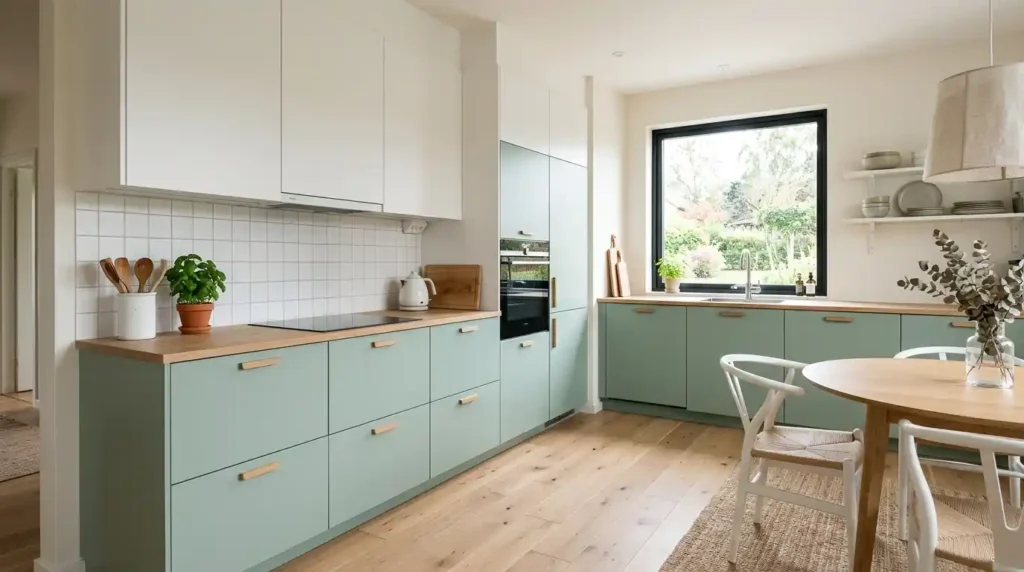
This is where most people need a clear rule and there is one. The darker accent color always goes on the bottom the base cabinets or the island never on top.
When a dark color sits on the upper cabinets it visually pushes the ceiling down and makes the kitchen feel smaller and heavier than it actually is. Dark on the bottom grounds the room naturally. It gives the kitchen a sense of visual weight in the right place anchored below, lighter above. This is why black base cabinets with white upper cabinets feel sophisticated while the reverse feels uncomfortable.
When combining different colors for upper and lower cabinets instead of using only the island as an accent, the accent color should be applied to the lower or base cabinets. The upper cabinets stay in the neutral. If you plan to use the accent color on the island as well, apply it only to the island and base cabinets, not the upper cabinets, unless you have a large, well-lit kitchen and professional design guidance to maintain balance.
Black and White Two Tone Kitchen Cabinets
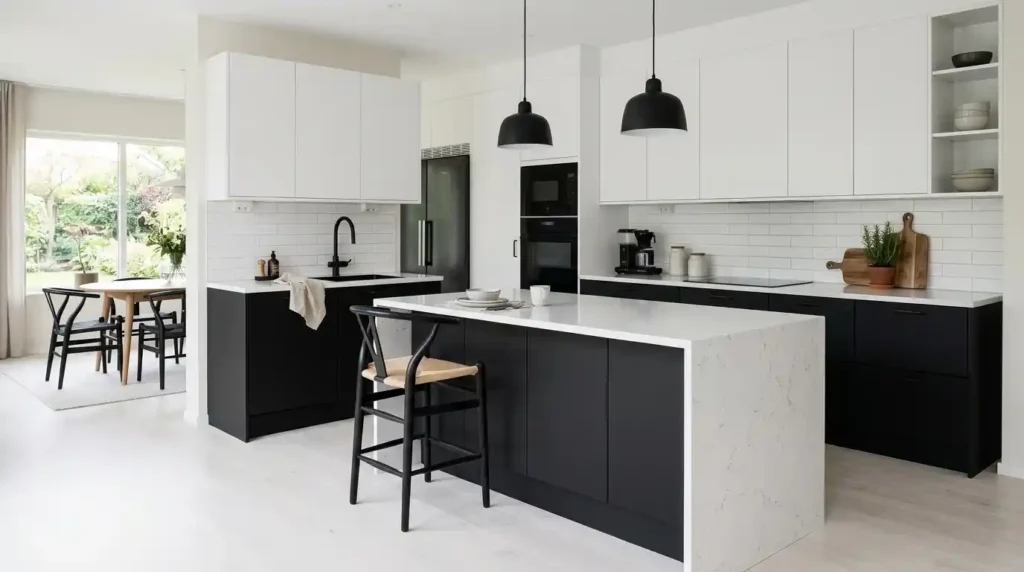
Black and white kitchen cabinets have been popular since 1982. That is not a typo. This particular combination resurfaces as a dominant trend every 5 to 10 years because it genuinely never goes out of style it just refreshes itself. Right now it is doing exactly that, turning up in contemporary open plan kitchens with paneled Sub Zero fridges, ceiling mounted hoods, matte black cabinetry hardware, and light LVP floors.
The rule applies here too. Black on the bottom cabinets, white on top. If there is an island, black goes on the island. Adding black handles and fixtures to the white upper cabinets creates a striking visual connection between the two zones without needing to paint everything dark. A Scandinavian white wood floor anchors the whole thing beautifully clean, light, and modern. You could pair it with checkerboard flooring but you do not have to. The scheme works without it.
Kitchen Island Two Tone Ideas
The island is the most natural starting point for a two-tone kitchen cabinet design. Most homeowners begin here because it is a smaller commitment you are testing the accent color on one element before committing it to the entire lower cabinet run.
A blue island with white upper and lower cabinets is the classic combination. French blue, royal blue, periwinkle, navy all of them work against white. A green island sage green, mint, or a deeper hunter green brings warmth and a nature-inspired quality that white cabinets amplify. A wood island quarter-sawn oak, natural wood melamine, or a warm walnut stain brings organic texture into a painted kitchen. A gray island bridges the gap between bold and neutral. A turquoise island in a Lafayette-style contemporary kitchen adds playfulness without losing sophistication.
In every case, the island functions as the focal point that draws the eye when you enter the kitchen. It organizes the visual hierarchy of the space. Everything else the flooring, backsplash, hardware, countertop material orbits around it.
Dark Accent Colors for Two Tone Cabinets
Dark accent colors charcoal, black, deep navy, forest green require a big airy kitchen with enough natural light to prevent the space from feeling cramped and unpleasant. Dark swallows light. If you have an all-black kitchen, it will feel heavy and dark unless you add significant interior lighting and even then, once the sun sets the artificial lighting has to work very hard to compensate.
Lifestyle matters here too. Dark cabinets show dust, pollen, and everyday dirt significantly more than lighter finishes. If you have a millennial family with kids coming in and out all day or you like to keep windows open, dark colors will require you to clean them every two to three days to keep them looking intentional rather than neglected. If you have regular professional cleaning help, this is less of a concern.
On lighting tone pay attention to this one. Warm lighting in a blue kitchen will pull the blue toward purple. If blue is your accent color, cooler lighting keeps it reading correctly. Ask your designer or electrician if you are unsure what tone your current lighting is producing.
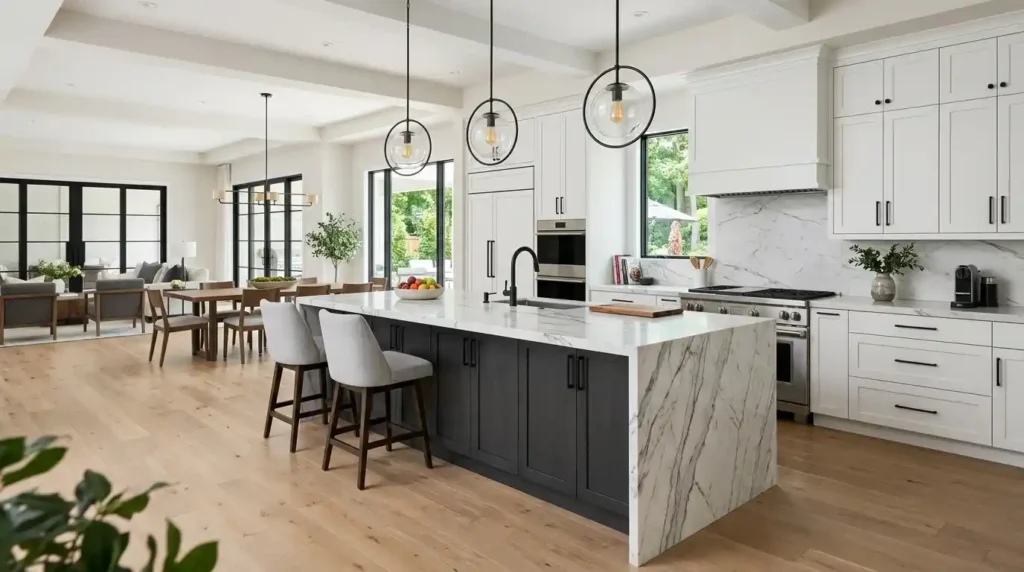
Three Color Kitchen Cabinets
Three-color kitchen cabinets are very much in style but they require the right conditions to work. Specifically a very large kitchen. They will not function in a U-shaped or galley kitchen where the layout already creates visual challenges.
In a 3-color scheme the structure is clear. One big, loud, vibrant, or bold color. One neutral. One accent color that is always a lighter tone. Italian-inspired kitchens handle this arrangement particularly well floating cabinets with lights underneath, a table that slides off the island, full-extension drawers, and cabinet interiors that are as considered as their exteriors. The third color is usually introduced through the interior of glass-front cabinets or through a carefully chosen accent element so it reads as deliberate layering rather than confusion.
Popular Two Tone Kitchen Color Combinations
Three color pairings are dominating kitchens across all generations right now.
Blue from periwinkle through sea blue to navy with white. This is the most consistent performer across kitchen sizes and styles. Sage and mint tones with warm vanilla or off-white. This combination is having a particular moment right now for its warmth and organic quality. Blue or green tones with light wood quarter-sawn oak, natural wide plank, warm walnut which brings natural texture into the color story in a way that painted combinations alone cannot.
Trending alongside these in 2025 are lighter warm neutrals set against black or charcoal accents, earthy greige tones with warm wood, and modern farmhouse kitchens with bold single-color islands in forest green or deep navy against crisp white perimeter cabinets on a light LVP floor.
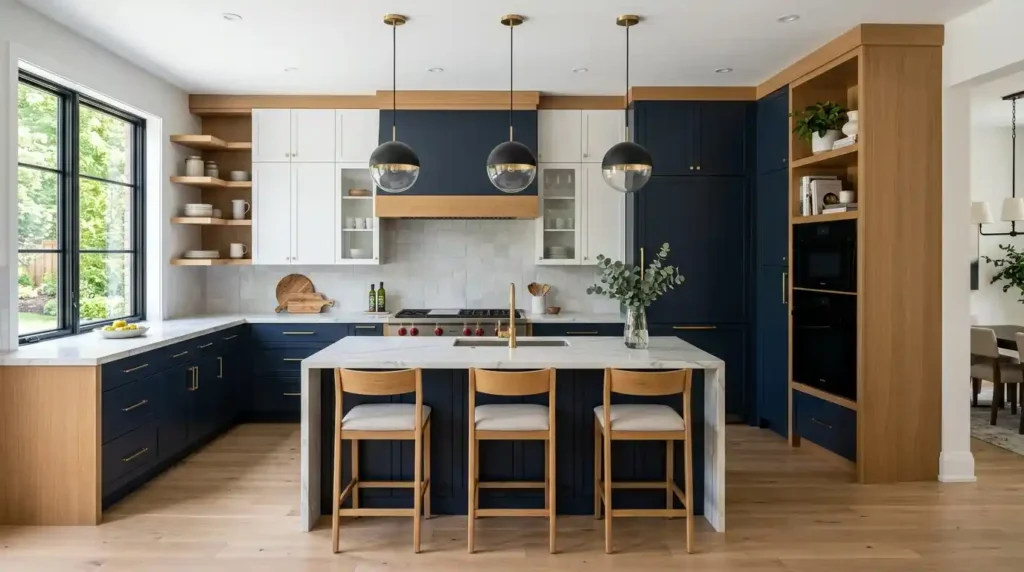
Two Tone Kitchen Cabinet Design Tips and Mistakes to Avoid
The only times two tone kitchen cabinets tips really don’t work are in small kitchens without exact color matching and enclosed U-shaped kitchens without symmetry. If the kitchen is small, the colors that aren’t carefully selected just make it look crowded and stressful instead of bright and happy. The difficulty is further complicated by the question of how to deal with the tall pantries and appliances, whether to match them to the walls or the base.
If the U-shaped kitchen does not have upper cabinets around all three sides, the effect is lopsided, and there’s nothing that can be done to fix it.
In all the other instances, be it a large kitchen, L-shaped kitchen, open plan kitchen, transitional kitchen, contemporary kitchen, or even a galley kitchen with an island, a two-tone kitchen done right with the right amount of expertise and help from professionals will yield an outcome that makes the kitchen better in all ways. It’s okay to reconsider past decisions when things aren’t going well. That’s what good designers anticipate. Your aim should be an integration of elements including flooring, back-splash, countertop materials, cabinet hardware, and lighting, all of which complement the two accent colors and one neutral color you choose.
Conclusion
Two-tone kitchen cabinets work because they address an issue that a monochrome kitchen will always fail to tackle: how to transform an entirely utilitarian space into one that is deeply personal, textured, and vibrant. It’s simple really: darker tones for either the base cabinets or the island unit; whites or other neutral shades for the upper cabinets; fixtures that bridge both worlds; flooring and splashback that complement rather than compete; and neutral countertops that allow the cabinets to stand out.
Get the basics right, and everything else falls into place. Be it an olive green island paired with white perimeter cabinets or a more dramatic black and white combination, complete with matte black hardware and light-colored hardwood vinyl plank flooring, the end product is unmistakably the product of deliberate design rather than a fleeting trend.
FAQs
Two tone kitchen cabinets use two different colours or finishes in the same kitchen, often with a contrasting island or different colours for upper and lower cabinets. They have become popular because they add depth, personality, and visual interest compared with a single-colour kitchen design.
Start by selecting either a favourite accent colour or a neutral base, then create balance between the two. Popular combinations include sage green with white, navy with lighter tones, and wood finishes paired with neutral shades.
In most two-tone kitchen designs, darker colours work best on lower cabinets or the island because they ground the space. Keeping upper cabinets lighter helps the kitchen feel more open and prevents the ceiling from appearing lower.

4 thoughts on “Two Tone Kitchen Cabinets by Dr Homey | The Complete Guide to Styles, Materials, Finishes, and Smart Storage for Every Kitchen”