
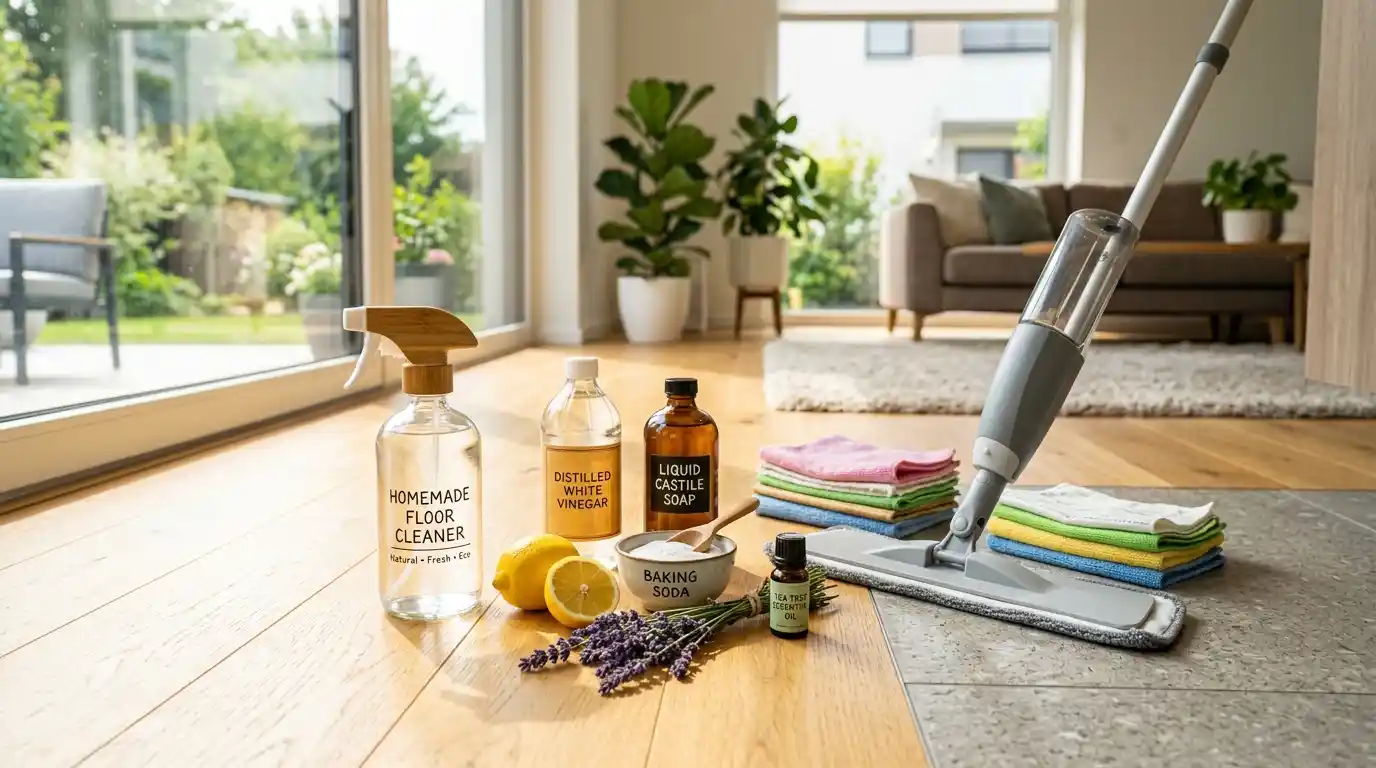
Creating your own do-it-yourself floor cleaner is just one of those simple choices that builds up to become a truly valuable money saver and healthy choice in the long run. An average family spends between $200 and $400 per year on store-bought floor cleaners, most of which consist of artificial fragrances, toxic surfactants, and chemical preservatives that stay behind on surfaces where children crawl around and pets tread every day.
After having used countless home recipes for floor cleaners on different surfaces such as hardwood floors, laminate floors, vinyl floors, tile floors, and natural stone floors throughout many years, I can confidently say that there exists the right home recipe for floor cleaners that beats almost all commercial cleaners in terms of performance.
The Natural Ingredients That Make Every DIY Floor Cleaning Solution Work
Understanding how each natural cleaning ingredient works helps you avoid common DIY floor cleaning mistakes, such as using vinegar on marble floors, adding too much dish soap, or mixing a solution that leaves behind a dull, sticky residue. An efficient floor cleaning solution is always a combination of a few simple ingredients each serving a unique purpose.
The key to making efficient home remedies for floor cleaning lies in getting the right proportion and ingredients for the particular type of floor.
White Vinegar, Castile Soap, and Baking Soda What Each Actually Does
Distilled white vinegar is the foundation of the most versatile diy floor cleaning solution recipes. Its mild acidity cuts through grease, dissolves mineral deposits from hard water floor cleaning situations, and produces a streak-free floor cleaner finish on most sealed floor surfaces. Cleaning vinegar vs white vinegar cleaning grade vinegar carries higher acidity at 6 percent versus standard white vinegar at 5 percent, making it more effective for a diy floor cleaning solution concentrate on heavily soiled floors.
However, the vinegar on hardwood floors warning and vinegar on marble warning are both legitimate undiluted or repeated vinegar application strips the finish from sealed hardwood and etches natural stone surfaces permanently. Always dilute correctly and never use vinegar-based diy floor cleaning solution on unsealed hardwood, marble floor, travertine floor, or granite floor surfaces.
Liquid castile soap Dr Bronner floor cleaner being the most widely available castile soap brand globally provides gentle surfactant action without the dish soap residue floor problem that standard washing-up liquid creates. Castile soap floor cleaner rinses cleanly, leaves no sticky residue, and suits a chemical-free floor cleaner approach on every floor type including LVP floor cleaner and engineered wood floor cleaner applications. Baking soda sodium bicarbonate adds gentle abrasive cleaning action useful in a tile floor cleaner DIY or grout cleaner homemade context. However, the baking soda abrasive warning applies never use baking soda directly on polished stone floor, waxed hardwood, or glossy laminate floor surfaces where micro-scratching will dull the finish permanently.
Essential Oils, Hydrogen Peroxide, and Rubbing Alcohol
Essential oils elevate a basic diy floor cleaning solution from functional to genuinely pleasant to use. Tea tree oil antibacterial properties make it the most effective antimicrobial essential oil addition 10 drops per litre produces a meaningful antibacterial floor cleaner natural effect without overpowering fragrance. Lavender essential oil floor cleaner blends produce a relaxing scent that makes weekly floor cleaning routine feel less like a chore. Peppermint essential oil refreshing quality suits kitchen floor cleaning particularly well. Eucalyptus floor cleaner combinations provide eucalyptus oil antimicrobial reinforcement alongside a clean fresh scent. Orange essential oil floor cleaner blends cut grease effectively on kitchen tile floor and concrete floor surfaces.
Hydrogen peroxide 3 percent the standard pharmacy concentration creates a powerful disinfecting floor cleaner natural option for tile grout cleaner DIY applications and sanitizing floor solution homemade needs during flu season. Isopropyl alcohol 70 percent adds fast-drying, germ-killing floor cleaner homemade performance to any diy floor cleaning solution spray bottle recipe particularly effective for vinyl floor cleaner DIY and LVT floor cleaner homemade formulas where quick-drying performance matters. Rubbing alcohol floor cleaner additions also address the streak-free floor cleaning solution requirement by accelerating evaporation and preventing water marks on high-gloss surfaces.
DIY Floor Cleaning Solution Recipes by Floor Type
The most important principle in diy floor cleaning solution formulation is matching the recipe to the floor type. A hardwood floor cleaner DIY recipe differs fundamentally from a tile floor cleaner DIY or a natural stone floor cleaner homemade formula. Using the wrong diy floor cleaning solution even one made from entirely natural ingredients causes damage that accumulates invisibly until the floor finish fails entirely.
Each floor type requires specific consideration of pH, abrasiveness, and residue risk before any cleaning formula is applied.
Hardwood, Laminate, and Vinyl Floor Recipes
The best diy floor cleaning solution for hardwood floor cleaning uses minimal liquid excess moisture causes wood swelling, joint separation, and finish lifting over time. Combine 1 litre warm water, 2 tablespoons liquid castile soap, and 10 drops essential oil floor cleaner blend of your choice in a spray mop solution DIY bottle. Apply sparingly with a microfiber mop never a string mop or sponge mop that deposits excessive water. This no-rinse floor cleaner formula dries quickly, leaves no floor cleaner residue, and produces a consistent streak-free floor cleaner result on both sealed hardwood floor and engineered hardwood floor cleaning applications.
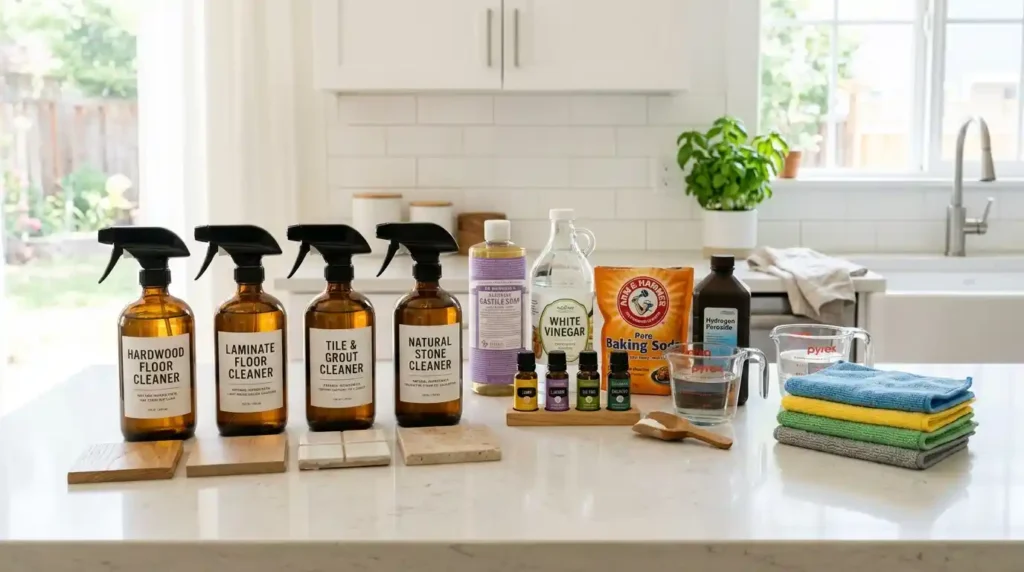
Laminate floor cleaning solution homemade requires even less moisture and zero vinegar. Combine 1 litre distilled water, 1 tablespoon castile soap, 1 tablespoon rubbing alcohol, and 5 drops lavender oil. The isopropyl alcohol floor cleaner component ensures fast drying that prevents laminate joint swelling. For luxury vinyl plank floor cleaner and LVP floor cleaner DIY applications, the same formula works excellently vinyl floor cleaning solution tolerates slightly more liquid than laminate but still benefits from the quick-dry alcohol addition. This diy floor cleaning solution works perfectly as a Swiffer solution DIY refill and Bona floor cleaner dupe homemade replacement delivering equivalent performance at a fraction of the cost.
Tile, Grout, and Natural Stone Floor Recipes
Tile floor cleaner DIY recipes can handle more aggressive ingredients than wood-based floors. For ceramic tile cleaner homemade and porcelain tile cleaner DIY applications, combine 1 litre warm water, 60ml distilled white vinegar, 1 tablespoon dish soap, and 10 drops tea tree oil antibacterial. This produces a disinfectant floor cleaner DIY that tackles kitchen grease, bathroom soap scum, and general tile floor soiling effectively. For grout cleaner homemade applications, create a baking soda grout cleaner paste using baking soda sodium bicarbonate and hydrogen peroxide 3 percent in equal parts apply directly to grout lines, leave for 10 minutes, and scrub with a stiff brush before rinsing.
Natural stone floor cleaner homemade requires the most careful formulation. Never use vinegar on natural stone the vinegar on marble warning and vinegar on travertine surface etching risk are both serious. Instead, combine 1 litre warm water with 2 tablespoons castile soap and 5 drops peppermint essential oil for a pH-neutral stone floor cleaner DIY that cleans effectively without etching polished surfaces. This formula suits marble floor cleaner DIY, granite floor cleaner homemade, slate floor cleaner DIY, and travertine floor cleaner applications equally. Additionally, terrazzo floor cleaning solution benefits from the same neutral castile soap base the hydrogen peroxide grout cleaner component addresses any grout discoloration in terrazzo without damaging the stone aggregate surface.
Mopping Technique, Equipment, and Routine for Best Results
The best diy floor cleaning solution produces disappointing results when applied with poor technique or wrong equipment. Mopping technique matters as much as formula composition and most homeowners apply significantly more solution than any floor surface actually needs. The floor cleaner too much soap problem and floor cleaner residue removal requirement both stem directly from over-application rather than formula error.
Consistent floor cleaning routine and proper floor preparation before mopping determine the final result more reliably than ingredient selection alone.
Mop Selection and Double Bucket Technique
Microfiber mop systems deliver the best results with any diy floor cleaning solution. Unlike string mop and sponge mop alternatives, microfiber mop heads apply minimal liquid, trap fine particles effectively, and release cleaning solution evenly across the floor surface. A spray mop solution DIY approach loading your homemade floor cleaning solution into a built-in spray bottle reservoir provides the most controlled application for hardwood floor cleaner DIY and laminate floor cleaning solution homemade use cases.
The double bucket mopping technique prevents redepositing dirty water across clean floor sections one mop bucket containing your diy floor cleaning solution, a second containing clean rinse water. The figure-eight mopping technique distributes the floor cleaning mixture evenly without streaking. Always mop with grain hardwood when cleaning sealed wood floors moving the flat mop parallel to the wood grain direction prevents micro-scratching of the finish. Sweep before mopping or vacuum before mopping to remove loose debris applying wet diy floor cleaning solution over unswept grit acts as an abrasive that scratches every floor type.
Floor Cleaning Schedule and Seasonal Routine
Daily floor cleaning for high-traffic areas using a dry mop before wet mop sequence maintains floor condition between deeper cleans. Weekly floor cleaning with your chosen diy floor cleaning solution handles routine soil buildup. Monthly floor cleaning with a slightly stronger floor cleaner concentrate homemade addresses accumulated residue and restores floor cleaner for shine performance on dull floors. Seasonal floor cleaning during spring clean cycles includes moving furniture cleaning, spot clean floor stains treatment, and clean baseboards cleaning as part of the comprehensive routine.
Floor cleaning after renovation and floor cleaning new home situations benefit from a stronger diy floor cleaning solution formula renovation dust creates a fine abrasive film that standard weekly mopping solution dilutions do not remove effectively on first pass. Floor cleaning rental property handover requires a disinfecting floor cleaner natural formula to satisfy tenancy agreement cleanliness standards without leaving commercial chemical residues that affect the next occupant.
Conclusion
A well formulated diy floor cleaning solution does everything a commercial product does cleans effectively, sanitizes reliably, and leaves floors streak-free while eliminating synthetic chemicals, reducing packaging waste, and cutting cleaning costs significantly. The diy floor cleaning solution recipes in this guide cover every major residential floor type from hardwood floor cleaner DIY through to natural stone floor cleaner homemade and tile grout cleaner DIY applications.
Match the recipe to the floor type, apply the correct dilution ratio floor cleaner for the soil level, use the right mop type for the surface, and your floors will look better, last longer, and carry none of the chemical residues that affect air quality, pet safety, and baby safety in any home. Start with one recipe this week and the results will make the switch permanent.
Frequently Asked Questions
Q1: What is the best DIY floor cleaning solution for hardwood floors?
The best diy floor cleaning solution for sealed hardwood floor cleaning combines 1 litre warm water, 2 tablespoons liquid castile soap, and 10 drops lavender essential oil or tea tree oil antibacterial blend. Apply sparingly using a microfiber mop never a string mop or sponge mop. The vinegar on hardwood floors warning is legitimate avoid any vinegar-based diy floor cleaning solution on hardwood as repeated use strips the protective finish. This castile soap formula also serves as an effective Bona floor cleaner dupe homemade and works equally well as an engineered hardwood floor cleaning solution.
Q2: Is a DIY floor cleaning solution safe for pets and babies?
A diy floor cleaning solution using castile soap, warm water, and pet-safe essential oils is significantly safer for pets and babies than most commercial floor cleaners. The pet safe floor cleaner DIY and baby safe floor cleaner DIY requirement is met by avoiding synthetic fragrances, bleach, and quaternary ammonium compounds found in many store-bought disinfectant floor cleaners. Tea tree oil requires dilution to safe levels 10 drops per litre poses no risk to pets or babies once dry. The floor cleaner for sensitive skin and floor cleaner for allergies benefit of natural diy floor cleaning solution over commercial alternatives is consistently reported by households making the switch.
Q3: Can I use a DIY floor cleaning solution in a spray mop?
Yes a diy floor cleaning solution works perfectly as a spray mop solution DIY refill. It also functions as a Swiffer solution DIY replacement for Swiffer Wet Jet systems. Use a castile soap and water base with your chosen essential oil blend avoid high vinegar concentrations in spray mop reservoirs as the acidity can damage internal seals over time. The diy floor cleaning solution spray bottle recipe format suits spray mop application perfectly combine 500ml distilled water, 1 teaspoon castile soap, 1 teaspoon rubbing alcohol, and 5 drops essential oil per refill for streak-free floor cleaner results on every use.
Q4: What DIY floor cleaning solution works best for pet stains and odors?
A diy floor cleaning solution combining hydrogen peroxide 3 percent, castile soap, and baking soda sodium bicarbonate addresses both floor stain remover homemade and floor odor eliminator DIY requirements simultaneously. Apply hydrogen peroxide directly to the floor stain area first allow 5 minutes contact time before blotting. Follow with the castile soap diy floor cleaning solution for general surface cleaning. Baking soda floor deodorizer homemade application sprinkle dry, leave 15 minutes, vacuum before wet mopping neutralizes pet odor at the source rather than masking it with scented floor freshener DIY products.