
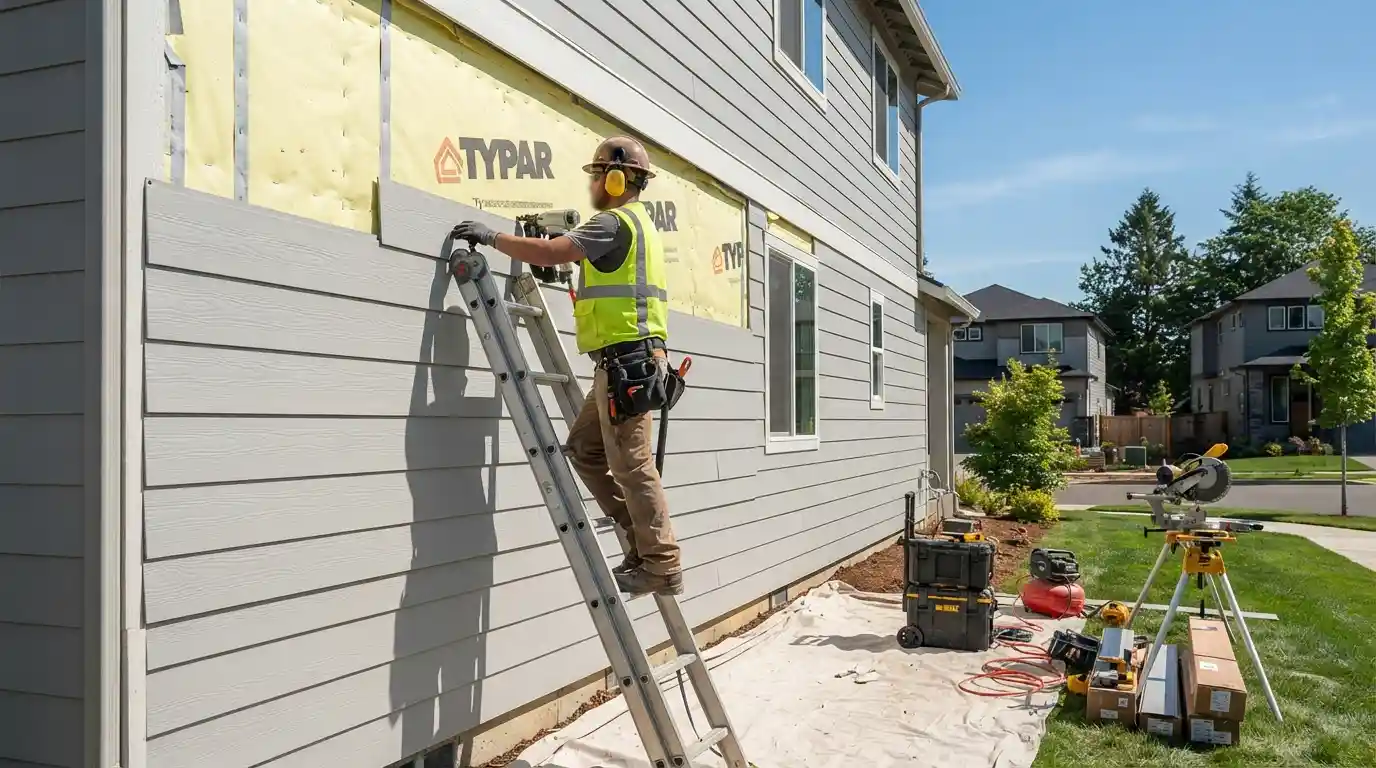
My neighbor Dave got three quotes for his siding job last summer, picked the cheapest one without asking why it was a third less than the others, and found out six months later why. The guy had no insurance, used the wrong nails for his climate, and vanished the second Dave noticed water stains creeping behind a corner board. Dave’s now paying twice what he would’ve paid the first time, once for the bad job and again for someone to fix it. That’s the pattern with siding work more than almost any other home project. The savings on paper rarely survive contact with reality.
Why the Cheapest Siding Quote Usually Costs More Later
Dave’s mistake wasn’t picking a bad contractor on purpose. He just didn’t know what questions actually separate a legitimate siding company from someone who’ll disappear halfway through the job.
Checking Insurance and Licensing Before Anything Else Happens
Every siding contractor operating legally should carry general liability insurance and workers compensation coverage, and asking to see both isn’t rude, it’s basic protection. Dave never asked, and when a worker on his crew twisted an ankle on a ladder, there was no coverage to fall back on, leaving Dave legally exposed on his own property. A quick call to the insurance carrier confirms the policy is actually active, not just a certificate someone printed once and never renewed. Licensing works the same way, though requirements vary quite a bit depending on which state or country you’re in.
Business history matters here too. A contractor who’s been operating locally for a decade or more has a reputation to protect in ways a company that showed up last month simply doesn’t. I always tell people to check if the business has a real, verifiable address, not just a phone number and a logo on a truck. Storm chasers, contractors who show up right after a hailstorm offering suspiciously fast repairs, are notorious for skipping insurance entirely and vanishing once the check clears. None of this vetting is complicated. It’s just a step people skip because the contractor seemed friendly enough during the initial visit.
Reading Reviews the Right Way Instead of Just Skimming Stars
Star ratings alone tell you almost nothing useful about a siding contractor. What actually matters is reading the text of several reviews and looking for patterns rather than isolated complaints. If multiple reviews mention the same issue, running late, poor cleanup, ignoring calls mid project, that’s a real signal rather than one unhappy customer venting. Google reviews and the Better Business Bureau both give a decent starting picture, though I’d also check Angi or HomeAdvisor since contractors sometimes behave differently depending on which platform they’re being reviewed on. References matter more than people assume too.
A contractor confident in their work will happily connect you with two or three past clients, and calling them directly, rather than just reading a testimonial they handed you, tells you far more. Ask a past client one specific question: would you hire this company again knowing what you know now. That single question cuts through polite small talk faster than almost anything else. Photos matter as well, since most legitimate siding companies keep a gallery of completed jobs, and comparing that gallery against houses similar to yours gives a realistic sense of what to expect.
What a Real Siding Quote Should Actually Include
A vague number scribbled on a business card isn’t a quote, it’s a guess, and too many homeowners accept guesses because comparing real numbers feels like extra work.
Getting an Itemized Estimate Instead of One Big Total
A proper written estimate breaks down material costs, labor costs, and disposal fees separately rather than lumping everything into one number. Dave’s cheap quote was a single line item with no breakdown at all, which in hindsight should’ve been the first warning sign rather than the price itself. Getting three to five estimates remains solid advice, since siding replacement nationally runs somewhere between $5,500 and $17,600 depending heavily on home size and material choice. If four quotes land close together and a fifth comes in dramatically lower, that outlier deserves real scrutiny rather than automatic celebration.
A detailed quote should also specify exactly which siding material is being used, since comparing a vinyl bid against a fiber cement bid isn’t really comparing anything at all. Permit fees deserve their own line too, since some contractors quietly fold permitting responsibility onto the homeowner without mentioning it upfront. I’ve seen homeowners get blindsided by a change order midway through a project simply because the original estimate never specified what happens if hidden rot gets discovered once old siding comes off. A good contractor addresses that possibility before it becomes an argument on day three of the job.
Payment Schedules and the Upfront Payment Red Flag
Any contractor asking for the full project cost upfront is, frankly, someone to walk away from immediately. A reasonable down payment, followed by a written payment schedule tied to project milestones, protects both sides fairly. Dave’s contractor asked for half upfront in cash with no receipt, which in hindsight was the second warning sign he brushed past. A legitimate company puts payment installments in writing, specifying exactly what triggers each payment, materials delivered, framing complete, final walkthrough passed. This isn’t about distrust so much as basic accountability that protects everyone involved in the transaction.
If contract language feels confusing or overly vague around payment terms, having a lawyer glance over it before signing costs far less than fixing a bad installation later. The contract itself should spell out start and end dates, though reasonable flexibility for weather delays is normal and shouldn’t be treated as a red flag on its own. What should raise concern is a contractor who pressures you to sign immediately, citing a limited time discount or a slot that’s about to fill up. That kind of urgency tactic is far more common among fly by night operations than established local companies with a steady pipeline of work.
Choosing the Right Material and Specialist for Your Climate
Not every contractor works with every siding material equally well, and picking someone based purely on price while ignoring their actual specialty is how mismatched jobs happen.
Matching the Contractor’s Specialty to Your Siding Material
Vinyl, fiber cement, wood, and aluminum siding each demand genuinely different installation skills, and a contractor who’s spent a decade on vinyl isn’t automatically great at fiber cement. James Hardie’s ALLIANCE program certifies contractors specifically trained in fiber cement installation, and choosing a Preferred or Elite Preferred installer through that program gives some built in reassurance around licensing and insurance. Fiber cement generally holds up better long term than vinyl, resists fire and pests more effectively, and tends to return more value at resale according to recent cost versus value reporting.
That said, vinyl remains the more budget friendly option and performs perfectly well in less extreme climates. A contractor working in a hot, humid region should understand moisture management details that someone in a dry climate might not think about as carefully. I’d always ask directly how many projects a contractor has completed using your specific material, not just their overall years in business. A contractor with quality general experience but limited fiber cement work isn’t necessarily a bad hire, but it’s a detail worth knowing before signing anything.
Warranty Terms That Actually Protect You Long Term
A workmanship warranty from the contractor matters separately from the manufacturer’s warranty on the material itself, and conflating the two is an easy mistake to make. Hardie siding, for example, often carries a 30 year non prorated warranty on the product, though that manufacturer warranty typically becomes void if installation was done improperly. That’s exactly why the installer’s own workmanship warranty matters just as much as what the material manufacturer promises on paper. Ask specifically what happens if something goes wrong two years down the line, who pays for repairs, and whether that coverage is actually documented in writing rather than a verbal assurance.
A contractor confident in their crew’s quality will offer a workmanship guarantee without hesitation, since they’re not worried about needing it. Dave’s contractor offered nothing beyond a handshake, and once the water damage showed up, there was no paper trail to point back to. Reading warranty terms carefully before signing, rather than after a problem shows up, is the difference between a straightforward fix and a drawn out argument over who’s responsible for what.
Conclusion
Dave’s siding disaster wasn’t really about bad luck or an unusually dishonest contractor. It came down to skipping a handful of checks that take an afternoon at most, insurance verification, itemized quotes, real payment terms, and warranty documentation in writing. None of that vetting requires special expertise, just a willingness to ask direct questions before signing anything. Getting those basics right before the crew ever shows up is what actually separates a siding project that adds real value to a home from one that turns into a second, more expensive job down the road.
Frequently Asked Questions
How Many Quotes Should I Get Before Choosing a Siding Contractor?
Most experts recommend getting three to five estimates before deciding, since siding costs vary significantly based on material and regional labor rates. Comparing detailed, itemized quotes side by side reveals far more than comparing bottom line totals alone.
Is It Safe to Pay a Siding Contractor Upfront?
No reputable contractor should ask for the full project cost before work begins. A reasonable down payment followed by a written payment schedule tied to project milestones is the standard, safer approach.
How Do I Know If a Siding Contractor Is Legitimate?
Verify their insurance directly with the carrier, confirm their license with your local building authority, and check reviews across multiple platforms for consistent patterns rather than relying on star ratings alone. A verifiable local business address and history also matter significantly.
What Should I Do If a Siding Quote Seems Unusually Low?
Ask directly what’s different about that estimate compared to others you’ve received. A quote significantly lower than the rest often means cut corners somewhere, whether that’s material grade, insurance coverage, or crew experience.