
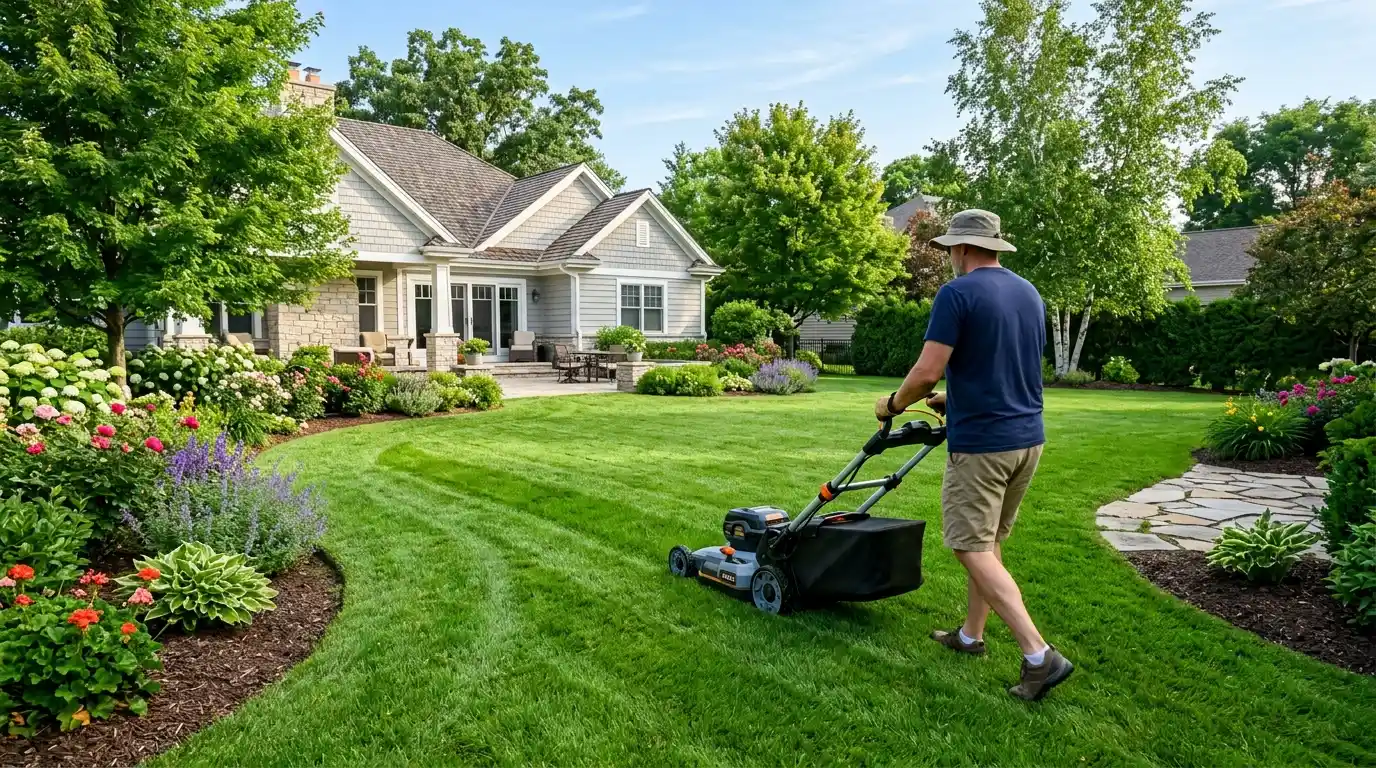
Selecting a new lawn mower appears to be an easy task, but when you begin to search for one, you get confused because of the wide variety of models including zero turn mowers, robots, and many types of engines you have no idea about. This is how I once stood in a hardware store aisle being totally confused about everything. This is exactly the reason why this guide was written.
Matching a Lawn Mower to Your Yard Size and Terrain
Yard size determines almost everything about which lawn mower makes sense for you. Get this step wrong, and you’ll fight your equipment all season long.
Small to Medium Yards Under an Acre
For yards under a quarter acre, a manual reel mower or push mower usually handles things fine. These lightweight machines skip gas entirely, relying purely on operator effort. A self-propelled mower becomes worthwhile once your yard approaches half an acre. Self-propelled drive systems let you steer without pushing against resistance constantly. Electric mower and cordless mower options work beautifully here too, especially corded electric mower models for compact spaces. Battery-powered mower technology has genuinely improved, offering solid runtime for smaller properties. Meanwhile, robotic lawn mower units suit lawns mowed frequently, since they maneuver using GPS navigation or boundary wire systems.
These quiet machines can even mow overnight without disturbing neighbors. However, robotic lawn mower decks tend to be narrow, so larger areas take considerably longer. Torque and cut width both matter less here than on bigger properties, though thick grass still benefits from higher torque ratings. I’ve found that lawn care becomes almost enjoyable once your lawn mower matches your actual yard size correctly. Don’t oversize your purchase just because a bigger machine looks impressive in the showroom.
Larger Properties and Sloped Terrain
Properties greater than half an acre will require riding mowers or lawn tractors in order to save time. Rear engine riders make great middle ground between a walk behind mower and tractors. Zero turn mower will do well in large yards that exceed an acre because they cut very close to the edges and are precise at doing so. Uneven grounds will require self-propelled gas or slope mowers. Mini riders will make great compromise in medium sized yards where there is little room to store equipment. They are still able to use grass baggers and other attachments.
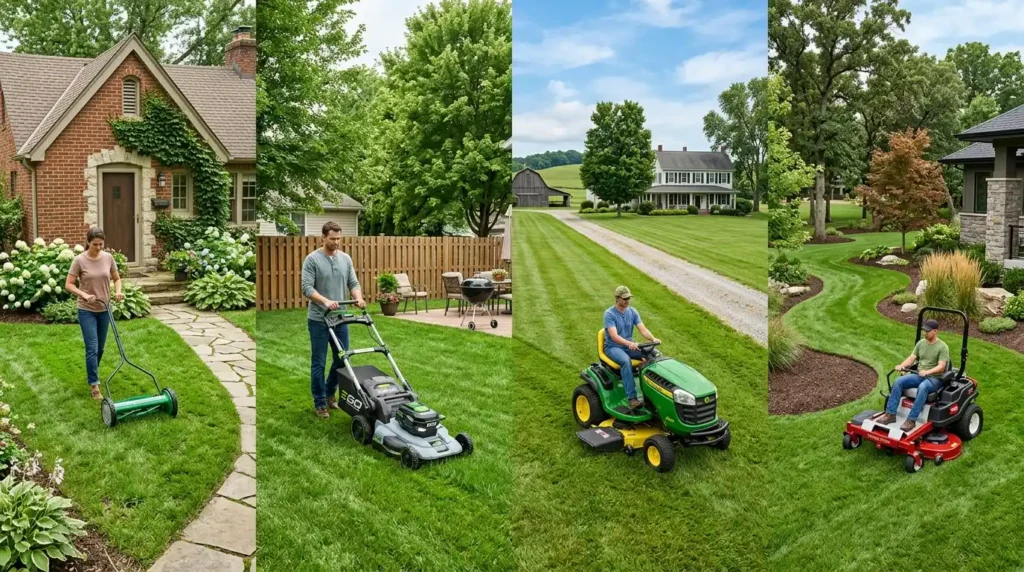
A tight corner and narrow gate just mean that maneuverability is more important than sheer speed. Weather conditions can have an effect as well; warmer southern areas require more regular mowing than northern ones. Long-growing season areas clearly make use of robotic mowers easier since grass will be constantly growing. Shorter-growing season areas will not be as cost-effective for robotic mower investments. Before purchasing any larger mower, be sure you take measurements of the gate and shed sizes as it is no fun being unable to bring your new machine home.
Comparing Lawn Mower Costs and Long Term Value
Price ranges vary enormously across the lawn mower market, from budget push models to premium riding units. Understanding where your money goes helps you avoid overspending or underbuying.
Budget, Mid Range, and Premium Price Points
The basic version of a lawn mower costs around two hundred fifty dollars and is suitable for a small area. The middle range self-propelled and electric mowers cost several hundreds of dollars extra. The riding mower as well as the zero-turn mower cost several thousand dollars. The price range of robotic lawnmowers is from five hundred to two thousand five hundred dollars. Bear in mind that the lower-priced lawn mower does not always imply better value for money. The reliability rates and consumer satisfaction surveys may show unexpected differences among similar lawn mowers.
Understanding Lawn Mower Power Sources and Cutting Features
Power source and cutting mechanics shape both performance and long-term ownership costs. Each option carries genuine tradeoffs worth understanding before you buy.
Gas Versus Electric Power Options
The models powered by gas engines continue to be the classic standard, providing high power and long runtime. The engine displacement in cubic centimeters shows the general cutting power directly. The higher engine displacement allows dealing with thick grass and weeds better compared to low-displacement ones. Nevertheless, the models powered by gas engines need to be maintained; in particular, fuel stabilizer is used during winter time. Electric models and those using lithium-ion batteries have no exhaust emissions at all; therefore, these devices appeal to ecology-aware people.
Cordless mower batteries improve yearly and narrow the gap in terms of performance relative to gas engines. This means that more buyers have started looking at battery operated mower units as a possible option for mid-size lawns. Of course, noise is important to consider as well, since electric mowers make much less noise compared to gas powered mower units. I myself made the switch to cordless some years ago and haven’t looked back since.
Mulching, Bagging, and Deck Configuration
Two blades and a blade changeover system facilitate mulching and bagging functions. Side discharge is still favored by riders that use their machines without any attachment for the bagger. The deck sizes vary greatly, starting at 21 inches and going all the way up to 54 inches.
Keeping Your Lawn Mower Running Smoothly Year After Year
Proper maintenance separates a lawn mower that lasts a decade from one replaced within a few years. Simple routines make an enormous difference over time.
Essential Seasonal Maintenance Tasks
The engine oil should be changed every 50 hours or once yearly, whichever comes first. The spark plugs and air filters need to be replaced or cleaned at regular intervals. The blade sharpness is also important because sharp blades cut cleanly whereas dull blades tend to rip the grass. The deck needs to be cleaned after every season of use by washing away the mud and moisture.
When to Repair Versus Replace
Following the Rule of 50, replace your lawn mower once repair costs exceed half its value.
Conclusion
The choice of a proper lawn mower depends on the size of the lawn, the source of energy used, and the ability to take care of it properly.
Frequently Asked Questions
When should I be sharpening my lawn mower blades?
Sharpen blades once a year, and if you find that you have ragged cuts during the middle of the season.
Which lawn mower size do I need for a half-acre yard?
Both self-propelled push mowers and entry level riding mowers work well for half-acre lawns.
Do I really want to get a robot lawn mower?
Yes, but only if you will be using your mower a lot, and it will cost more money.
How long will my lawn mower last?
Push-behind lawn mowers last for 8 to 10 years, while riding lawn mowers last for 15 to 20 years.