
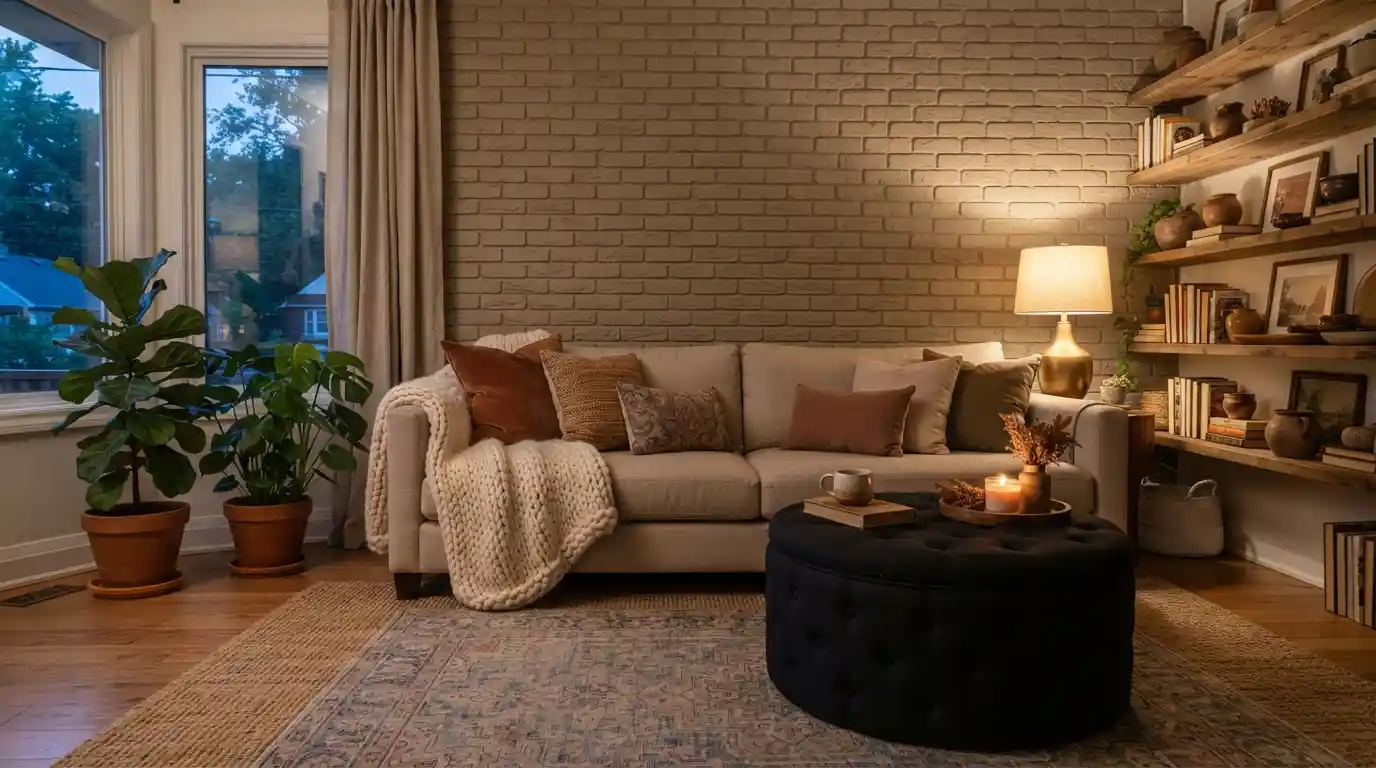
My sister moved into her first apartment last spring with a mattress, a folding chair, and not much else. She called me in a panic, no idea where to start. I’d just finished my own living room a few months before, tight budget, no real plan going in either, so I ended up repeating whatever Dana, the stylist I paid for a few consultation hours, had drilled into me. Decoration room decoration doesn’t need a full designer or a big check. Honestly the cheapest changes I made mattered more than the expensive ones. Here’s what actually worked, what I’d skip next time, and roughly what the whole thing cost.
Why Decoration Room Decoration Starts With Layout, Not Shopping
Classic mistake, buying stuff before figuring out how the furniture should even sit. Dana caught it within ten minutes of walking in. Said most people go straight for throw pillows and wall art before dealing with the actual bones of the room. Furniture placement decides almost everything downstream of it, she told me, a couch facing the wrong way ruins even good decor sitting on top of it. My living room’s an awkward rectangle, longer than wide, and my sofa had been shoved flat against one wall for two years without me ever questioning it. Moved it a few feet. Angled it slightly toward the window. Opened the whole room up more than any amount of shopping would have.
Measuring Before You Buy Anything
Dana had me measure every wall and doorway before we even talked furniture, which felt like overkill at the time. Saved me from one genuinely expensive mistake though, a sectional I’d been eyeing online wouldn’t have cleared my hallway doorframe.
Choosing a Focal Point First
Every room needs one thing your eye lands on, Dana said, a fireplace, a window, whatever. Mine turned out to be an odd brick accent wall I’d been ignoring for years without really seeing it. Once that became the focal point, everything else got easier to place around it.
Color Choices That Actually Hold Up Over Time
Color’s where I second-guessed myself hardest, cycling paint swatches for almost a month before finally committing. Dana pushed warm neutrals instead of the stark white I’d planned. Her argument, true white reads cold in a room without much natural light. My apartment faces north. Brightness was never really on the table, and leaning into that instead of fighting it warmed the whole space up without adding a single lamp.
Warm Neutrals vs Stark White
Landed on a soft greige for the main walls, somewhere between gray and beige, shifts depending on the light hitting it. Warmer in the evening under lamp light. Cooler during the day. Gives the room more personality honestly than flat white ever managed.
Using an Accent Wall Without Overdoing It
That brick wall became the accent wall almost by default. Dana talked me out of painting it entirely, said exposed texture does more work than color when you’re doing an accent wall right. I resisted for a bit. She was right, obviously.
Furniture Choices for Small or Awkward Spaces
Not a huge living room, and Dana kept steering me toward furniture that pulls double duty instead of anything purely decorative sitting there taking up space. A storage ottoman replaced what used to be a coffee table with nothing underneath, wasted space basically, and now it holds blankets and remotes and a stack of magazines I never actually read but can’t bring myself to toss. Nesting tables solved the game-night problem, extra surface when people come over, gone the rest of the week when I don’t need it.
Multifunctional Furniture Worth the Investment
The storage ottoman was probably my single best purchase in this whole thing. Cost more than a basic coffee table would’ve. Never once regretted the extra money though.
Vertical Storage and Wall-Mounted Shelving
Floor-to-ceiling shelving on either side of the brick wall fixed a storage problem I’d been avoiding for years, and it pulls the eye upward in a way that makes the ceiling read taller than it actually is. Dana called it one of the cheapest tricks for making a small room feel bigger. Living with it for months now, I’d agree.
Textures, Layering, and the Details That Make a Room Feel Finished
Underestimated this part the most, honestly, assumed furniture and paint would carry the whole room by themselves. Dana’s whole thing was that texture is what separates a room that looks put together from one that just looks furnished, and none of it costs much. A chunky knit throw over one arm of the sofa. A couple of woven baskets tucked under the console table. Two rugs layered instead of one flat one. Small stuff, added more warmth than any single piece of furniture managed on its own. Mismatched-but-coordinated throw pillows did more visual work than the actual sofa underneath them, which still feels a little absurd to say out loud.
Layering Rugs and Textiles
Large neutral jute rug on the bottom, smaller patterned one layered on top, a trick Dana swore would define the seating area without needing an actual divider. It does. Cost less than one new area rug would’ve alone, too.
Indoor Plants and Natural Materials
Two big leafy plants near the window softened the room more than any object I bought outright. Dana kept pushing natural materials generally, wood, stone, woven fiber, her reasoning being they age better and somehow photograph worse in a good way, meaning the room reads lived-in instead of staged for a listing.
Lighting and Small Details That Change the Whole Mood
Lighting came last, mostly because the budget was running thin by then and I had to get creative. One statement lamp replaced the harsh overhead light I’d lived under for years without thinking about it. Dana said layered lighting, some ambient, some task, matters more than people give it credit for when a room feels flat. Smart bulbs let me shift the warmth depending on time of day, sounds minor until you’re sitting there at 9pm and it used to feel like an exam room in here.
Statement Lamps and Layered Lighting
The lamp wasn’t cheap, closer to $80 than the $20 version I’d first considered. Dana’s argument, one good lamp beats three mediocre ones. Correct, apparently, it’s the first thing people mention walking in now.
Personal Touches That Make a Space Feel Lived-In
Framed photos. A small shelf of books I actually read. A couple travel souvenirs from trips I still think about. Barely cost anything, did more to make the space feel like mine than most of what Dana and I planned out together on paper. Designers apparently agree three to five genuine pieces read as curated rather than cluttered, and mine landed close to that without my really trying for it.
Conclusion
Whole decoration room decoration project came in under $600. Layout and lighting mattered more than any single purchase along the way, looking back on it now. Start with how the room actually functions before buying anything. Lean into warm neutrals if your light’s limited. Don’t underestimate what a couple of textured layers can do. My sister’s apartment came together faster and cheaper once she followed roughly the same order.
FAQs
A meaningful refresh can often be done for a few hundred dollars if spending focuses on one or two statement pieces instead of filling every surface. Some widely cited budget makeovers claim a high-end look for under $500 compared to a $10,000 professionally designed equivalent.
Buying decor before addressing furniture placement is one of the most common issues, since even great decor can’t fix a poorly arranged room. Measuring the space and identifying a focal point first tends to save both money and frustration later.
Neutral color palettes have a reputation for being flat, but they actually give more flexibility to rotate accent pieces and textiles seasonally without repainting. Warm neutrals in particular tend to feel cozier than stark white, especially in rooms with limited natural light.