
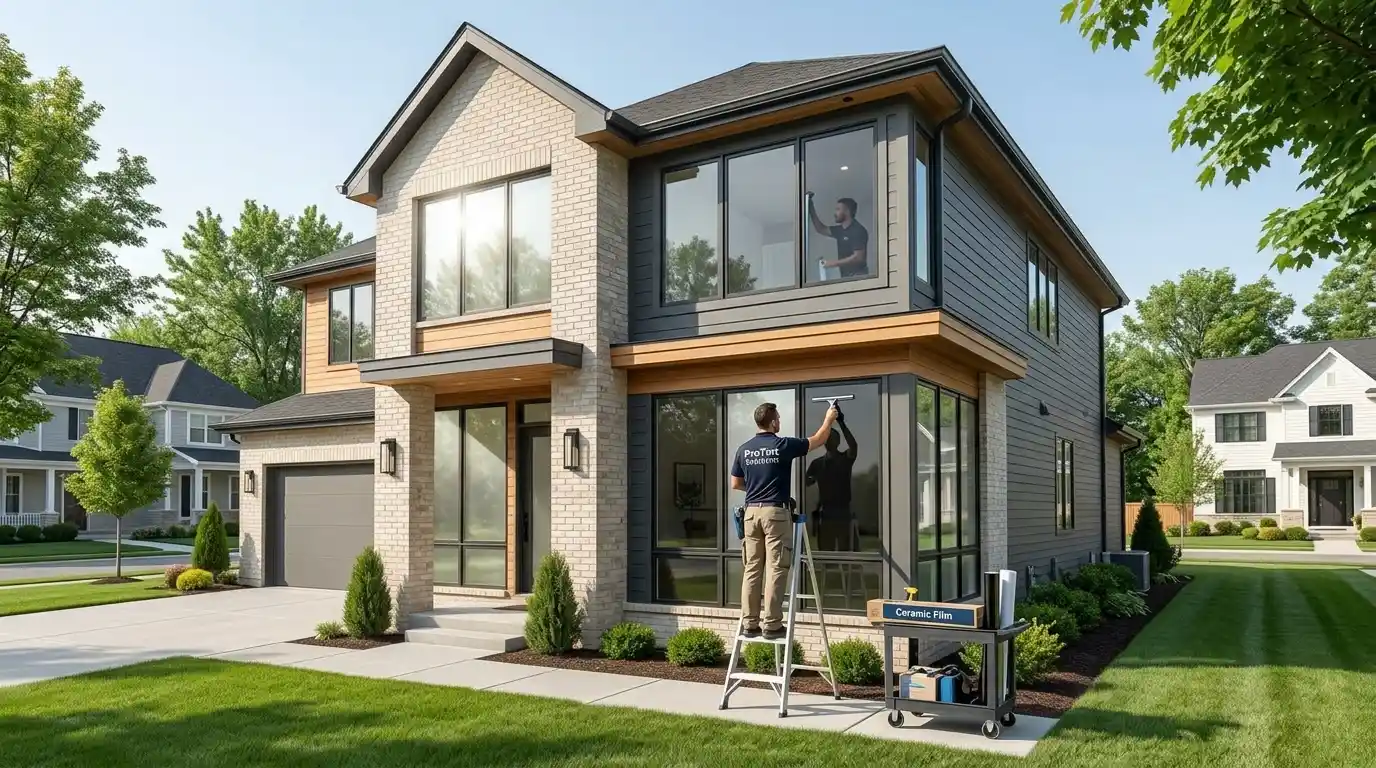
The summer I finally looked into house window tinting near me properly, I’d already spent two years doing everything else first. New blinds in the living room. Blackout curtains in the west-facing bedroom. A standing fan that ran from April through October. None of it fixed the actual problem, which was that afternoon sun was heating the west side of the house to a level that made those rooms essentially unusable between 2pm and sundown.
A friend who’d had her conservatory filmed the previous year said the single most useful thing anyone said to me throughout the whole process: “Don’t search for the cheapest installer. Search for someone who will tell you honestly what the film will and won’t fix before they’ve taken a penny of your money.”
That turned out to be exactly the right filter. The first window tinting contractor I called gave me a VLT number and a price. The second one I eventually used asked which direction the windows faced, what the glass type was, and whether I was on a leasehold or had an HOA to consider. That difference in conversation quality told me everything I needed to know about which installer understood residential window film well enough to actually solve my problem.
Why the Film Type Matters More Than the Installer’s Proximity:
The first decision in any residential window tinting project isn’t which company is nearest it’s which film type matches your actual problem. This is where the research pays off before you ever request a window tinting quote near me, because the right answer genuinely varies by room orientation, glass type, and what you’re trying to achieve.
Ceramic and Nano-Ceramic Window Film:
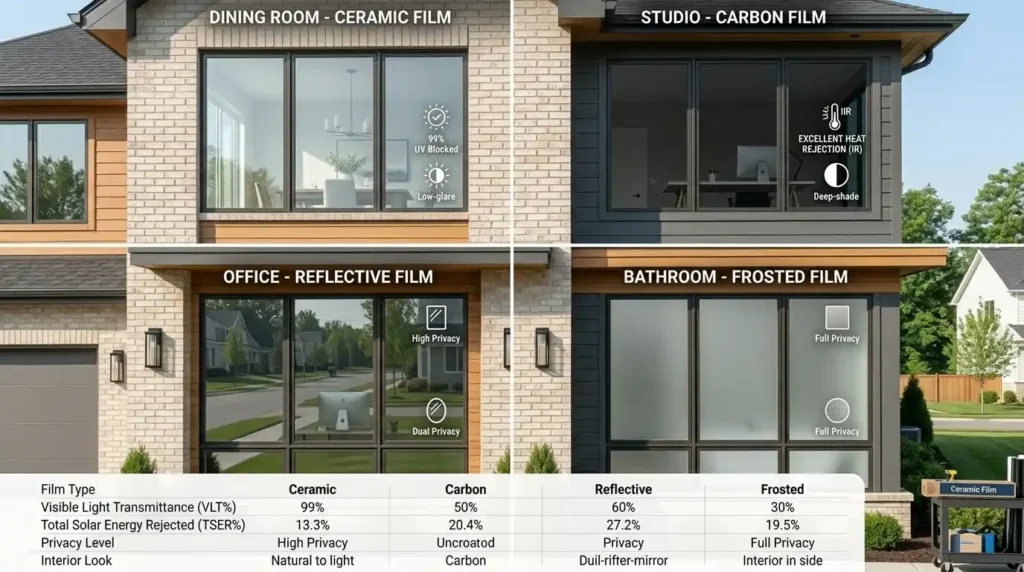
Ceramic window film and nano ceramic window film are currently the performance benchmark for residential use. Built around nano-ceramic particles rather than metal deposits, these films reject infrared radiation without the reflective exterior appearance that older metalized window film and reflective window film produce. The practical difference matters for appearance.
A home fitted with ceramic film looks largely unchanged from the street, while a heavily reflective or dual reflective window film creates the mirror exterior that some HOAs and UK planning authorities specifically restrict. Titanium nitride nano ceramic technology, used in premium multi-layer film construction products like Kepler window film, delivers some of the strongest heat rejection rates available while maintaining optical clarity. Huper Optik window film sits in this same premium ceramic bracket.
Dyed window film:
Dyed window film sits at the opposite end of the cost and performance spectrum. A dyed interlayer absorbs rather than reflects solar energy, making it the lowest-cost entry point in residential window film with a 5 to 8 year lifespan dyed film under normal conditions meaningfully shorter than the 10 to 15 year lifespan ceramic film or the 15 to 20 year lifespan premium film products. For rooms where budget is the primary constraint and appearance is less of a concern, dyed film is a defensible choice. For any room with prolonged direct sun exposure, it’s worth understanding the trade-off in window film lifespan before committing.
Carbon window film:
Carbon window film sits between dyed and ceramic in both price and performance better heat rejection than dyed, without the premium of true ceramic construction. Spectrally selective film takes a different approach entirely, designed to reject heat-carrying infrared wavelengths while transmitting the full visible light spectrum the best available option for rooms where maintaining natural light and color accuracy matters as much as heat rejection.
Types Of Window Film:
Safety and security film, frosted window film, privacy window film, and decorative window film all address different primary needs. Safety and security film including products at the extreme end like ballistic window film and bullet resistant window film bonds glass fragments together on impact, slowing break-in attempts and protecting occupants from flying glass in accidents or storms. Frosted window film and privacy window film address visibility rather than solar performance, making them the primary choice for bathroom window film, ground floor window privacy.
And street facing window tint applications where the priority is daytime privacy without curtains rather than heat management. Anti-graffiti window film is an entirely separate specialization, relevant mainly for properties facing vandalism risk. Switchable smart film and electrochromic film represent the technology frontier electrically switchable panels that transition from clear to opaque on demand but at a cost point that makes them a niche residential choice rather than a mainstream option.
Reading the Technical Numbers Before You Compare Quotes:
Every residential window film product produces a set of technical measurements that tell you what it actually does and understanding even three or four of these before requesting a window tinting estimate near me makes it dramatically easier to compare competing quotes on a like-for-like basis.
VLT percentage:
Visible light transmission VLT percentage is the figure most people know first. It describes the percentage of visible light that passes through the film. 5% VLT darkest tint is essentially opaque from outside; 75% VLT lightest tint is barely perceptible. Most residential living spaces work well in the 35% VLT to 50% VLT range enough tint to meaningfully reduce glare on TV screens and computer screens without creating an artificially dark interior. Bedroom window tinting, bathroom window film, and ground floor applications dealing with nighttime privacy window film concerns sometimes go darker. Home office window film addressing direct screen glare often benefits from 20% VLT on the most exposed elevation only.
Understanding How Window Film Blocks Heat:
Solar heat gain coefficient SHGC and total solar energy rejected, or TSER rating, tell you how much of the sun’s total energy the film blocks across the full solar spectrum rather than just the visible band. Infrared rejection and heat rejection rate are the related metrics: a film might have a moderate VLT while blocking 60% to 80% of the heat-carrying infrared spectrum which is precisely what spectrally selective film and premium ceramic window film achieve, maintaining bright rooms while dramatically reducing solar heat gain.
UV blocking and UVA UVB blocking performance is arguably the least visible but most consequential performance metric. Quality film blocks 90 to 95 percent UVA UVB across most product categories, with premium products hitting the 99% UV blocking rate threshold that the Skin Cancer Foundation recommends for daily UV protection. This is the specification behind protect artwork from UV damage, prevent furniture fading, prevent floor fading, and protect skin from UV indoors benefits none of which are visible immediately after installation but accumulate meaningfully over years.
How to Actually Find a Qualified Installer Rather Than Just the Nearest One:
Searching for window tinting near me or window film near me returns a genuinely wide range of results national franchise networks, independent local window tinting specialists, mobile window tinting service operators, and retail products designed for DIY installation all appear in the same results. Distinguishing between them before you pick up the phone saves time and protects you from mismatched expectations.
Certified window film installer:
Certified window film installer status through manufacturer programmes LLumar SelectPro dealer near me, CoolVu dealer near me, authorized window film dealer near me signals that the installer has completed product-specific training and typically offers access to manufacturer warranty window film coverage that independent operators can’t provide. The 3M window film, LLumar window film, and Vista window film brands all operate dealer networks built around this model. Kepler window film and CoolVu window film have similar regional dealer structures, with online locators that return verified local window tinting company contacts rather than generic directory listings.
Check Window Film Installer Near Me Reviews:
Specifically for residential projects rather than automotive tinting the skills overlap but aren’t identical, and a highly rated car tint shop may have limited experience with the window film adhesion, bubble free installation technique, and curing time management that architectural window film on house windows requires. A 24 to 48 hours curing time standard means your installer should also be advising on aftercare what not to clean the film with, when you can open windows after installation, and how to spot window film peeling or window film bubbling that would indicate an installation defect rather than normal settling.
Ask specifically about your window type. Can you tint double pane windows is one of the most commonly asked questions, and the honest answer is yes in most cases but some sealed unit manufacturers’ warranties specify that external films may affect their guarantee, which a reputable window tinting contractor near me will raise before installation rather than after. For sliding door window film, conservatory window film, and skylight film applications, the heat buildup dynamics are different enough from standard vertical glass that installer experience with those specific applications genuinely matters.
The Practical Decisions Nobody Tells You to Make Before Booking:
Window tinting HOA approval and window film planning permission UK are the two regulatory variables that catch homeowners off guard most consistently and they’re both easier to check upfront than they are to deal with after the film is already on the glass. Many HOAs permit window film but restrict reflective or dual reflective window film specifically because of the mirror-glass exterior appearance.
Which means the conversation about residential window tinting that doesn’t look dark from outside isn’t just an aesthetic preference but sometimes a compliance requirement. In the UK, listed building consent and conservation area rules sometimes apply to window film on external glazing, particularly with darker or more reflective products a specialist in window tinting for Victorian sash windows near me or house window tinting near me for period property will know your local authority’s typical position on this.
Window Film vs Window Replacement Cost:
The window film vs window replacement cost comparison resolves clearly in film’s favor for most residential applications. Retrofit window film installed on existing glass delivers a meaningful fraction of the energy performance of a full window upgrade for a fraction of the cost energy efficient windows without replacement is the category name, and the 10% to 30% cooling demand reduction solar film potential, alongside 25% to 30%.
Residential heating cooling energy loss attributed to untreated windows, grounds the case in documented building science rather than marketing copy. Window film vs blinds and window film vs curtains comparisons favor film specifically in rooms where maintaining the view or restricting window treatments is a priority the film treats the glass itself rather than covering it.
Installation itself is faster than most homeowners expect. A professional window tinting service near me typically completes each window in 15 minutes of average installation per window to 30-to-45-minute installation per window depending on size and complexity. A whole-house project on an average three-bedroom property usually finishes in a single day. The micro thin polyester film with ultra-bond adhesive film backing bonds directly to the glass surface, with the scratch resistant coating on the exposed side making it genuinely low maintenance once installed and cured.
DIY vs Professional installation:
For anyone still deciding between professional installation and a DIY approach: the window film installation technique gap between the two outcomes is visible in the finished product far more than any other DIY vs professional gap in home improvement. A professional achieves bubble free installation and clean edge cuts that a first attempt at home rarely matches, and the low-emissivity film and nano ceramic products that deliver the best heat rejection performance are also the most unforgiving of installation errors
For a single bathroom window film or kitchen window film project using a basic frosted privacy film, DIY is entirely reasonable. For south facing window tint, west facing window tint, or whole-house residential window film projects where performance matters, the installation quality difference justifies the professional window tinting cost consistently.
How to Choose the Best Film for your House:
Window film works best when the film type, the VLT level, and the installer’s specific residential experience are all matched to the actual problem you’re trying to solve not to whichever quote arrives fastest after a search for house window tinting near me. Ask the right questions before anyone arrives with a roll of film, and the difference between a window that works and a west-facing room you can finally use in the afternoon is largely decided before installation day even arrives.
Conclusion:
When searching for house window tinting near me, proximity to your location alone is not the most important factor. In order to get the best results, it is essential to pick the proper type of film based on the orientation of your property, your energy efficiency needs, your privacy needs, and your budget, in conjunction with a professional residential installer. In this way, you will be able to benefit from lower energy bills and many other benefits.
Frequently Asked Questions
Residential window tinting applies a thin film directly to existing glass to control heat, glare, UV exposure, or privacy depending on the product selected. The result depends heavily on matching the film type and VLT level to the room, window orientation, and intended purpose.
Ceramic film generally provides stronger heat rejection, better optical clarity, and a longer lifespan without creating a heavily reflective exterior. Dyed film costs less and can work for budget-focused applications, but it absorbs more solar energy and typically needs replacement sooner.
VLT tells you how much visible light passes through the film, so lower percentages create a darker result. The article suggests roughly 35% to 50% VLT for many living spaces, while rooms dealing with stronger glare or privacy concerns may benefit from a darker film.
DIY installation can make sense for a simple frosted privacy film on a small bathroom or kitchen window. For ceramic films, west- or south-facing windows, and whole-house projects, professional installation is usually the better choice because clean edges, proper adhesion, and bubble-free application directly affect performance.