
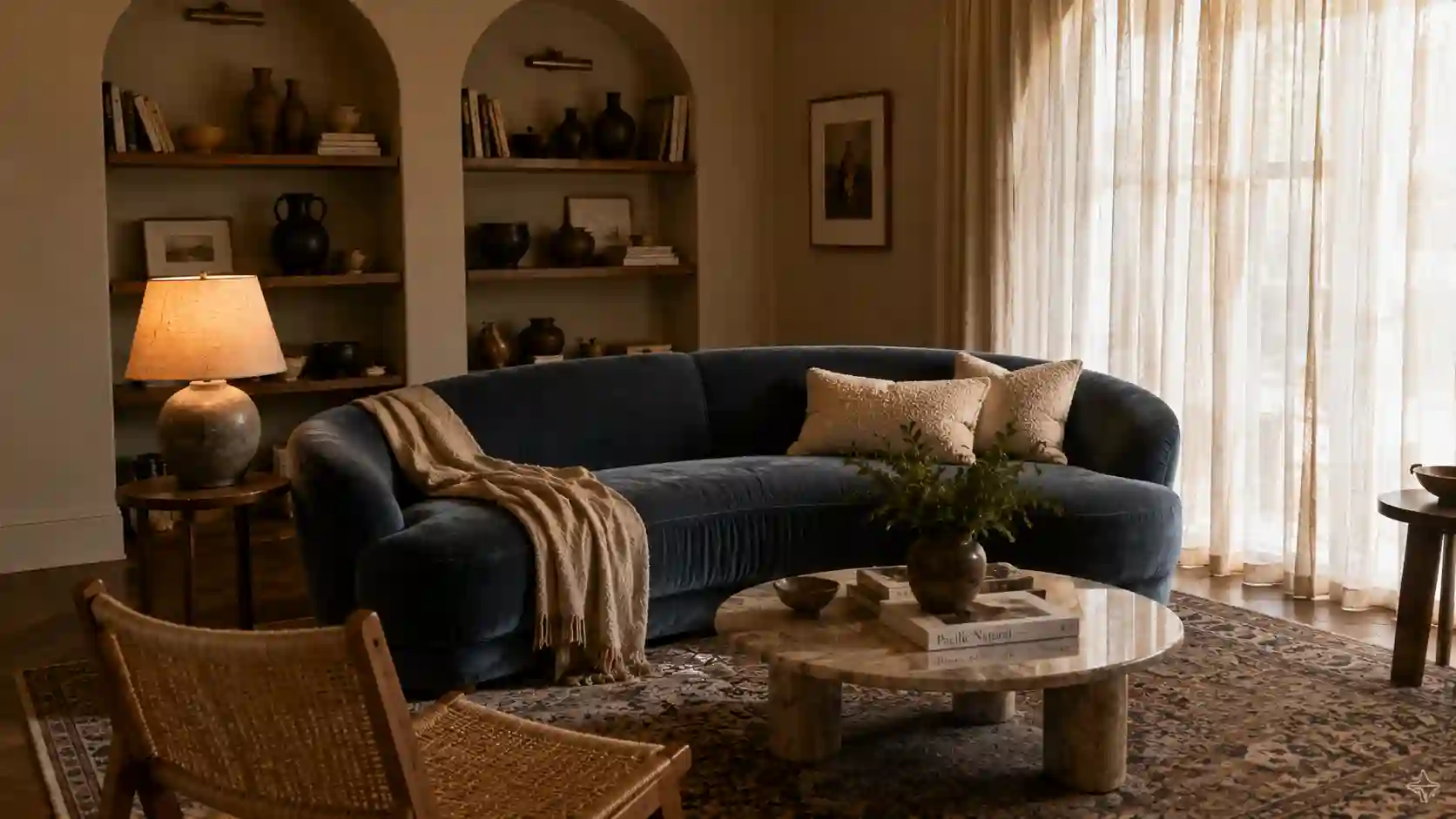
Lounge Interior Ideas
The lounge I’m most proud of helping redesign wasn’t a big room. Medium-sized, awkward proportions, a window that looked directly into the neighbor’s fence. The client had been living with it for three years, liked nothing about it, and had already bought two sofas in two years trying to fix the problem which turned out not to be the sofas. It was the layout. And then the lighting.
And then the fact that every piece of furniture was facing the television like it was the only reason to be in the room. Three months of considered lounge interior ideas later no new walls, no structural work, one reupholstered chair and a genuine reboot of the color and textile logic it became somewhere people didn’t want to leave. That’s the actual goal, and it’s almost never about spending more.
Layout First — Why Lounge Interior Ideas That Skip This Step Always Feel Off:
Furniture Arrangement Is the Foundation Every Other Decision Sits On:
Lounge interior ideas that start with color or accessories without settling the furniture arrangement first are building on uncertain ground. The layout determines everything else traffic flow, circulation path, conversation area, zoning, focal point relationship, and whether the room feels like somewhere people actually gather or just a space where furniture happens to be stored. Most lounges default to sofas against walls, which creates a peculiar museum-gallery effect: furniture around the perimeter, empty void in the middle, no real reason for anyone to lean toward each other and talk.
The conversation area fix is simple but ignored constantly. Pull the sofa away from the wall even 8 inches makes a difference and orient the seating so people can actually face each other. Two sofas facing each other around a marble coffee table, or an L-shaped arrangement with a corner sofa and a pair of accent chairs completing the U-shaped conversation pocket, creates a lounge that draws people into it rather than just providing somewhere to sit facing a screen.
Distinct zones a TV zone separated from a reading nook, a relaxing zone distinct from a hybrid work lounge corner give a larger room purpose and prevent it from feeling like one undifferentiated space. The crosswise furniture arrangement technique, noted by Apartment Therapy editors as one of the most consistently effective lounge interior ideas for long narrow rooms, visually widens a space by pushing the eye perpendicular to the longest axis rather than following it.
Focal Point, Zones, and the Layout Decisions That Scale to Any Room Size:
The fireplace focal point remains the easiest anchor in any lounge layout because it gives a natural direction for seating to face that isn’t the television. But if a fireplace isn’t available, a styled bookshelf, a piece of statement artwork, a built-in bar, or even a carefully lit built-in bookshelves display serve the same function they give the room a reason for its orientation. Lounge interior ideas built around a focal point that isn’t the TV tend to age better, feel less utilitarian, and photograph significantly more interestingly.
Small lounge layout thinking requires extra specificity. Breathing room and negative space are more valuable in compact rooms than additional furniture pieces. Nesting tables that stack when not in use, storage ottoman that doubles as a coffee table, streamlined sofa with slim profile, rectangular coffee table rather than round these choices protect floor space while keeping the functionality of a fully furnished lounge. A multi-functional lounge in an apartment works through vertical storage, built-in bookshelves, and media wall integration rather than through floor-level accumulation.
Color, Palette, and the Lounge Interior Ideas Defining 2026:
The Color Drenching and Color Blocking Shift That’s Rewriting Lounge Design:
Lounge interior ideas in 2026 are moving with notable energy around color. Color drenching wall color, ceiling, skirting, cabinetry, and even built-in shelving all in the same or closely related tones has graduated from trend to established technique. Sara Braham of Studio Braham MacNicoll describes using Farrow and Ball Calke Green for a full open-plan lounge dining combo, drenching walls, cabinetry, and bookshelves in the same tone with Farrow and Ball Sobek on back panels to add depth and contrast the result reading as a sophisticated backdrop for collected furniture and artwork rather than an overpowering color statement.
Color blocking is evolving alongside color drenching in lounge interior ideas for 2026. Sarah Stafford Turner of House Digest identifies it as the mature version of monochromatic rooms mixing two or three related tones rather than committing to a single one, which gives the flexibility to rotate accent pieces in and out as the palette evolves. Dominant color on walls and large upholstery, secondary color on curtains and drapes and larger area rug, accent color carried through cushions, throw pillows, ceramic vase, and candle grouping the 60-30-10 logic applied to a lounge keeps the color story legible without feeling overly matched or decorated.
The palette directions most active in lounge interior ideas globally right now: blues from soft teal to moody ink blue to steel blue to powder blue what Chloe Barrow of Laura James calls the “new modern coastal” earning their place as the calmer, grounded alternative to the warm tones that dominated 2023 and 2024.
Chocolate brown and mocha mousse are still running strong as the warm base option, cited by DFS’s Kellie as creating rooms that feel “instantly warm and cocooning.” Electric blue and acid green are the more committed choices for lounge interior ideas aimed at the personality-led design direction, particularly when paired with concealed LED strip or artistically bent LED lighting that amplifies the color into the far corners of the room.
Wallpaper, Feature Walls, and the Surface Treatment Decisions Worth Committing To:
Bold wallpaper lounge applications floral wallpaper on a chimney breast, plaid design on a single alcove wall, stripe pattern wallpaper in a staircase-adjacent sitting room all read as design decisions rather than shortcuts when the rest of the room is allowed to breathe around them. Elizabeth Hay’s approach pairing blue-painted wraparound bookshelf with a textured wallcovering behind the sofa, then linking upholstery through cushions and trimmings shows how a second or third lead color creates cohesion without looking “too done.” The accent wall functions the same way when bold wallpaper feels like too heavy a commitment.
Seating, Textiles, and the Lounge Interior Ideas Making Comfort the Point:
Seating Trends That Prioritize Livability Over Photography:
The seating story in lounge interior ideas for 2026 is one of relaxed confidence. Daybeds are replacing standard sofas in certain project typologies particularly holiday homes and younger homeowners’ first-owned spaces. Historic chaise lounges are dominating high-end residential projects, with interior designer Taylor Hill noting a direct correlation between clients seeking informal, laid-back spaces and the return of the chaise as primary seating rather than accent piece. Built-in banquettes are migrating from kitchens into lounges, with Blair Parkes of Parkes and Lamb Interiors identifying them as a natural fit for lounge dining combo rooms where fixed, upholstered seating serves both functions.
Layering seating styles is the more broadly applicable lounge interior idea: a curved sofa paired with a structured club chair and an oversized ottoman, or a modular sofa with a monolithic armchair in contrasting upholstery, creates the dimension and tension that Kristina Khersonsky of Studio Keeta identifies as the quality that makes rooms feel “collected rather than matched.” Mismatched furniture is no longer the fallback of the budget-limited it’s the deliberate choice of the design-aware homeowner who wants a lounge that reads as lived-in rather than showroom-assembled.
Textiles, Faux Fur, and the Tactile Layer That Changes a Lounge’s Feel:
Textile choices are doing significant design work in lounge interior ideas for 2026. Washed linen named the first ever Etsy texture of the year is the tactile baseline, bringing organic, slightly rumpled warmth to sofas, cushions, and curtains alike. Faux fur upholstery has moved beyond throws and cushions into full sofa and lounge chair applications, creating what Decorilla editors describe as a “statement, immersive effect” when deployed in jewel tones or saturated deep pile across a primary seating piece. Bouclé fabric and woven leather represent the textured middle ground enough tactile interest to register but disciplined enough to work with complex color palettes.
Soft furnishings layering is where most lounge interior ideas are won or lost in real homes. A washed linen sofa with velvet cushions and a chunky knit throw reads layered. A faux fur throw over a bouclé armchair with a vintage rug underfoot and sheer curtain diffusing the window light reads deeply considered. Florals and stripes working together, plaid and florals in mixed pattern combinations Sarah Stafford Turner specifically endorses “plaids upon florals upon different rich textures” as a genuinely dynamic 2026 direction stop a lounge from the flatness that single-material schemes almost always produce.
Wall Decor, Lighting, and Accessories — the Finishing Layer of Lounge Interior Ideas:
Gallery Walls, Art Placement, and the Mistakes That Flatten a Room:
Lounge interior ideas for walls in 2026 are converging on two approaches: the gallery wall with vintage frames thick frames specifically, with art hung at the correct eye level of 57 to 60 inches to the center of the piece and the single statement artwork or large photograph that anchors an entire wall without competing with anything. Art hung too high is the single most common wall decor mistake; it disconnects the art from the furniture scale and makes a room feel unresolved regardless of how good the piece is.
Wall paneling, ribbed wall paneling, and alcove shelving add architectural character before any art goes up which is particularly valuable in newer builds where the walls are flat and featureless. Built-in shelving display styled with bookends, coffee table books, ceramic vase, dried florals, and sculptural object creates a lived-in focal point that a bare painted wall never provides. Brass picture lights over statement artwork shift framed prints from decoration to focal feature. Seasonal artwork rotation swapping a botanical print for an abstract art piece quarterly keeps lounge interior ideas evolving without requiring any structural change.
Layered Lighting and the Accessories That Complete the Picture:
Lounge lighting is where most rooms fail at the final stage. A single ceiling fixture even a statement chandelier or crystal chandelier is never sufficient alone. Layered lighting means ambient lighting from above, accent lighting from a picture light or concealed LED strip, and task lighting at reading zones through a floor lamp or table lamp with a warm bulb.
Cocooning lighting the term for low, directional, warm light that wraps around the seating area is specifically what transforms a lounge from an adequately lit room to one that feels like the most comfortable place to be after dark. Vintage light fixtures, cordless lamps, and golden hour indoor light effects from well-positioned table lamps are all doing this job in the most admired lounge interior ideas currently being shared across Pinterest and Houzz.
Accessories complete the picture: indoor plants pothos, snake plant, and ZZ plant being the most reliably low-maintenance for lounge environments fresh blooms in a decorative vase, taper candles in a candle grouping on the mantel styling, rattan coffee table or rattan accent bringing the countryside style texture note, colorful glass decor in amber or cobalt as a light-reactive accent. Woven basket, wooden ladder, and woven rattan panel add the handmade, artisanal quality that Architectural Digest editors noted at Milan Design Week 2025 as the defining material shift away from manufactured perfection and toward work that shows the hand that made it.
Conclusion:
Lounge interior ideas are only as good as the sequence in which they’re applied: layout before color, color before textiles, textiles before accessories, accessories before lighting is checked at every time of day. Every element covered here furniture arrangement and zoning, color drenching and blocking, seating choices and layering, wall decor and gallery walls, layered lighting and tactile accessories is available at a range of budgets and in any size space.
The lounge that needed three years of wrong sofas to fix needed none of those sofas to begin with. It needed its layout rethought, its lighting layered, and its textile story told deliberately. Get the sequence right first and the rest of the lounge interior ideas in this guide slot in exactly where they belong.
FAQs
Start with the furniture layout before choosing paint, accessories, or new décor. A good arrangement improves movement, creates comfortable conversation areas, and gives the rest of the design a clear direction.
Color drenching works well when you want a unified, immersive look using one main shade across walls, ceilings, and built-ins. Color blocking is better if you prefer more contrast, as it combines two or three related tones to create depth while keeping the room flexible.
Keep enough negative space around the main furniture and choose pieces that serve more than one purpose, such as nesting tables or a storage ottoman. Slim-profile sofas, vertical storage, and built-in shelving can also provide functionality without overcrowding the floor.

1 thought on “Lounge Interior Ideas: 10 Designer-Approved Moves That Make Any Room Feel Expensive, Collected, and Completely Yours”