
Most people searching for a whole house reverse osmosis system have already gone down the rabbit hole water test results sitting on the kitchen table, a list of contaminants they cannot pronounce, and three browser tabs open comparing systems that all claim to do the same thing. I have been in that exact spot. After discovering elevated PFAS contamination and borderline arsenic contamination in our well water, the research process was genuinely overwhelming.
What helped most was cutting through the technical noise and understanding what these systems actually do and more importantly, when they are the right answer versus when they are not. This guide is written for that exact situation.
What a Whole House Reverse Osmosis System Actually Does
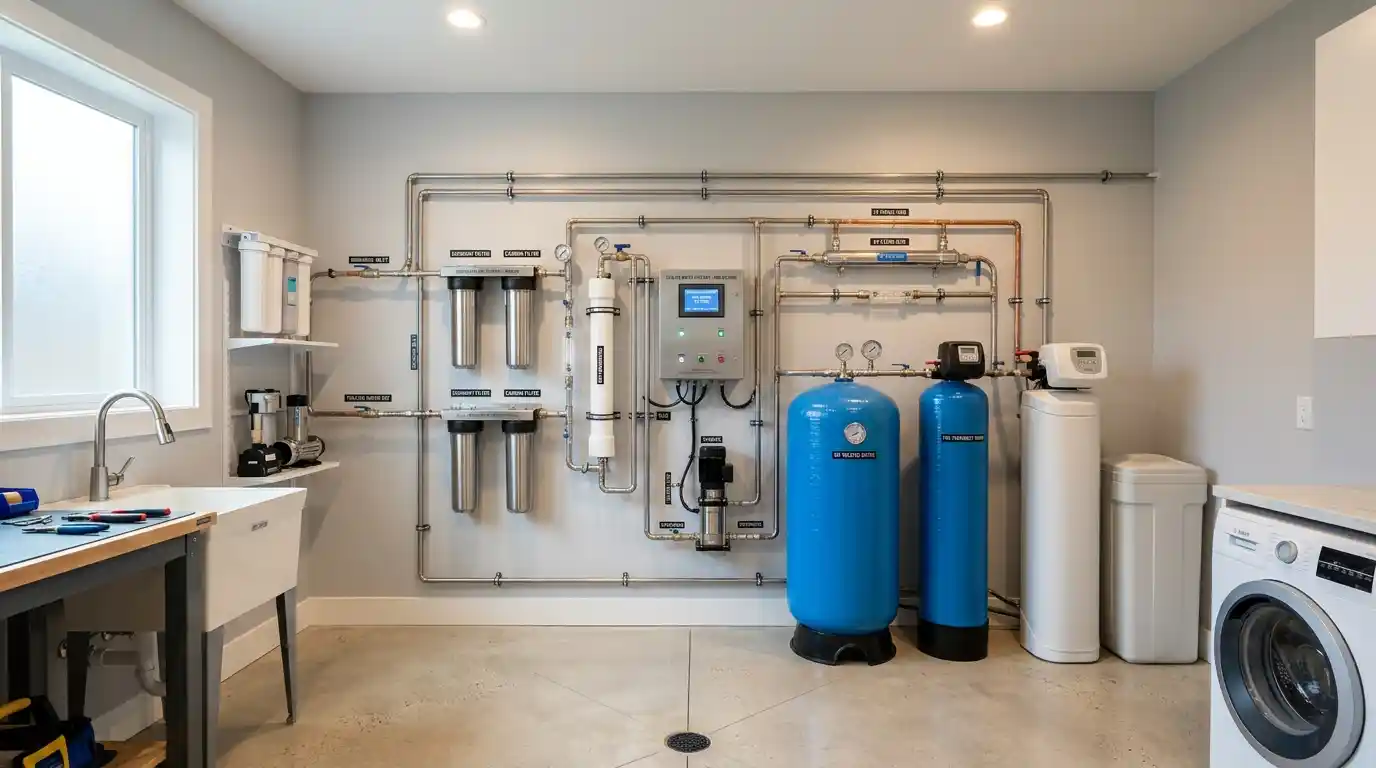
A whole home reverse osmosis setup is installed at the main water line making it a true point of entry RO system, or POE system. Unlike an under sink reverse osmosis unit that filters only your kitchen tap, a POE system treats every drop of tap water entering the property before it reaches any faucet, appliance, or fixture.
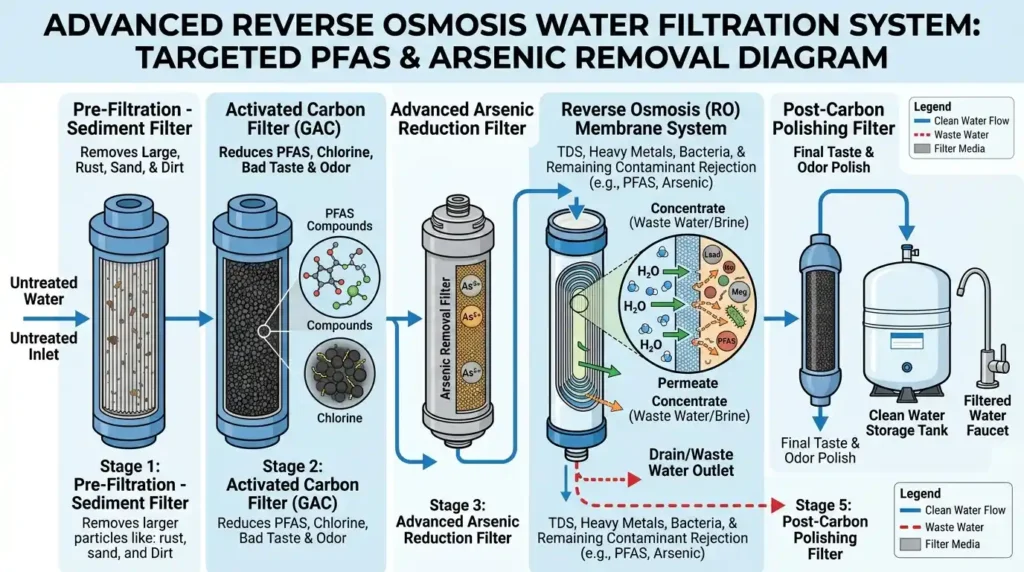
The core of the system is the reverse osmosis membrane a semipermeable membrane that forces water through under pressure. Anything larger than a water molecule is rejected. The result is a TDS reduction of up to 99%, removing a remarkable range of dissolved substances that standard whole house water filter systems simply cannot touch.
The difference between a point of entry RO system and a point of use RO system (POU system) matters enormously in practice. A POU system handles drinking water filtration at one location. A whole house reverse osmosis system handles whole home water quality shower water quality, bathing water quality, cooking water quality, laundry water quality, every appliance protected, every faucet filtered, every tap delivering purified water simultaneously.
The Contaminants That Make a Whole House RO Worth It
Not every home needs a whole house reverse osmosis system. The honest answer confirmed by Bill McTighe, the water quality expert featured on This Old House is that whole house RO filtration makes the most sense when your water analysis reveals specific contaminants that standard filters cannot adequately address.
The RO membrane excels at PFAS removal and PFOS removal including GenX chemicals removal which is significant given that 165 million Americans have been exposed to PFAS contamination in their drinking water according to EPA treatment technology data. It handles arsenic removal including arsenic V, lead removal, nitrate removal, nitrite removal, fluoride removal, chromium-6 removal and hexavalent chromium removal, mercury removal, uranium removal, perchlorate removal, sulfate removal, sodium removal, and chlorides removal.
Carbon Filter And Carbon Block Filter Stage
The activated carbon filter and carbon block filter stages typically positioned as a sediment prefilter and carbon prefilter ahead of the membrane handle chlorine removal, chloramine removal, volatile organic compounds (VOC removal), and disinfection byproducts that the RO membrane alone does not catch. The multi-stage approach 3 stage filtration through 6 stage filtration depending on configuration creates overlapping contaminant removal that provides genuinely comprehensive water purification.
For homes on private well or well water, a whole house reverse osmosis system addresses well water contamination including iron removal, hard water treatment, limescale removal, and scale prevention across the entire plumbing system. For municipal water users in hard water areas across the United Kingdom, Europe water treatment markets, Canada, Australia, and the United States, the same principle applies the incoming city water supply may meet minimum regulatory standards while still containing concerning levels of heavy metals, pesticide residue, pharmaceutical traces, and bacteria removal challenges.
The EU drinking water directive, WHO water guidelines, EPA water standards, and NSF certified benchmarks specifically NSF 58 certification and NSF 42 certification set the minimum bar. A properly configured residential reverse osmosis system consistently exceeds those standards across every measure.
What a Whole House RO System Actually Costs
The whole house RO cost range is wide enough to cause genuine confusion. Here is what the numbers actually mean.
DIY installation of a point of use RO system runs $0 in labor if you can handle 2 to 3 hours of basic plumbing the unit itself typically costs $150 to $600 for under sink reverse osmosis and $200 to $600 for countertop reverse osmosis options. A tankless reverse osmosis configuration adds cost but eliminates the need for a pressurized storage tank.
Whole Home Reverse Osmosis Systems
True whole home reverse osmosis systems genuine point of entry RO systems installed at the water main represent a meaningfully different investment. HomeGuide and HomeAdvisor data puts the typical range at $4,800 to $8,000 installed, with some configurations reaching $10,000 when combined with a water softener combination package and advanced pre-treatment system. Commercial reverse osmosis configurations for hotel water system or restaurant water system applications reach $25,000 and beyond.
The cost variables that drive the number up or down are straightforward. Storage tank capacity whether you need a 150 gallon tank, a 500 gallon tank, or a 550 gallon tank depends on GPD gallons per day demand. Most families need 500 GPD to 1500 GPD capacity. Larger households or properties with higher flow rate demands may require 2500 GPD configurations.
Professional Installation
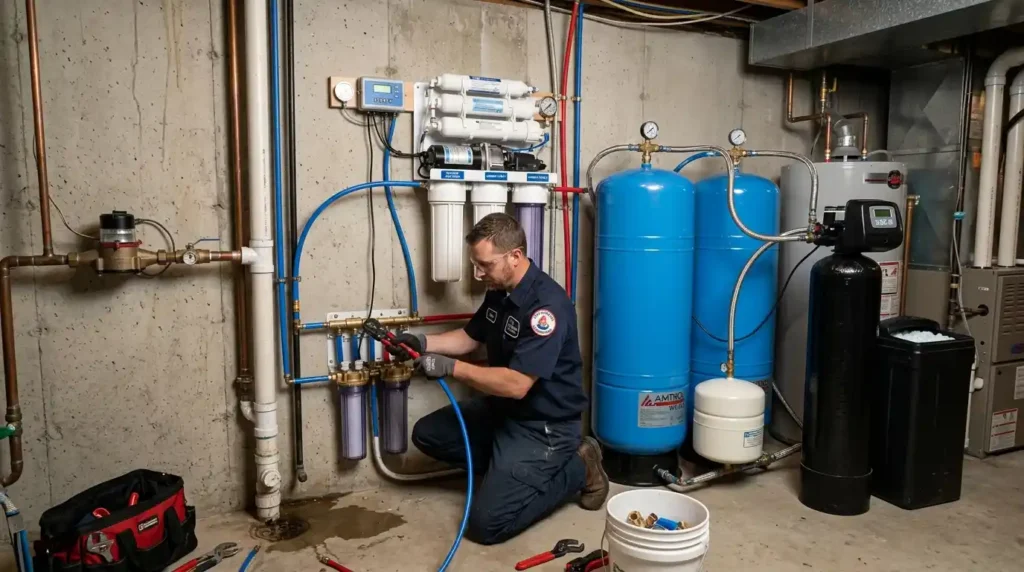
Professional installation by a licensed plumber adds $200 to $300 on average, with plumber hourly labor cost running $45 to $150 per hour depending on installation complexity and plumbing complexity. A handyman installation runs $100 to $200 for simpler configurations. The booster pump, repressurization pump, pressure gauge, bypass valve, shut off valve, ball valve, check valve, automatic shut off, drain saddle, feed water adapter, and quick connect fittings are components that experienced DIY installation homeowners can handle though the RO housing, membrane housing, and filter housing assembly requires careful attention to manufacturer specifications.
The Maintenance Reality Nobody Fully Explains
The annual maintenance cost of a whole house reverse osmosis system is the figure most buyers underestimate in their ROI return on investment calculation. The maintenance schedule for a system like the RainDance 400 to 1500 packages one of the most transparently documented custom built RO system options available illustrates the real picture.
The sediment prefilter requires 6 to 9 month replacement intervals. The carbon prefilter similarly needs replacement every 6 to 9 months to 6 to 12 month carbon filter cycles. The TSM-RO membrane or equivalent high-performance RO membrane lasts 3 to 5 year membrane lifespan under typical conditions, though 2 to 5 year membrane replacement is the standard guidance. The post pH neutralizer and remineralizer cartridge needs replacement every 6 to 12 months to maintain proper pH balance and mineral restoration in the purified water output.
Filter Replacement Cost Ranges
Filter replacement cost ranges from $20 to $100 per filter depending on type and brand. The full annual maintenance cost across all consumables is the figure to budget carefully particularly if your water analysis shows high TDS total dissolved solids levels or significant hard water mineral content, which shortens replacement intervals.
System sanitization periodic flushing and cleaning of the RO housing, filter housing, and atmospheric storage tank prevents bacterial growth in stored purified water. The initial flush and membrane break in period during system startup are critical steps that determine long-term system performance. The system flush, backwash cycle, and system regeneration procedures are all outlined in manufacturer documentation for systems like the Defender whole house RO from US Water Systems and the Waterdrop X12 configuration.
The Benefits That Justify the Investment
The long term value of a whole house reverse osmosis system extends well beyond water taste improvement and water odor removal though both are immediate and genuinely noticeable. Filtered water through a quality RO filter makes better tasting coffee, better tasting tea, and better tasting food when used for cooking. That alone converts skeptics in the first week.
The health risks reduction across children water safety, baby safe water, pregnant women water safety, and elderly water safety represents the most compelling justification for the investment in homes with confirmed water contamination issues. Skin condition improvement from eliminating hard water contact during bathing, hair quality improvement from shower water quality improvement, and the elimination of digestive problems linked to water contaminants are benefits that ESP Water Products and APEC Water customers document consistently.
Appliance Protection And Pipe Protection
Appliance protection and pipe protection the reduction of mineral sediment removal and scale prevention across the entire plumbing system delivers measurable infrastructure longevity benefits. Dishwashers, washing machines, water heaters, and coffee makers all operate more efficiently and last longer when fed consistently purified water rather than hard water laden with calcium magnesium deposits.
The environmental argument elimination of bottled water replacement dependency, plastic free water throughout the home, carbon footprint reduction from eliminating bottled water alternative purchasing, and contribution to sustainable water solution goals resonates strongly across Europe water treatment markets, Netherlands water filtration consumers, Scandinavia water quality standards, and Germany water treatment market buyers where green home certification and eco friendly water system credentials influence purchase decisions meaningfully.
How to Know if You Need One
Before calling a plumber or comparing systems, do one thing: get your water testing done properly. A professional water analysis not just a basic TDS meter reading gives you a water quality report that identifies exactly which contaminants your water contains and at what concentrations.
That report determines whether a whole house reverse osmosis system is the right solution or whether a more targeted approach using an iron filter combination, water softener combination, RO and softener combo, or sediment filter upstream configuration addresses your specific water contamination challenge more cost-effectively.
Crystal Quest Water Filters, Culligan, RainDance Water Systems, and Waterdrop all offer custom built RO system configurations based on incoming water chemistry. The NSF approved components, BPA free tubing, food grade tubing, stainless steel construction, and long life membrane specifications matter when comparing systems as do WQA certified and NSF certified credentials on the specific modular RO system or compact RO system you are evaluating.
Smart Home Water System
The smart home water system category is growing rapidly. Smart water filtration options with app connected water filter functionality, WiFi water monitor capability, TDS monitoring, real time water quality monitoring, filter change indicator alerts, and system alert notification features are increasingly standard in premium configurations making the whole house reverse osmosis system category more accessible and less demanding to maintain than it was even five years ago.
Conclusion
Not every household should have a whole-house reverse osmosis system, but for those that should, there really is no substitute. In case you are faced with an array of water contaminants such as PFAS, the need to remove arsenic, the requirement to remove nitrates, lead removal considerations, or any combination of heavy metals, pesticides, and other harmful chemicals that can’t be handled by the whole-house filter system, the only alternative left is the installation of an effective whole-house reverse osmosis system. It processes all incoming water prior to being delivered into the house in order to treat the shower water, bathtub water, cooking water, laundry water, etc.
The whole house RO system installation cost of $4,800 to $8,000 is an accurate estimation that deserves serious contemplation. Add the annual expenditure on the filters change-out, membranes changing at intervals between three to five years, and regular sanitization of the system itself. Calculate the savings made due to the absence of the need for bottled water purchase, protection of appliances from scale damage and increase in the lifespan of the plumbing infrastructure because of consistent scale reduction. In many cases, the ROI will clearly be on the positive side of the equation.
Start with a proper professional water analysis not a basic TDS meter reading and let the water quality report guide the decision. Whether the right configuration turns out to be a RainDance, a Waterdrop X12, a Defender from US Water Systems, or a custom built RO system from Crystal Quest or Culligan, the system you choose should be matched precisely to the contaminants your water actually contains rather than the worst-case scenario you read about online.
FAQs
A whole house reverse osmosis system is a point-of-entry water filtration setup installed at the main water line to treat all incoming water before it reaches faucets, appliances, and fixtures. It uses a semipermeable membrane to remove dissolved contaminants and significantly reduce total dissolved solids (TDS) throughout the home.
A whole house RO system is designed to reduce a wide range of difficult contaminants, including PFAS, arsenic, lead, nitrates, fluoride, chromium-6, mercury, uranium, and other dissolved substances. The right filtration setup depends on the results of a professional water analysis.
An under sink reverse osmosis system is a point-of-use solution that filters water at one location, usually a kitchen tap. A whole house reverse osmosis system treats water at the entry point, providing filtered water for drinking, cooking, bathing, laundry, and appliances across the entire property.
A complete whole home reverse osmosis system typically costs around $4,800 to $8,000 installed, although larger systems with additional treatment equipment can cost more. The final price depends on factors such as storage capacity, water demand, pre-treatment requirements, and installation complexity.

3 thoughts on “Whole House Reverse Osmosis System by Dr Homey – Complete Home Water Filtration Guide”