
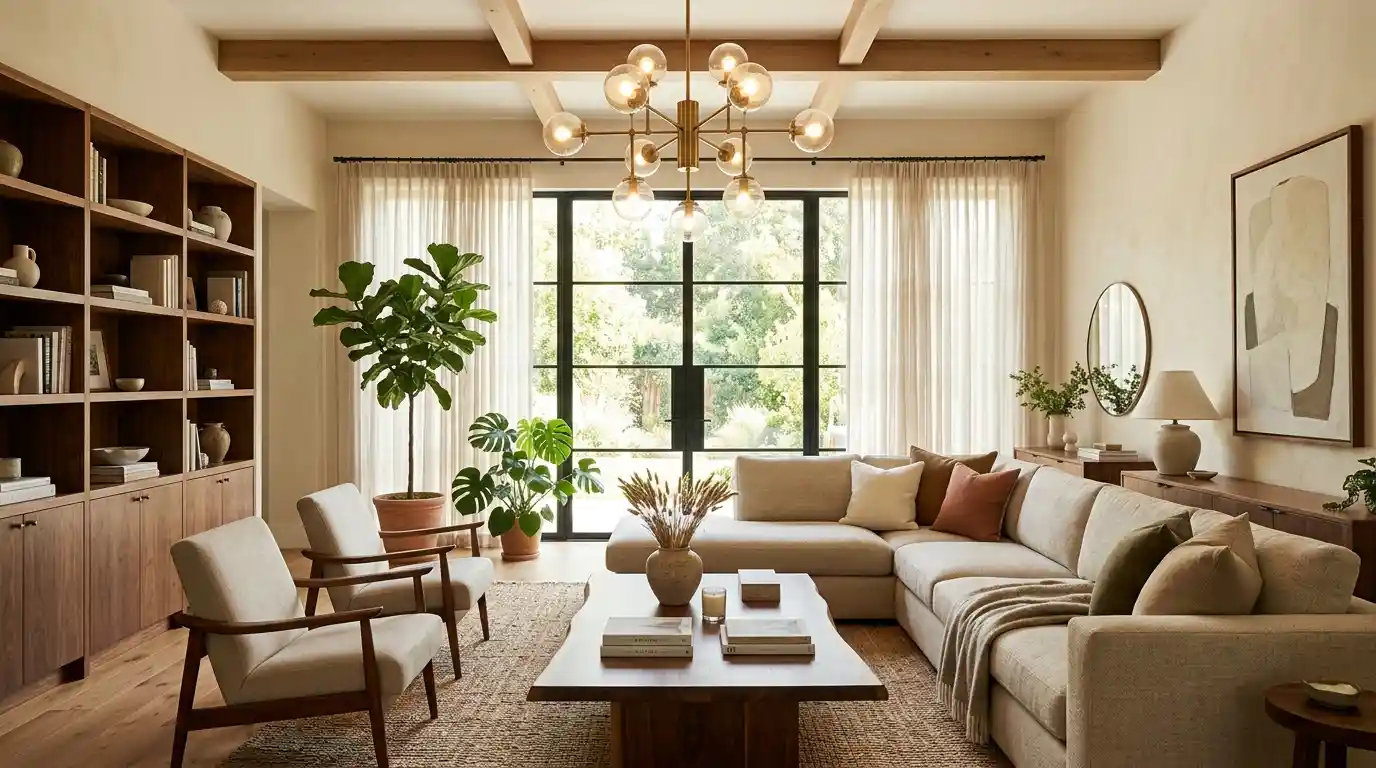
Most people don’t realize how much of an emotional experience decorating a space is when they begin to do so. For many years, I’ve attempted to determine how people express their lives through their physical surroundings. This conclusion continually reaffirms itself: your dwelling is always communicating. The colors you choose, the furnishings you select, the textures you layer are not perceived as neutral. Styles are not just examples of how to recreate something you’ve seen in a magazine; rather, they are visual languages that will help you transition from being intimidated by the idea of decorating to simply making a choice about how to express yourself.
Every single space has a vibe. That vibe is established by the combination of the color scheme being used, the materials chosen to build the space, the shapes and silhouettes of the furniture, and the scale or proportions of the furnishings, materials, and colors that comprise the space, whether chosen by a designer or an accident. The traditional definition of interior design develops from rooms of the 18th and 19th centuries in Europe; they were symmetrical, featured nearly exclusively dark wood, had crown molding, had wainscoting, had silk drapes, had velvet upholstery, and had damask upholstery. Layered lighting using different lighting sources (chandeliers, sconces, table lamps) provides continuity to the overall design. Antiques are placed next to framed artwork and quality area rugs in ways that form a visual balance and a sense of richness while being in harmony with each other. Most importantly, quality and craftsmanship are two of the most important characteristics of this style of design.
If traditional feels stuffy, transitional design lives in the comfortable middle. It blends traditional elegance with contemporary lines, calmer patterns, and cleaner layouts. Ornate details are softened. Rattan sits beside lacquer without awkwardness. Masculine and feminine vibes share the same room without competing for attention. Throw pillows, blankets, and area rugs do the decorative heavy lifting, keeping accessories minimal and furniture front and center.
The Modern, the Minimal, and the Misunderstood
Confusion often arises when it comes to modern and contemporary. The words seem interchangeable however they are quite different from one another. Modern” refers to an era for interior design and architecture mostly ranging from the early to mid-20th century based mainly on three different sources: Scandinavian, Mid Century, and Post Modern.
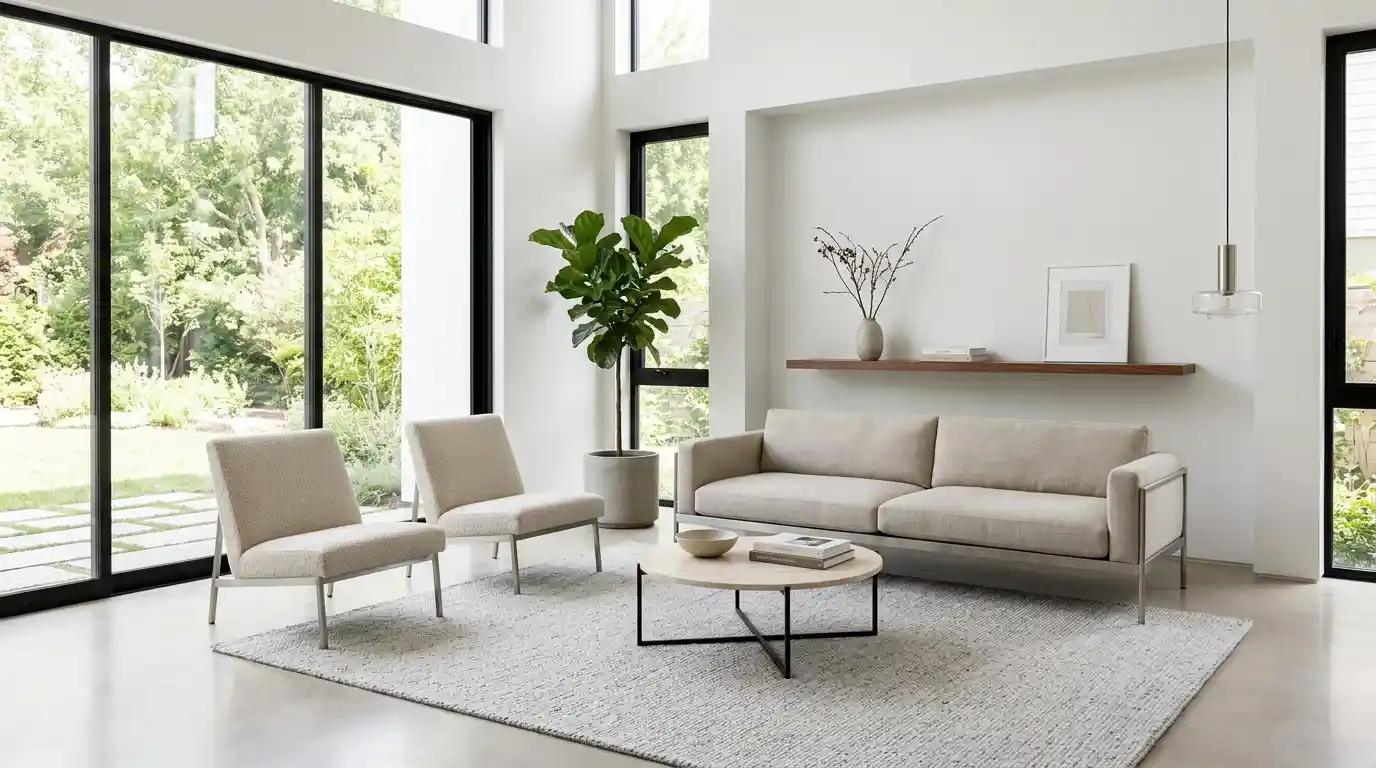
Modern use of materials includes chrome, glass and metal while surfaces will be smooth and polished, patterns will be eliminated, and the decoration will leave a lot of space for freshness, by eliminating unnecessary decoration through careful choice of texture – eg.- one walnut shelf, one brushed steel fixture, and/or one travertine surface, all reused in different ways creates more than five decorative objects would ever provide.
Contemporary is different since it is always referring to what is currently in style. Contemporary can take inspiration from multiple time periods but then incorporates those styles into how we live now by including things such as open concept dwellings with exposed furniture legs, organic materials, soft flowing shapes, textured fabrics etc.
The current trend and dominant theme in contemporary design is ”Quiet Luxury” an understated level but extremely luxurious, very clean but warm and most importantly, never cold in nature.Minimalism takes the less-is-more philosophy further than any other inside style. Primary colors appear occasionally as accents. Smart storage hides everything that does not belong A coffee table that has a secret compartment isn’t simply functional as part of a minimalist room; it’s actually part of the overall design scheme. Negative space has been used in this instance as a design element not an empty space ready to be filled in. Functional furniture is always going to be the key item and the way they create texture will carry the majority of the load that normally would have come from using patterns.
Mid-Century, Bohemian, and the Styles That Never Quite Fade
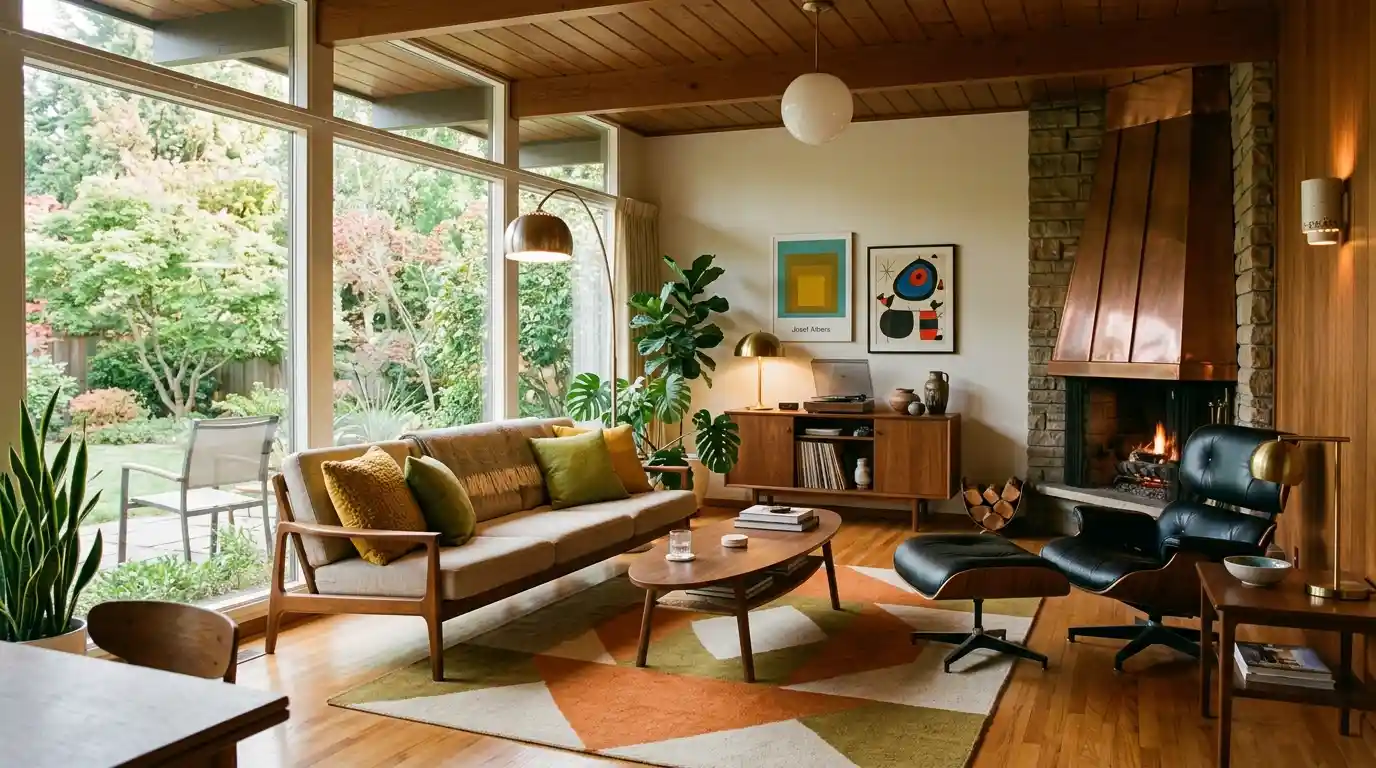
American mid-century modern design emerged out of post World War II growth during the 1950s – 1960s. It promoted a connection between indoors and outdoors via sliding doors and bare windows. Rich materials such as teak, rosewood and walnut added richness to accent colors, including mustard yellow, chartreuse and avocado green. Iconic pieces of mid-century furniture, like the Eames lounge chair, egg chair and wishbone chair, still stand out in today’s world as they did back then. In terms of aesthetics, a revival of 1950s-1960s design trends ensures anyone can create a retro-style room.
Conversely, “bohemian” style decorating is defined as having little or no need for order or organization within a room. While in a well-designed bohemian environment, it is clear that every object has been collected from different parts of the world, metallic features, animal hides, natural woods and bold patterns are all jumbled together without hierarchy (the principle of establishing dominance amongst visually related objects). This creates an open-minded and nomadic feel. Unfortunately, executing a true bohemian style room is more difficult than it first appears since the distinction between collecting and chaos only comes down to the intention of curating.
The shabby chic style is one of softness and femininity with origins dating back to the 18th Century; often characterized by the use of painted white or distressed finishes on furniture, the use of floral prints in conjunction with whitewashed walls or floors, and vintage pieces that display signs of age or use. These “imperfections” should be viewed as part of the original heritage or family memories carried within the item itself. The French country design also carries similar traits: Using tufted upholstery over weathered wood, wrought iron light fixtures (or sconces), exposed beams, distressed raw textures, and soft muted colours (e.g., beige, cream, sage green, lavender) combine together to achieve a relaxed yet elegant feel, reminiscent of life in the countryside.
Coastal, Industrial, and the Styles With Geography Built In
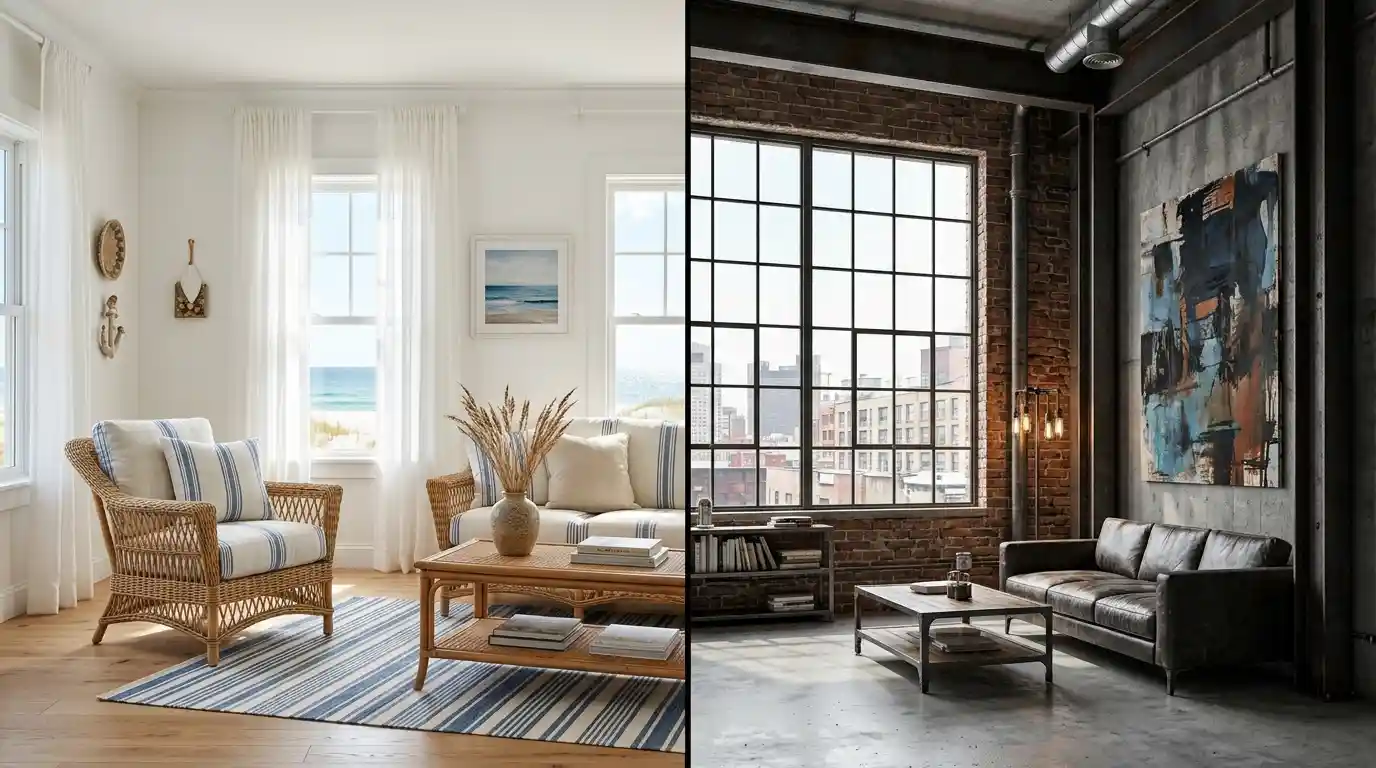
Coastal style done well does not scatter anchors and seashells around a room. The design brings nature indoors by using a thoughtful choice of colors and materials – white, beige, and sandy neutrals as bases; blues from the ocean or summer sky. Wicker, jute, distressed finishes, and sheer fabric bring a light and airy feel to the space. Minimal window treatments allow for greater connection between indoors and outdoors. Plants are not optional in a coastal room.
California Coastal is the laid-back cousin to traditional coastal. Rattan, linen, leather, and wood replace anything nautical or preppy. The energy is tailored yet casual comfort and natural textures first, everything else second.
Industrial interior design has a real history behind it. When Western European factories closed after the Second Industrial Revolution, people converted those large vacant buildings into residential neighborhoods. The inside style kept what those spaces naturally had: exposed pipes, beams, brick, concrete, and the raw NYC loft character. It is masculine and deliberately unfinished. Oversized artwork and cozy textiles are about the only things that soften the edges.
Southwestern interiors draw from adobe houses, Spanish textiles, and ironwork. The desert landscape drives the color palette rust, terracotta, and cactus green pulled from the American desert. Leather and suede are the most common upholstery choices, and furniture tends heavy with thick legs and bulky finishes. The rustic look originated from the Romantic period and involves a statement fireplace. It uses features like weathered wood, rough stone and animal skins to create a warm cabin feel.
Glam, Scandinavian, Mediterranean, and the Outliers
The roots of Hollywood glam trace back to California in the 1930’s, the Golden Age of Hollywood. Incorporating geometric shapes found in Art Deco with proportions from mid-century modern architecture, there are elements like high gloss and mirrored surfaces, chandeliers that are larger than life, hot pink colouring against black and white, luxurious fabrics and materials such as velvet and silk; even though they create an elegant and sophisticated feeling they also create a bold contrast. Foyers and entryways are the best examples of the Hollywood Glam style and allow people to make great first impressions at fancy receptions and events.
Art Deco emerged in France between the 1910’s to 1940’s, characterised by geometric shapes, sharp angles, pointed shapes, jagged edges, glossy metals, glass detailing, mirrors in an exotic environment. Rare varieties of wood and animal skins were also seen as trendy during this period. One of the best examples of Art Deco design still exists today is Miami Beach, Florida.
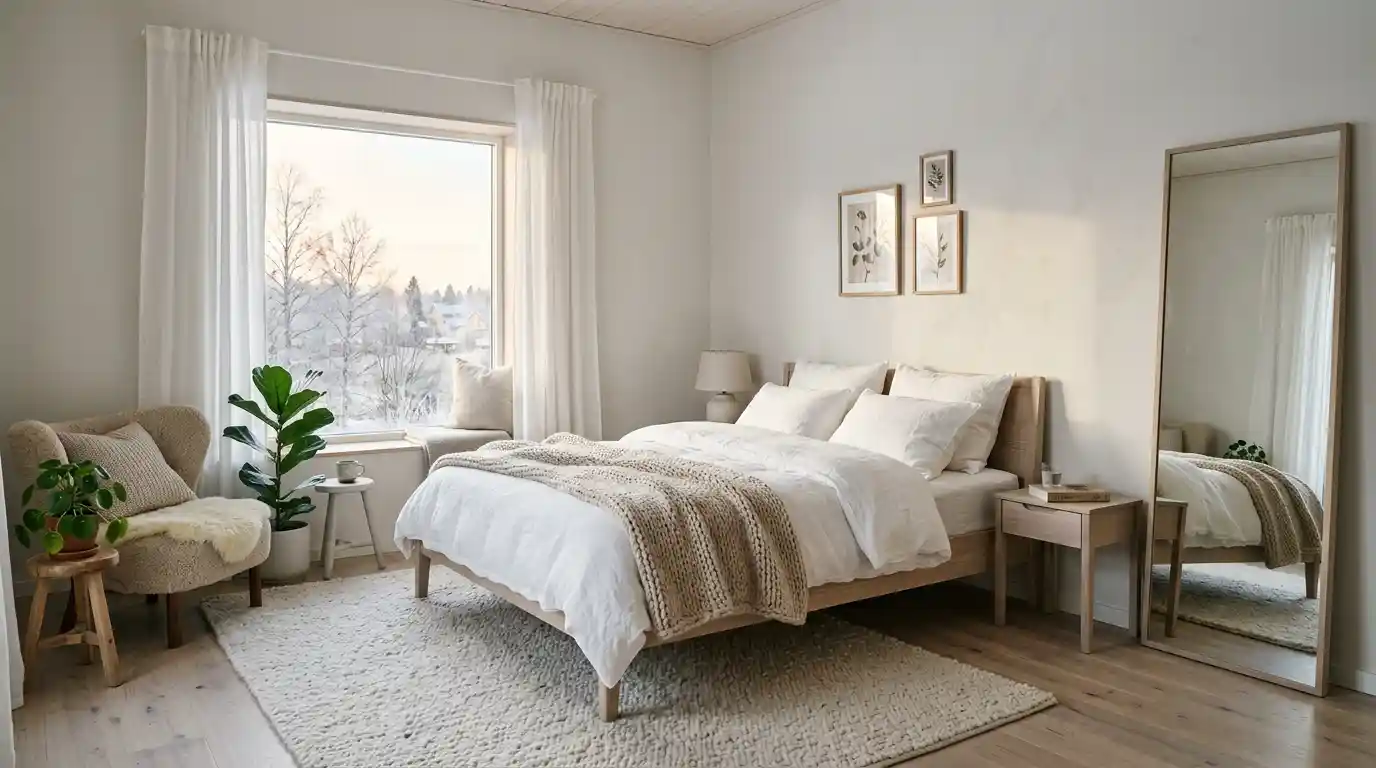
Scandinavian design is clear from the moment you walk through the door: light-colored, pale walls, light brown/ash natural wood, large wall mirrors, high-pile area rugs, cosy textiles and no clutter! All design decisions are based on Danish “Hygge” which is all about creating a sense of warm, comfortable, peaceful calm (you are/feel Hygge). Also, all design decisions stem from the Swedish “lagom” where everything is “just right”; there is nothing too much or too little. Light is considered one of the materials used to create the architecture and all layouts are designed to reflect and extend the light.
Mediterranean design uses architecture and design elements from Spain and Italy, along with Greece. It is typically defined by archways, columns, interior balconies and rich wood tones. Floors, walls, and staircases are decorated with tile and mosaic materials. Many of the colors are based on the surrounding terrain; terracotta, ochre, deep blue, and sandy neutrals. Coffee tables and chandeliers are fashioned from wrought iron throughout the space which provides incredible warmth and real solidness.
Asian Zen interiors focus primarily on providing a relaxing environment; place your priorities first (physical appearance is secondary). The basis for space arrangement is Feng shui; this determines how to arrange furniture asymmetrically with low furniture with strong horizontal movements, as well use shoji screens to separate open areas.. Bamboo, stone, and water are placed with intention. Every object must justify its presence. The color palette is drawn strictly from nature. Emptiness is not absence here it carries as much weight as any tangible element in the room.
The Styles That Come With a Specific Point of View
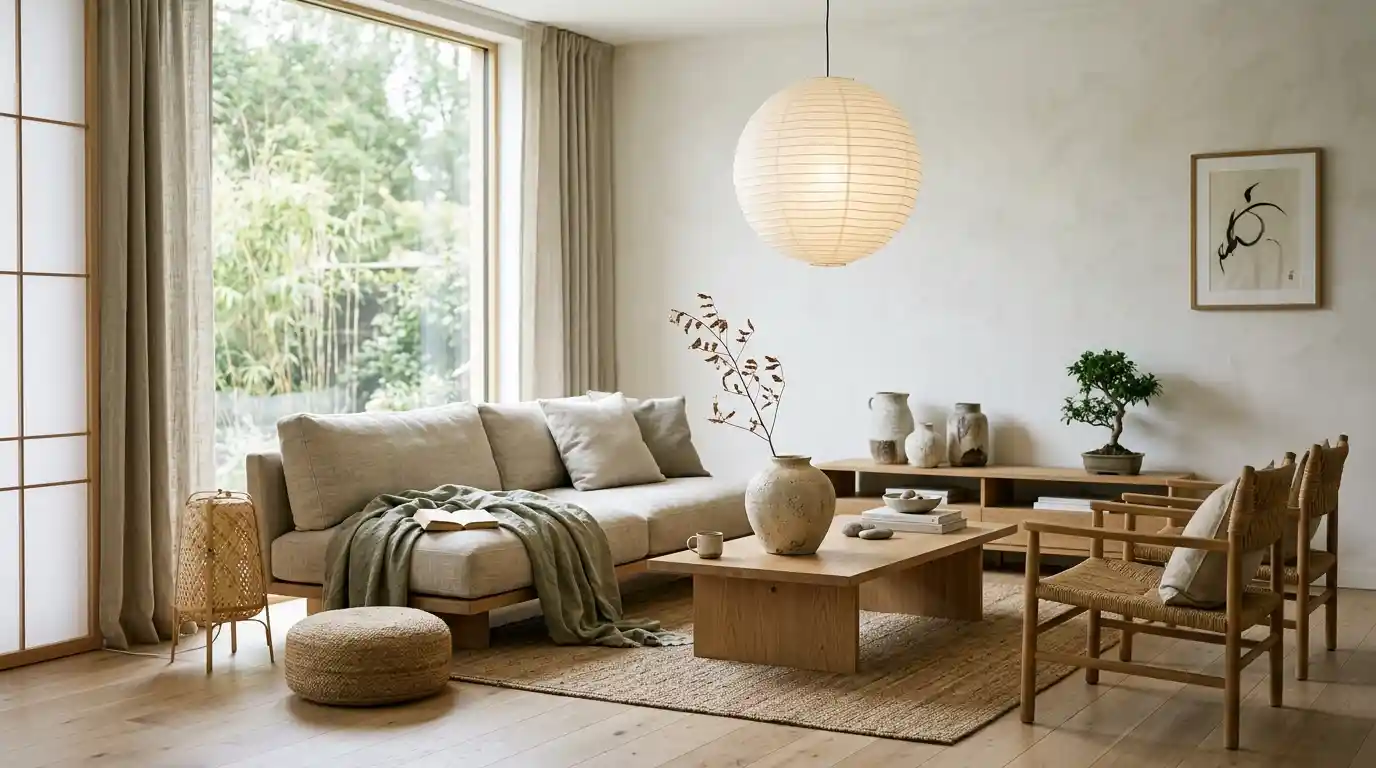
Japandi is located between Scandinavian and Japanese styles. It reflects a sense of calmness with low furniture, natural materials, a neutral palette, paper lanterns, and imperfections in ceramic pieces that create an overall grounding effect. When you enter a Japandi space that has been designed well, there is no need to understand it; you simply feel it settle in around you.
Gustavian design originated in Sweden between 1770 and the early 1800s and was named after the kings who ruled during this period. It featured an evolution of the Rococo curved silhouette toward straight lines, intricate millwork in the form of doors and columns in pastel colors, slim tapered legs, and largely symmetrical layouts.
Biophilic design focuses on creating connection to nature as its first priority. It uses plant walls , green roofs, recycled material for upholstery/furniture, natural light and greenery through out to achieve this. Biophilic design creates an atmosphere of connection to nature that develops through time spent in the space, day after day; not simply an aesthetic experience.
Maximalism exists as the opposite of minimalism and glory in this fact. Using color, pattern and texture is a goal of maximalist design. The key is balance; nothing can become overwhelmed with everything present at once. More is more but more can only be produced when curated wisely.
Americana blends farmhouse charm with midcentury chic. Wood paneling, vintage artwork, functional finishes, checkerboard prints, patchwork quilts, and solid wood furniture give it a distinctly American historical character Colonial, Greek Revival, and Victorian influences all visible beneath the surface.
Palm Beach style is as specific as any inside style gets. The use of sea-inspired colors, patterns, and shapes of furniture combined with scallops and woven textures makes for a very cohesive but also creates a style that will never be matchy-matchy. This style is very preppy and bright and also unapologetically embraces both of those elements.
Alpine chic is an elegant way of living in the mountains as opposed to being a ski resort. The materials used in this style, including reclaimed wood, stone, iron, shearling, wool, and velvet make for a much moodier and richer interior than a basic cabin. This style references the ski resorts in Switzerland and the French Alps.
What Professionals Know That Most People Learn the Hard Way
Designer Nate Berkus once said the best design projects came from clients who broke all the rules. Designer Annie Elliott pointed out that a consistent color palette blurs the lines between styles so effectively you stop needing a label for what you have built.
That is the real thing inside styles teach you. Joanna Gaines built a career blending farmhouse aesthetic into something more modern and collected. Corey Damen Jenkins makes traditional design feel genuinely fresh by mixing it with unexpected contemporary detail. Jill Abelman of Inside Style in Las Vegas working with residential clients since 2004 coined the word Organiglam to describe spaces that are functional, organic, and beautiful together. Style labels are useful starting points. After that, your lifestyle decides the rest.
Conclusion
Indoor design does not just include a room’s appearance on any particular day, but also extends the way the design is able to function with regard to your actual life — to the things you enjoy doing, the spaces you have lived before now and the pieces that will make you truly happy living there. No matter if you are interested in the hard, unrefined beauty of industrial style, the peacefulness of minimalist Scandinavian design, or the rich, cozy aesthetic of a bohemian space, the effective design that works for you will be the one that represents your personality. An indoor design should offer you a point from which to develop your ideas, along with a means of verbalizing them. All that remains is for you to complete the journey.
FAQs
Interior design styles are different visual approaches that shape how a room looks and feels through colours, materials, furniture, textures, and layouts. Styles such as traditional, modern, contemporary, Scandinavian, industrial, and bohemian help homeowners create spaces that reflect their personality and lifestyle.
Modern interior design is linked to the early and mid-20th century, focusing on clean surfaces, minimal decoration, and materials like glass, metal, and chrome. Contemporary design refers to current trends and often combines different influences with features such as organic materials, open layouts, and softer shapes.
Start by considering how you want your space to feel and how you use each room. Look at elements such as colour preferences, furniture needs, textures, and lifestyle habits instead of choosing a style only because it looks good in pictures.

3 thoughts on “Inside Styles Explained: How to Find the Right Look for Your Home”