
My cousin gutted her primary bathroom last year expecting to spend around fifteen thousand dollars, and she ended up closer to thirty two once the contractor found out her drain lines needed moving to fit the layout she wanted. She loves the result. But ask her about the process and the first thing out of her mouth is that nobody warned her plumbing is where bathroom budgets go to die. That’s basically the whole story with bathroom remodel ideas people find online. Everyone talks tile. Almost nobody mentions the layout decision sitting underneath it, the one that quietly doubled my cousin’s number before she’d even picked a paint color.
The Layout Decision That Determines Your Entire Budget
Before tile samples or paint chips show up, the actual footprint of the room needs sorting first. This one decision drives basically everything that follows, invoice included.
Wet Rooms and Curbless Showers Worth the Extra Cost
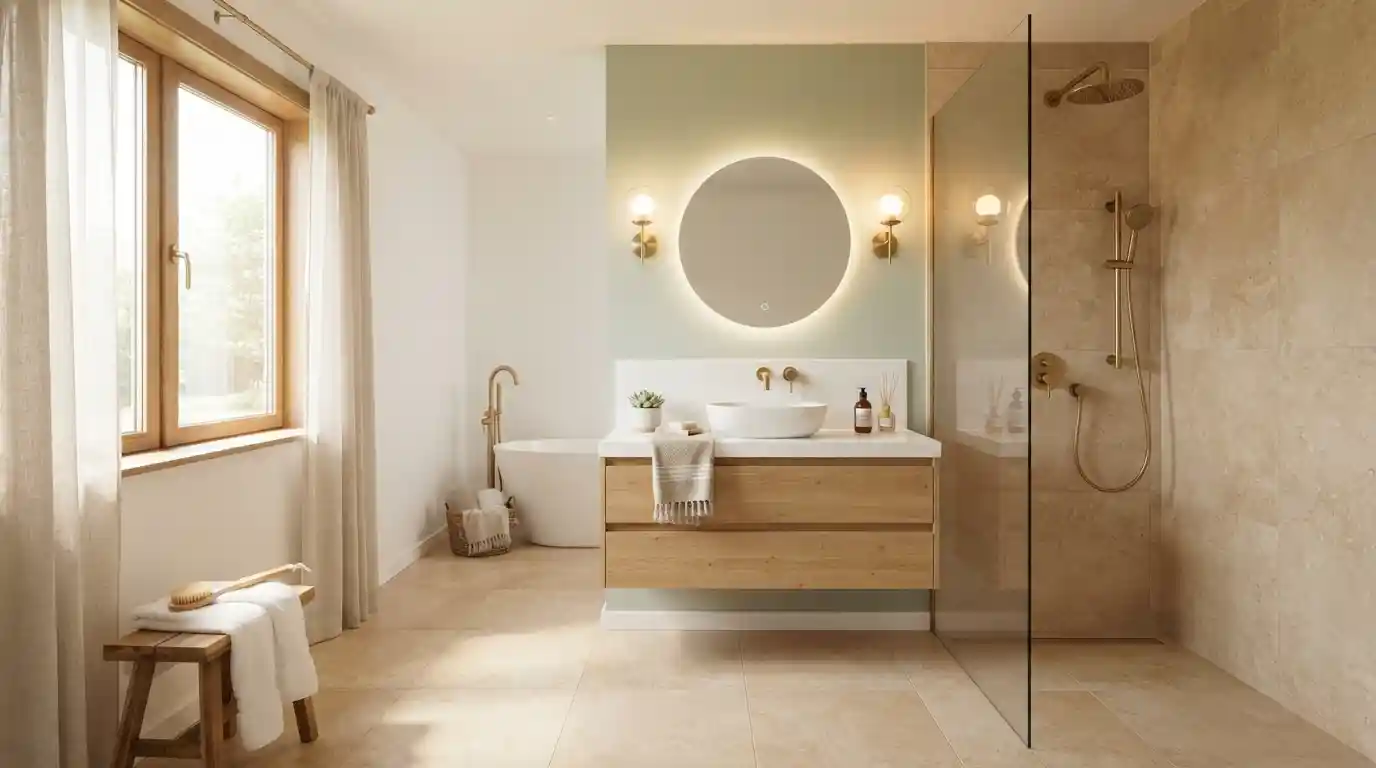
Everyone wants a wet room right now, and honestly, I get why. Recess the subfloor, run a linear drain, and tile just flows from the dry side into the shower with nothing to step over. My cousin did exactly this, and her small primary bath genuinely feels twice its size now because of it. It’s not purely aesthetic either. A curbless entry works better for anyone dealing with mobility stuff, now or later, which matters if this remodel’s supposed to last a decade or two. Here’s the catch though. Recessing a subfloor and adding a linear drain almost always means messing with existing plumbing, and that’s exactly what blew up my cousin’s original number.
If your current layout can stay put, keep it. Sticking with existing drain and water lines can save thousands without changing the actual look you’re going for. A full wet room job in a standard hall bathroom usually lands somewhere between fifteen and thirty five thousand dollars, region and finish dependent, while a primary spa bath with premium stone can run past ninety grand in pricier markets. Good to know that range exists before falling for a layout your budget can’t actually cover.
Keeping Plumbing in Place to Protect Your Budget
Whether the toilet, shower, and sink stay put or move is honestly the single biggest lever on price here. Move one drain line and you’re looking at another fifteen hundred to three thousand dollars, before any actual finish work starts. My cousin’s contractor brought this up almost casually during their first walkthrough. She’ll tell you now that was a pretty massive detail to mention in passing. Here’s the thing though, a lot of those gorgeous bathroom photos everyone shares are secretly the exact same layout the house already had. Just dressed up completely differently.
A decent designer works within your existing plumbing and still gets you a new vanity spot, a reworked shower, updated fixtures, no pipes touched. Big deal if money’s tight, since whatever doesn’t go toward moving pipes can go toward nicer tile instead. Ask straight up, early, whether the layout you want means moving plumbing. My aunt asked that question on her own remodel a few years back and dodged a nasty surprise because of it.
Color and Material Choices That Won’t Feel Dated in Five Years
Layout settled, now color and material is where personality actually enters the picture. Trends move faster here than in almost any other room in a house.
Warm Neutrals Replacing the All White Bathroom
The stark, sterile all white bathroom is finally losing steam, thank goodness, replaced by something warmer that actually feels like someone lives there. Oatmeal. Taupe. Soft beige. Creamy ivory. These are what people keep grabbing now, often paired with a muted sage somewhere in the room. My aunt repainted her guest bath in a warm clay shade last spring, nervous it’d date fast, and it’s aged better than the cool gray it replaced by a mile.
Buyers respond to warmth too if resale ever crosses your mind, way more than a cold white box. Terracotta and deeper clay tones look especially good next to wood vanities and stone, everything just clicks. Add black or brass hardware against those warm tones for contrast, otherwise the room goes flat fast. If I had to bet on one safe long term move, pick a solid neutral base, then let one thing, a tile pattern, a vanity finish, do the personality work.
Large Format Tile and Natural Stone Surfaces
Large format tile is nearly the default now for shower walls, mostly because fewer grout lines means less scrubbing, cleaner look, done. My cousin’s shower runs porcelain floor to ceiling in one continuous piece, no tiled box feeling at all. Natural stone brings real texture, especially when the same slab runs from countertop down the vanity’s side panel. Sintered stone works as a cheaper stand in if real stone’s out of reach.
Statement tile still earns its keep though, particularly in a powder room, where one bold pattern carries the whole room without needing much backup. My aunt’s powder room has a single striking hexagon floor against plain white walls. Every guest brings it up. Bold tile only works if everything around it stays quiet, that’s really the whole trick. Whatever combo gets picked, matching the tone across walls, floor, and vanity makes even a tiny bathroom read bigger than it measures.
Storage and Vanity Choices That Make a Bathroom Actually Function
Looks aside, storage is what determines whether a bathroom actually works day to day, and this is exactly where pretty remodels quietly fall apart.
Floating Vanities and Storage That Cuts Real Clutter
Floating vanities have taken off, mostly because they make a room feel bigger while still holding plenty underneath. Deep drawers, hidden outlets, counter stays clear, floor space doesn’t shrink. My cousin picked one specifically so she could still see floor beneath it, and her fairly average sized primary bath suddenly felt roomier because of it. A double vanity works well for two people getting ready at once, assuming there’s genuinely enough width so elbows aren’t colliding.
Vessel sinks add a sculptural touch on top, though you’ll want taller counters underneath so they’re actually usable each morning without hunching. Open shelving with good baskets, folded towels, warms up a bare vanity wall, provided it stays tidy instead of becoming clutter’s new home. Whatever setup gets chosen, the real point is less friction day to day. Fewer things sitting out. Towels within reach. Not just something photogenic that falls apart the second real life shows up.
Lighting That Changes How a Bathroom Actually Feels
Lighting probably shapes mood more than any single other decision in a bathroom, and it’s the thing people budget for least. Sconces at eye level, one either side of the mirror, beat a single overhead fixture every time, no harsh shadows ruining your morning routine. My aunt split her mirror lighting and overhead lighting onto separate switches. Bright for makeup. Dim and soft at night. LEDs around 2700K to 3000K throw a warmer glow than the cold daylight bulbs that used to be standard in every bathroom.
Backlit mirrors have gotten popular too, soft ambient glow, no extra fixtures or rewiring needed beyond the mirror itself. Radiant floor heating costs more going in, sure, but paired with layered lighting it builds that calm, spa feeling most people actually want from a remodel in the first place. Layered lighting instead of one harsh overhead bulb costs relatively little next to tile or plumbing. Changes how the whole room feels, every morning, for years.
Conclusion
My cousin’s bathroom came out gorgeous. But if you asked her what actually mattered, she wouldn’t say tile or paint. She’d say plumbing and layout run the whole show, long before anyone’s picking finishes. Keep the drains where they are if that’s an option. Go with a neutral that’ll still look right in five years. Don’t cheap out on lighting just because tile’s more fun to shop for. Get those three things sorted early, and everything picked after that just fits.
Frequently Asked Questions
How Much Does a Full Bathroom Remodel Actually Cost?
A well planned full bathroom remodel with new tile, a vanity, updated fixtures, and fresh plumbing typically runs between $10,000 and $25,000 in most American markets. Costs climb toward $35,000 or beyond for primary bathrooms with a wet room, freestanding tub, and premium natural stone finishes.
What Bathroom Remodel Ideas Add the Most Resale Value?
Curbless walk in showers, durable quartz or stone surfaces, quality layered lighting, and warm neutral color palettes tend to return the most value at resale. Timeless, well built upgrades consistently outperform trendy finishes that risk feeling dated within a few years.
Can I Remodel a Bathroom Without Moving the Plumbing?
Yes, and it’s one of the most effective ways to control cost. Keeping the toilet, shower, and sink in their existing footprint avoids the fifteen hundred to three thousand dollar cost of relocating even a single drain line.
Is an All White Bathroom Still a Good Choice?
All white bathrooms remain clean and timeless, but they’re gradually being replaced by warmer, earthier palettes like taupe, oatmeal, and soft sage green. A warm neutral base tends to photograph better and appeal to a broader range of buyers at resale.