
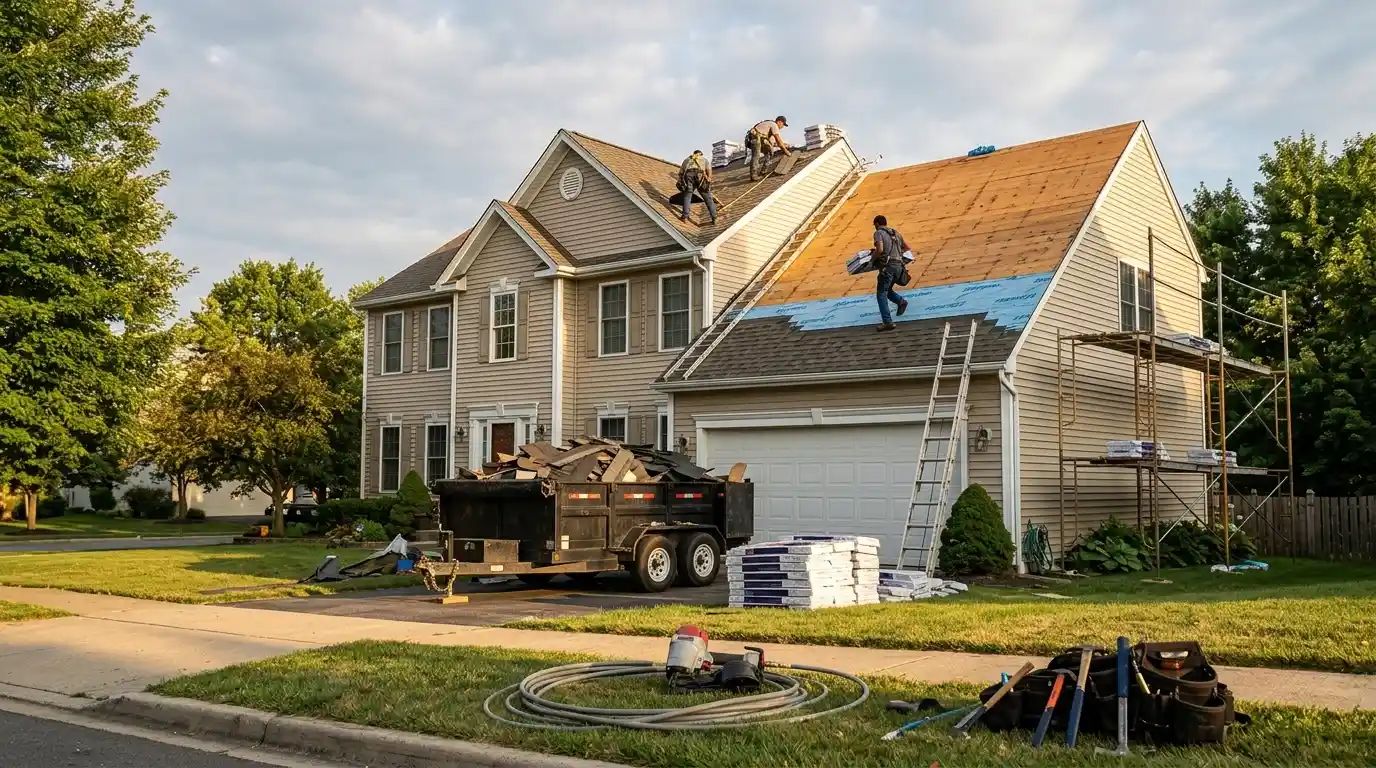
I got quoted $9,200 last year. My cousin, two states over, same size house, basically the same shingles, got quoted $19,000. Same year. Nobody warns you the gap can be that wide. So if you’re typing how much is a new roof into Google at 11pm because you just found a stain on your ceiling, here’s the actual breakdown, US and UK both, not the vague “it depends” answer contractors love to give.
What A New Roof Actually Costs In The US
Numbers online are all over the place and honestly, some of that’s real, not just SEO noise.
The National Numbers, Roughly
A typical homeowner will usually have to pay anywhere between $9,000 and $18,000 for asphalt shingles by 2026. According to NerdWallet, the average stands at $9,500, but could range anywhere between $5,800 and $47,000 for more difficult and unappealing projects. In This Old House’s calculations, 1,500 square feet home costs around $9,313, but labor alone takes up approximately 60% of it. Metal or tile roof might cost you more than $50,000.
There simply is no right answer. There’s a range, and where you fall in it depends on stuff most people don’t think about until the quote arrives. New York homes with architectural shingles run $10,000 to $22,000 typically. Manhattan’s worse, sometimes $14,000 to $28,000, because permits and access are a nightmare there. Atlanta and Sacramento sit closer to the middle. Coastal areas cost more almost every time. That’s just labor economics, not a scam.
Why Two Identical Houses Get Totally Different Quotes
Size matters most, obviously. Roofers work in “squares,” one square is 100 square feet. A 1,200 sq ft roof needs 12 squares. Simple math, right? Except your actual roof surface is usually 20-30% bigger than your home’s footprint once you factor in pitch and overhang. People forget this constantly and then act surprised. Steep roofs need more safety gear and take longer, which means more labor hours billed. Dormers, valleys, skylights, chimneys, all of it adds cutting and flashing time.If, for instance, your neighbor has an ordinary gable roof while you have three dormers with a chimney on your roof, then don’t expect them to be the same. They won’t be
What A New Roof Costs In The UK
Same question, different money, honestly just as messy.
UK Averages, Roof By Roof
Checkatrade’s number is £8,000 average, most homeowners land between £4,000 and £19,000.The prices in case of MyBuilder would be slightly cheaper, ranging from £5,500 to £7,000. The gable end roof, being the simplest one, would cost from £5,000 to £8,000. The price for the hip roof would be high because it is difficult to build. Both the sides of the hip roof slope towards the eaves, costing it to range from £8,000 to £12,000.
What about the flat roofs? Well, those belong to the specialist category where costs vary wildly based on what lies underneath. When replacing the roof of a three-bedroom semidetached house in the Midlands region, costs may vary from £7,000 to £16,000. But remember London and the South East tend towards the higher end of the scale, at times going above £18,000. Get that confirmed in writing though, don’t just assume it.
Per Square Metre, If You Want The Real Math
A conventional owner of a house in Britain will spend somewhere between £90 and £220 on roof replacement per square meter. The cheapest type of material is concrete tiles that cost from £65 to £90 per m2. Clay tiles are a bit more expensive and cost about £75 – £105 per m2. The most expensive option is natural slate that costs from £120 to £200 per m2, especially Welsh slate.
EPDM rubber for flat roofs runs £45 to £100 per m². Cheaper torch-on felt is £40 to £65 per m² but wears out way faster. A 65 square metre semi roof with concrete tiles lands around £4,000 to £5,850 for materials and basic labor. Bigger roof, bigger number, no surprise there.
The Material You Pick Changes Everything
This is where I’d spend the most time researching if I did it over again. Genuinely.
Asphalt shingles are cheapest in the US, $4.50 to $9.50 per square foot installed. Architectural shingles cost a bit more but last 25-30 years instead of 15-20, so do the math on that trade-off yourself. Standing seam metal runs $8 to $18 per square foot and can go 50-70 years without much fuss. Aluminum’s cheaper than steel. Copper sits at the top of the metal tier, price-wise. Zinc standing seam falls somewhere in the middle.
In the UK, EPDM dominates flat roofs because it just outlasts felt, no contest really. GRP fibreglass costs more than EPDM but holds up better on small extensions and porches. Wood shakes (usually cedar) run $9 to $14 per square foot, look genuinely gorgeous, and demand constant upkeep plus a dry climate. Don’t pick cedar if you live somewhere damp. I’ve seen people regret that one.
Clay and concrete tiles both last 50 years or more. Natural slate can outlast the house itself, sometimes 100 years, though it’s $15 to $30 per square foot in the US. Synthetic slate mimics the look for way less money. Thatched roofs, mostly rural England, run £90 to £225 per m² and need a specialist, not your average roofer. Solar tiles and green roofs are the newer, sustainability-angle options. Lead roofing still shows up on heritage or listed buildings, valued for lasting basically forever despite the steep price. When someone asks me how much is a new roof for premium materials, I always say calculate cost per year of expected lifespan. Sticker price alone lies to you.
The Extras Nobody Mentions Until The Invoice Arrives
Materials and labor get the spotlight. The hidden stuff is where budgets actually blow up.
Scaffolding is around $800 – $1,800 in the US, or about £900-1,800 in the UK if you’re working on a three-bedroom semi. Permits cost about £50-£300 in the UK or $100-$500 in the US, depending on your council. Removal costs for waste and hire of skips for old materials are an additional £100-£1,000. If you have a shared wall, a party wall agreement will be needed, and surveyors’ fees are about £7 Rotten rafters, rotten battens, damaged decking discovered mid-tear-off, these can add thousands with zero warning. Loft insulation upgrades become mandatory under UK Building Regs once you replace over 25% of a roof, even if you didn’t plan on doing that.
Asbestos removal on older UK bungalows adds £500-£1,500 and legally needs a licensed contractor, no shortcuts there. Chimney flashing and skylight installation add specialized costs too. None of this is a scam. It’s just stuff base quotes conveniently leave out. Ask for an itemized breakdown before you sign anything. That one request protects you more than almost anything else in this entire process.
Signs You Actually Need One
Timing matters. Wait too long and it almost always costs more.
Water damage or damp patches in the loft, usually the first clue. Missing shingles, slipped tiles, broken tiles, all let moisture creep under the surface and quietly rot decking for months before anyone notices. Granule loss on asphalt shingles (that grit collecting in your gutters) means the material’s near the end of its life. A sagging roofline from the street usually means something structural, not just cosmetic. Cracked tiles shouldn’t be ignored even if it’s just a couple after one storm. A roof inspector can catch this stuff during a survey, usually $150-$400. Cheap insurance against discovering full structural rot mid-project.
Asphalt lasts 15-30 years depending on weather. Clay and concrete tiles often hit 50 years. Metal and natural slate can go past 50, sometimes 100, with decent maintenance. Near the end of that range? Replace proactively instead of waiting for a leak to force your hand. Homeowners insurance sometimes covers storm damage claims, wind or hail specifically. Routine wear almost never qualifies though, so check your actual policy before assuming anything.
Getting A Quote You Can Trust
Once you get the variables, getting an honest number is way easier.
Get at least three quotes, always. A price way lower than the others is usually cutting corners somewhere, not a lucky break. Check licensing, insurance, and NFRC or FMB membership in the UK before signing. Ask for references from recent, similar jobs. Extended warranties run $500-$5,000 depending on coverage, and workmanship warranty terms vary a lot between contractors, so actually read them. Financing and payment plans are common now too, if spreading the cost out matters to you.
Conclusion
So, how much is a new roof, really? There’s no single number, and that’s not me dodging the question, it’s just how this works. Your final price depends on material, size, shape, regional labor, and the hidden extras that only show up once the old roof’s off. What I took from my own quote gap with my cousin: get multiple quotes, ask for an itemized breakdown, and know your roof’s real condition before anyone shows up with a ladder.
Frequently Asked Questions
US: $9,000-$18,000 for asphalt, up to $47,000 for bigger or premium jobs. UK: around £8,000 average, typically £4,000-£19,000.
Asphalt shingles in the US. Concrete tiles or traditional felt in the UK.
Sometimes, for sudden damage like storms or hail. Routine aging almost never qualifies.