
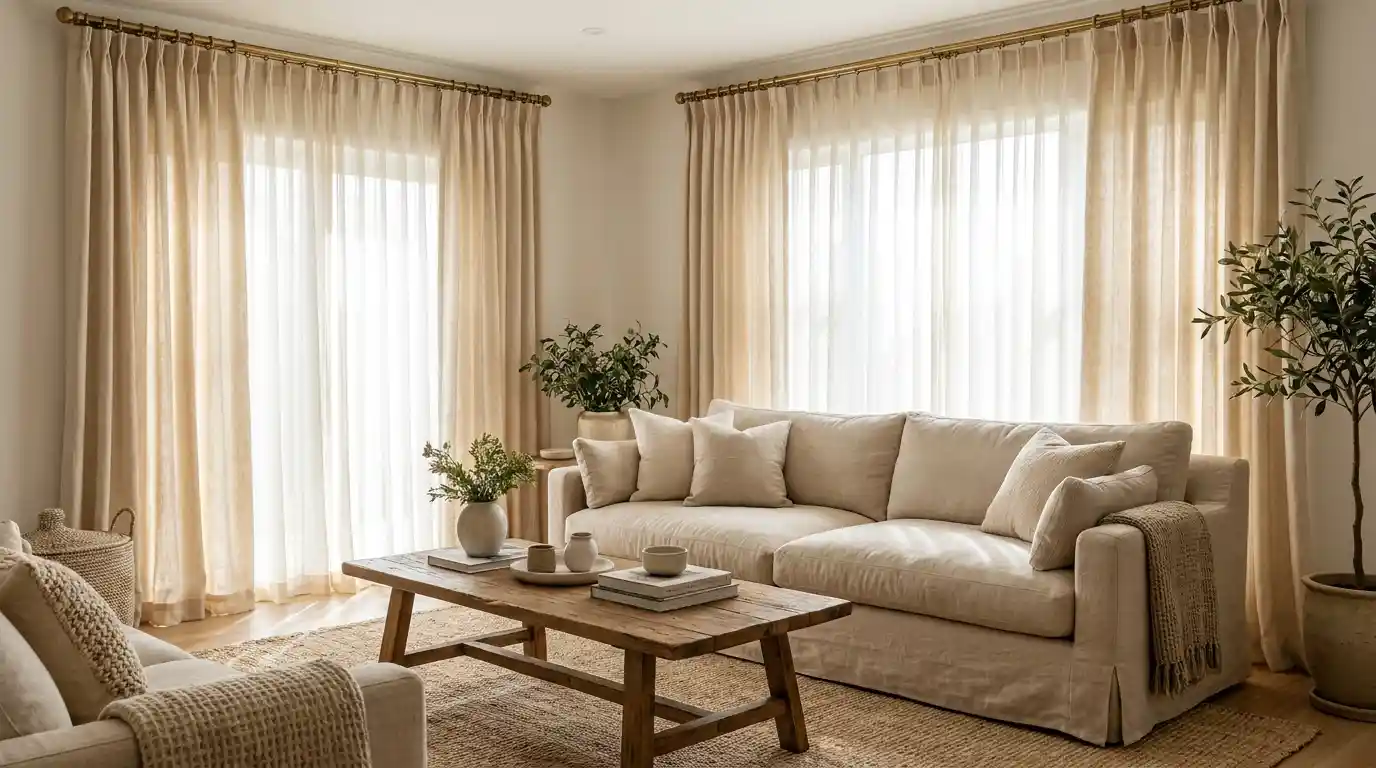
It appears that there is an aspect of choice regarding picking curtains for your house. I have been through this myself, and I know what it feels like to pick the wrong curtains for your living room. My living room felt really off until I decided to change my old curtains with new ones which felt better. This one change completely changed the look of my room. Though we may consider curtains as just fabric hanging on the glass, they are the last thing we install when doing interior designing.
Why Window Coverings Deserve More Thought Than They Usually Get
For most individuals, curtain selection is usually the final consideration when decorating their houses. I have been a witness to this phenomenon many times in beautifully decorated rooms but one key factor was missing from the entire process. The choice of curtains affects the quantity of light entering the room, whether the room is warmer or colder, and even the overall atmosphere inside the room. Window treatment affects the size of the room.
Curtains from ceiling to floor give an impression of taller ceilings, which even architects would appreciate. Putting up a valance on top of the windows gives the room architectural appeal without undergoing any renovations. Even hanging some café curtains in your kitchen can alter its cottage-like feeling.
Fabric First: The Foundation of Every Great Curtain
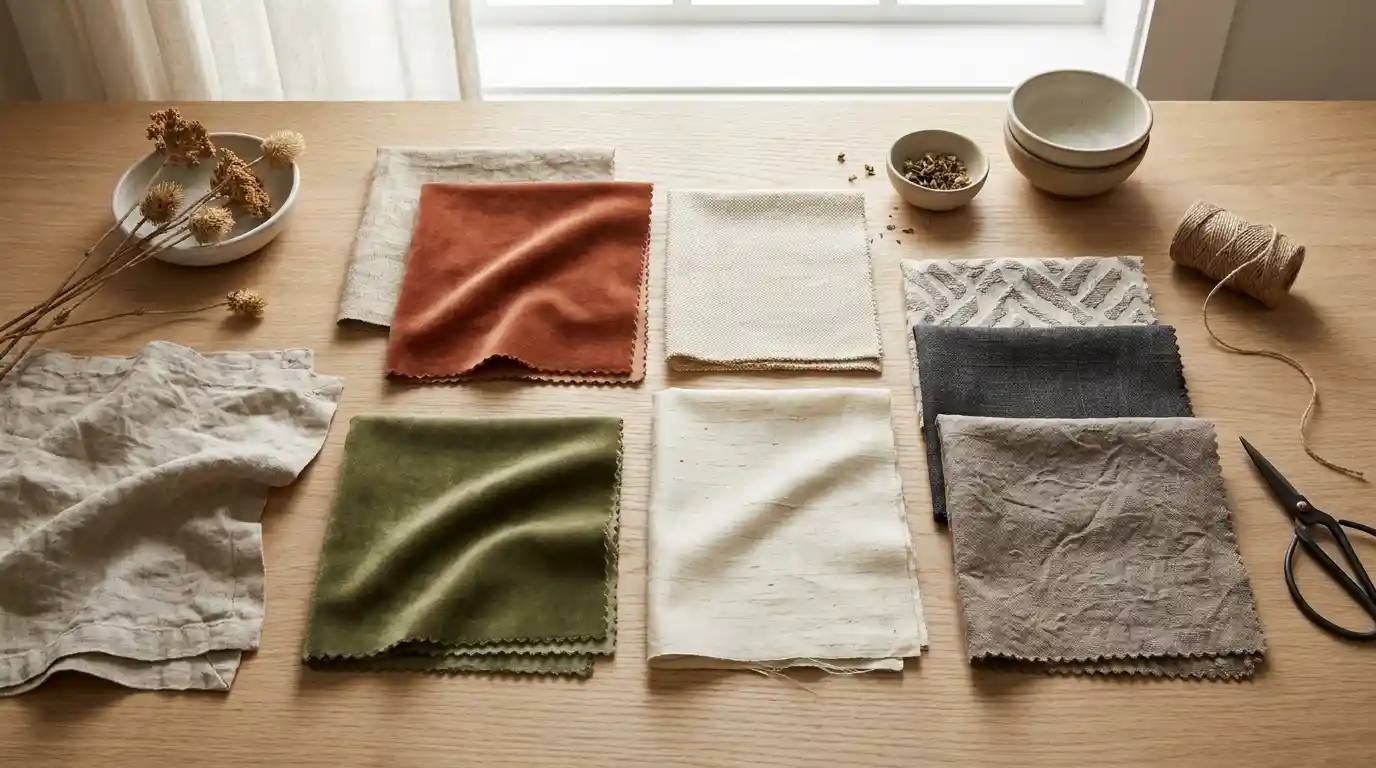
The type of material used is responsible for every aspect, including drapeability and even energy savings. My advice to people is always to check out the fabric. Linen drapes have a natural and unique look and are ideal for farmhouse style and rustic interior designs. Drapes made of cotton give clean lines and are perfect for contemporary interior design and minimalist interior settings. On the other hand, velvet drapes offer luxurious textures and are best used for winter interior designs.
Silk drapes are the most sophisticated choice, but they need special care and are expensive than polyester blends. Polyester drapes offer great value when compared to silk and should be considered if one is looking for affordable ready-made drapes. Jacquard fabric stands apart for patterned curtains because the weave itself creates the pattern no printing needed. Wool is less common but genuinely excellent for thermal curtains in colder climates where insulation matters daily.
The Role of Color in Your Curtain Decision
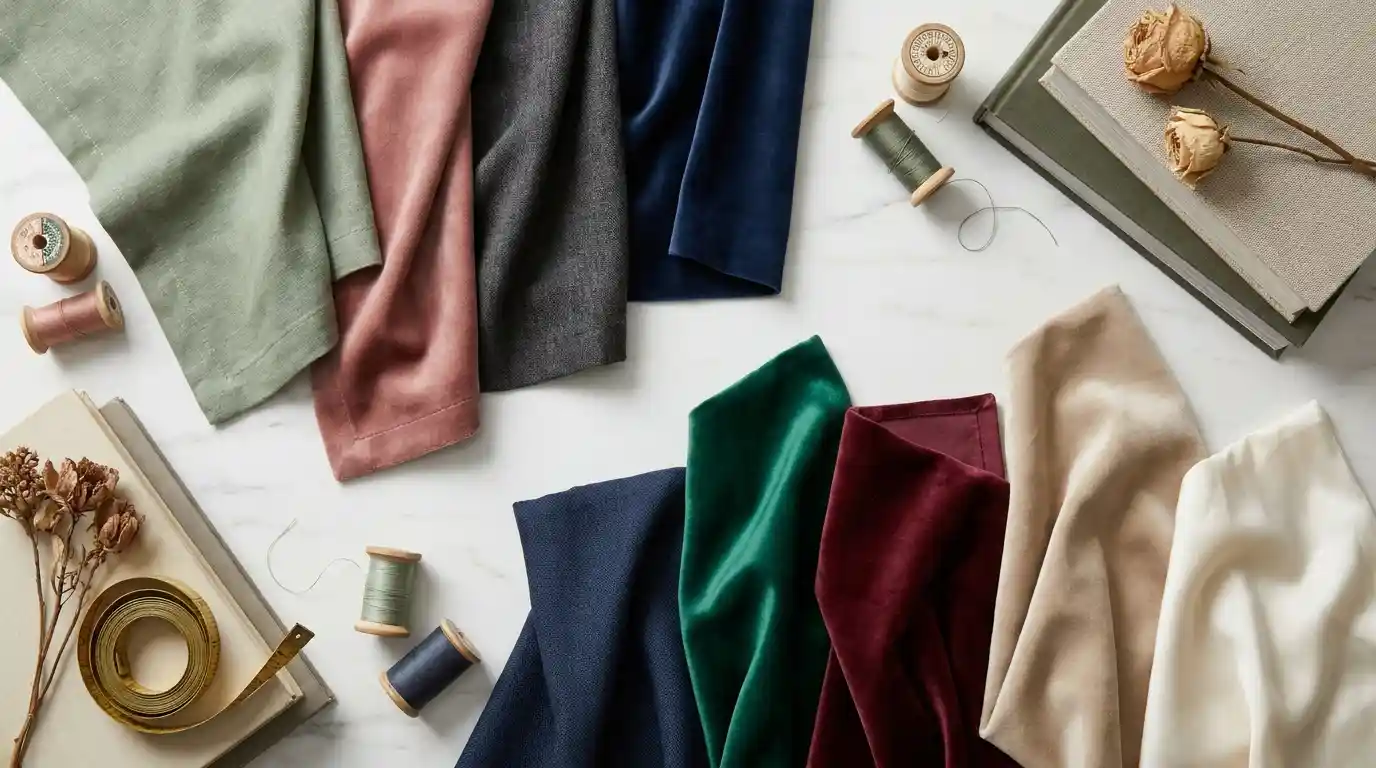
This is precisely the point where home decoration becomes fascinating and intimidating at the same time. Beige, ivory, and taupe are always safe colors that suit almost any color scheme or interior type. I would choose these options for my clients who aim for timeless designs that will last for three years and more. Nowadays, sage green is a color I am particularly fond of. It goes perfectly with earthy colors and natural elements.
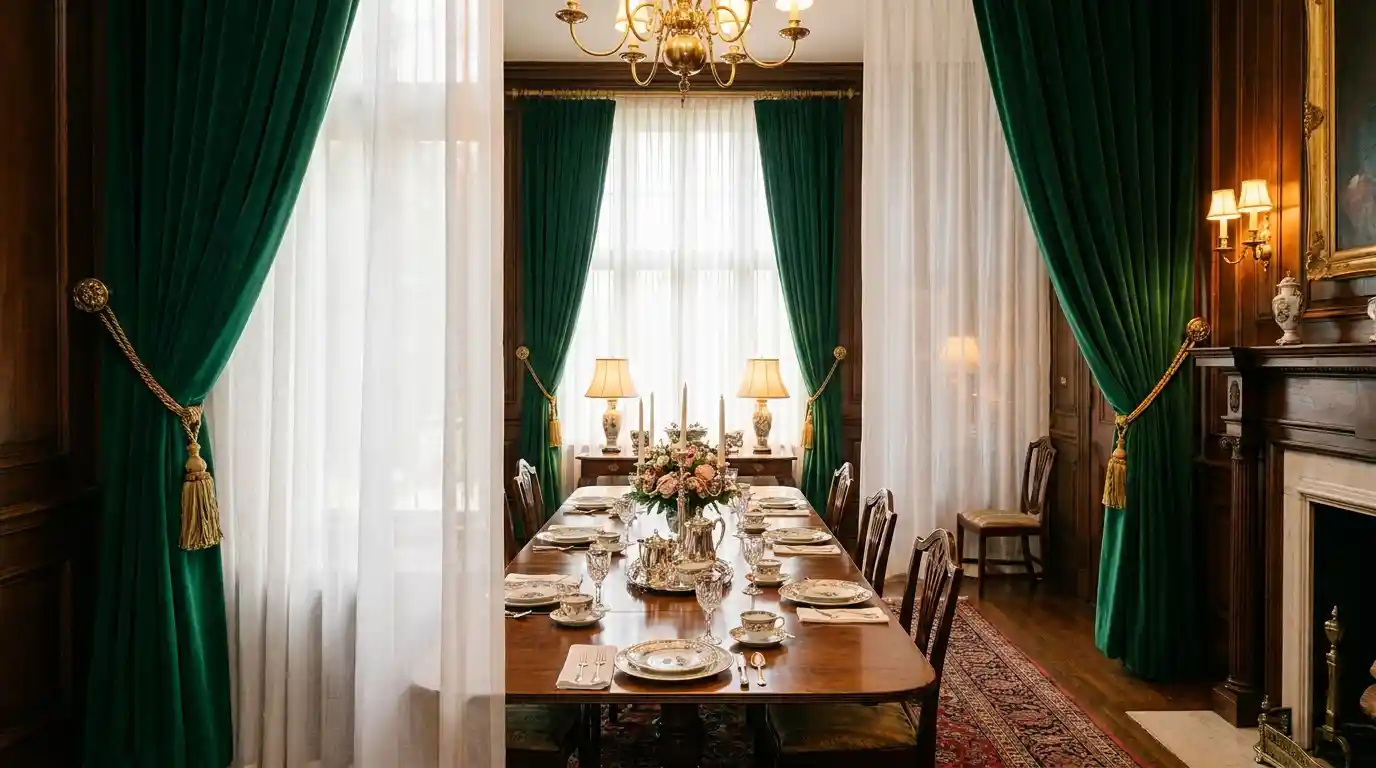
“Charcoal curtains are effective in asserting their dominance in the room while not affecting the other interior elements. Dusty rose helps add warmth to bedroom interiors, while navy curtains help make striking contrasts in white walls of the living room. ‘Emerald’ and ‘Burgundy’ are always viewed as daring color choices that accentuate windows and emphasize planning and foresight since Day One.”. If you prefer striking patterns, both floral and geometric ones can do the trick but in a completely different way.
Curtain Styles, Pleats, and Heading Types That Actually Matter
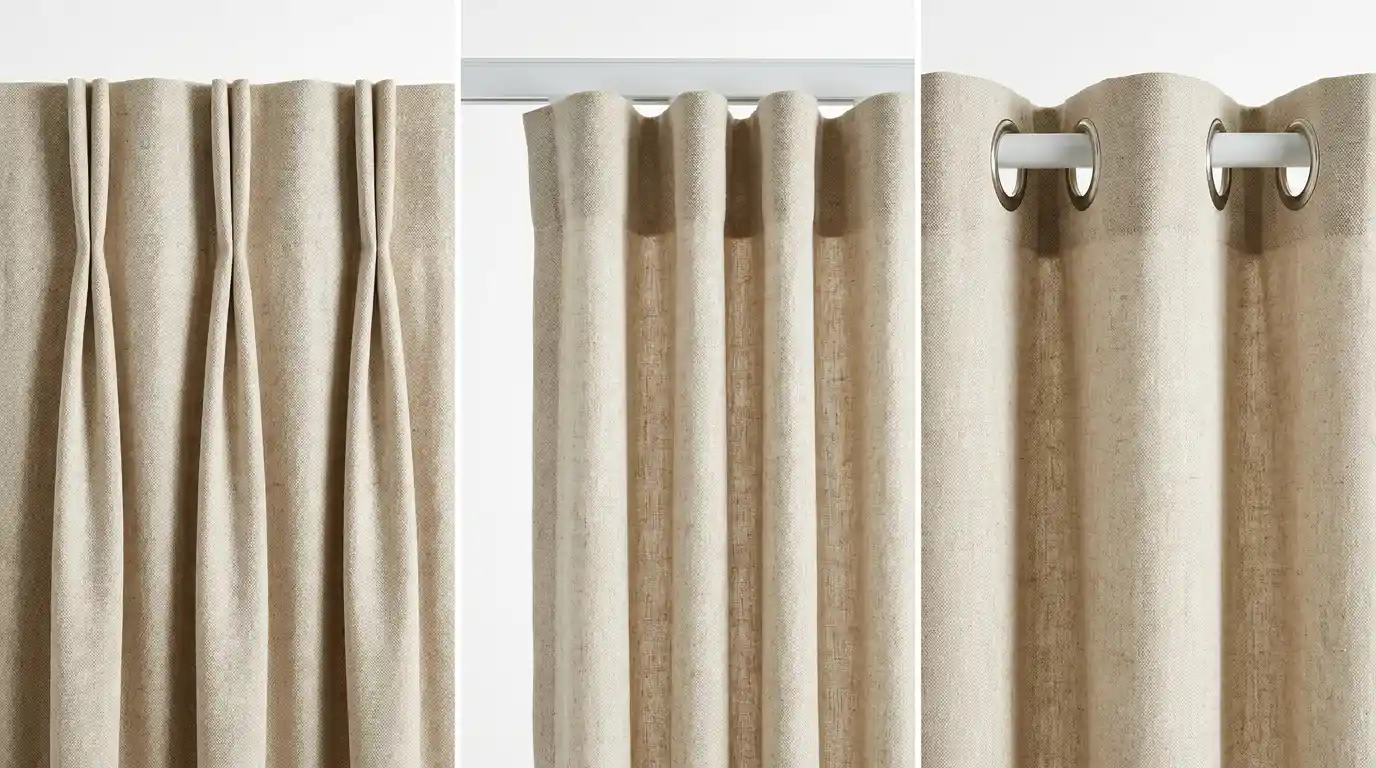
The heading style of your curtain panels affects the way fabric falls and how the window reads visually. A pinch pleat is my personal favorite for traditional curtains or elegant interiors because the formal fold adds real curtain fullness and structure to any room. Wave fold curtains are the contemporary go-to their soft, continuous ripple creates an effortlessly polished drape effect. Grommet-top curtains, sometimes called eyelet curtains, have a clean and casual look that suits modern curtains in relaxed spaces.
Tab top curtains are the most relaxed heading option and suit bohemian or eclectic design settings well. For a truly luxurious, double dressed window look, layering sheers behind heavier panels gives depth while maintaining excellent light control throughout the day. This sheer layering technique is one of the most effective decorative layering strategies available without spending a fortune.
Curtain Rods, Hardware, and the Details Most People Skip
Even the most beautiful curtain panels can look wrong with the wrong curtain rods. The rod is not invisible it is part of the overall window decor solution. Brackets, rings, and the rod finish should complement your room’s metal accents consistently. Sliding tracks work exceptionally well for wide windows or floor-to-ceiling panels in open-plan living spaces. Tiebacks add a classic decorative accent that lets natural light flood the room during daytime hours.
The rod height matters enormously mounting rods closer to the ceiling rather than directly above the frame creates that desirable ceiling height illusion I mentioned earlier. For rod placement, a general rule is to position the rod four to six inches above the frame at minimum. Curtain installation done properly makes even affordable curtains look like custom drapery from across the room.
Light Control, Privacy, and the Practical Side of Curtains
Interior styling is partly about beauty, but practical curtains are just as important in daily life. Blackout drapes with blackout backing are necessary for bedrooms in which good sleep is dependent upon total darkness at night. The thermal backer acts as an insulator, particularly during the winter season, ensuring that heat is retained indoors and minimizing heating bills progressively. Therefore, the current tendency towards marketing thermal curtains as energy savers instead of window dressings.
Acoustic performance is yet another overlooked benefit of heavier materials such as velvet and wool that reduce external sound once professionally installed. When visual privacy is necessary but there is a need for light improvement, then using light filtering sheers is the best option. These turn the strong sunlight into soft lighting that makes everything look brighter.
Measurement Tips That Prevent Expensive Mistakes
Getting measurements wrong is the most common and costly curtain mistake I encounter. Just having an idea about the size of the window will not help in determining how much fabric you will need to create your desired look. At least one-and-a-half to two-and-a-half times the width of the window should be available for the panel to ensure the proper drapery effect. The long drapes which trail a little below the floor level make your décor more lavish, whereas floor drapes which just touch the floor level create a more contemporary effect.
For high windows, opt for the single-panel or double-panel type, rather than stacking several panels. Mounting your drapery rod on the ceiling will always give a higher look to your room. The fullness ratio and accurate rod height calculation are the two measurements that separate a polished result from a disappointing one every time.
Matching Curtains to Room and Interior Style
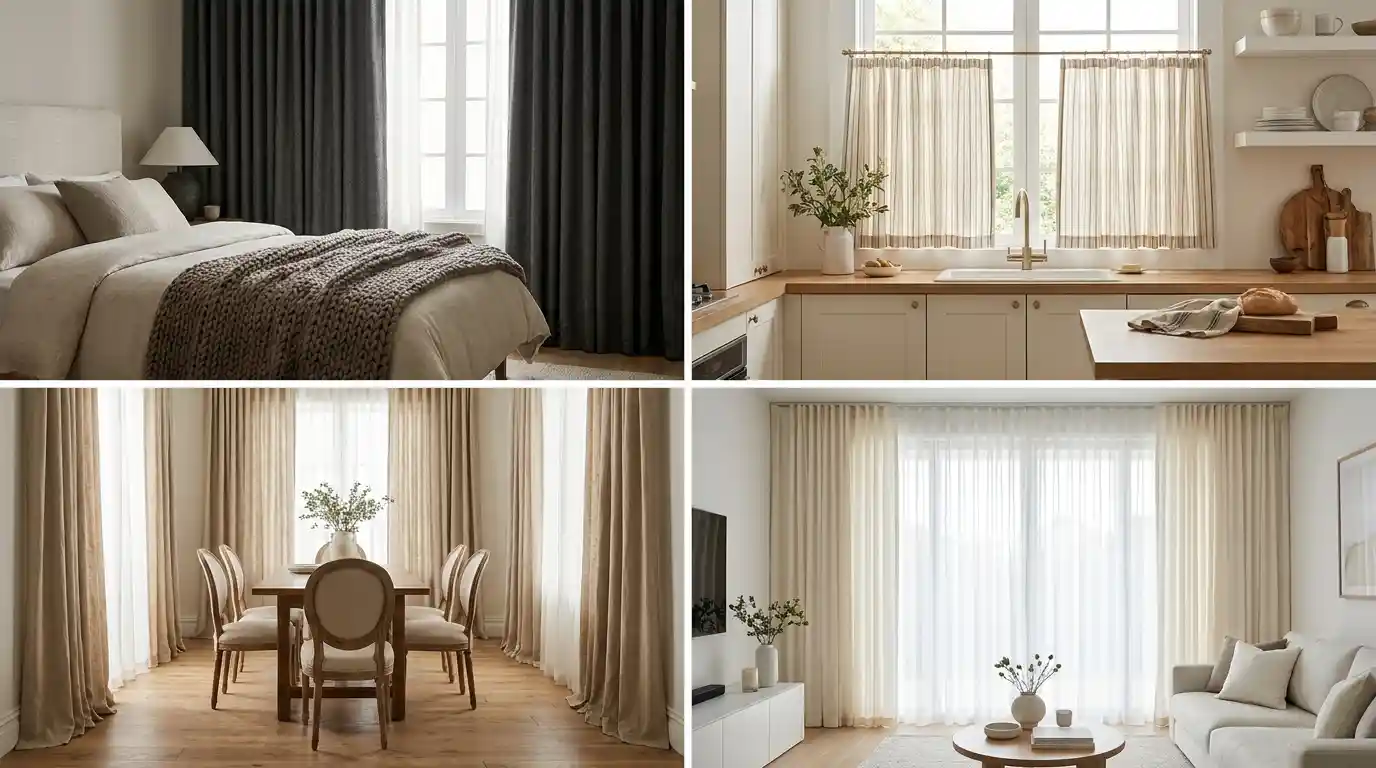
Bedroom curtains take privacy and black out capabilities into much greater consideration than any other aspect when designing them. Living room curtains are generally the most decorative type of curtain in the house because visual aesthetics become more prominent there. Café and tier curtains are the preferred options for kitchen curtains because practical considerations become paramount there.
The moisture resistance of the material used to manufacture bathroom curtains and its easy maintenance is vital. In case of dining room curtains, high-quality materials like linen, jacquard, or velvet can add luxury. Whatever type of curtains we go for, it is important that their mood complements the mood of the entire room.
Layering, Trends, and the Longer View
The 2025 and 2026 design trends lean heavily toward natural materials, earthy color palettes, and relaxed, organic silhouettes in window decor. Linen and cotton blends dominate because they balance casual softness with sophisticated drape. Layering remains the most discussed technique in designer interiors specifically the combination of a sheer panel behind a heavier decorative curtain for a double dressed window effect.
This provides spatial awareness and perspective, which cannot be replicated by flat and one-dimensional window dressing. Embroideries and trims have come back into fashion as decoratively draped curtains shift from being basic panels to more intricate finishes. Homes and Gardens has constantly demonstrated how the decorative touches used in curtains can transform even the simplest room into something with class. The Masterclass teachers stress the importance of curtain location and proportions for any good room design.
Custom Drapery vs. Ready-Made Curtains
The honest answer to the custom versus ready-made debate is that both have real merit depending on your situation. When it comes to custom drapes, you get exact control over your fabric selection, the choice of lining, and the exact length to suit your windows perfectly. There is a considerable variation in price; however, custom drapes can cost many times the price of their readymade equivalents. When dealing with average window sizes, it is highly likely that readymade curtains by a reputable retailer will do very well.
The only thing you have to do is cut down the hemline of the ready-made curtain, add a tieback that contrasts with the color of the curtain, or change its heading design. These are the key ingredients that you must buy when decorating windows: curtains and curtain accessories.
Conclusion
However, curtains are not merely fabric; they are the silent choice that either makes the room feel complete or incomplete. Through many years spent working on diverse rooms and designs, I have always returned to the realization that nothing, no matter how good the furniture and colors may be, can ever replace the carefully selected curtains. They shape your environment, create your light, and reveal your personal tastes. With the right curtains, your room will finally breathe easy.
FAQs
Choosing the right curtains depends on your room style, fabric preference, privacy needs, and the amount of light you want to control. Consider the curtain material, colour, length, and heading style so they complement your existing interior design.
The best curtain fabric depends on the purpose of the room. Linen works well for natural and relaxed interiors, velvet adds luxury and warmth, cotton suits modern spaces, and thermal fabrics are useful when insulation is a priority.
Custom drapes provide better control over fabric choice, lining, and exact measurements, making them ideal for unique windows or luxury interiors. Ready-made curtains are often a practical choice for standard window sizes and offer a more affordable way to update a room.

5 thoughts on “Curtains That Transform Your Home — Styles, Fabrics & Expert Tips”