
The Reclining Sectional How It Became the Best Choice for Your Living Room Furniture
Every time people shop for furniture, there comes a point where they stand before various items, imagining what they look and feel would like months from now. I remember that exact moment very well.
I was searching for an item capable of providing comfort during movie marathons, weekend relaxation, hosting a toddler, and a pet at the same time. It was only then that I decided on a reclining sectional. I had never seen anything like that, except perhaps for a sofa. But once you learn about these types of furniture and what they have to offer, you will see that they have quickly become the focal point of interior design.
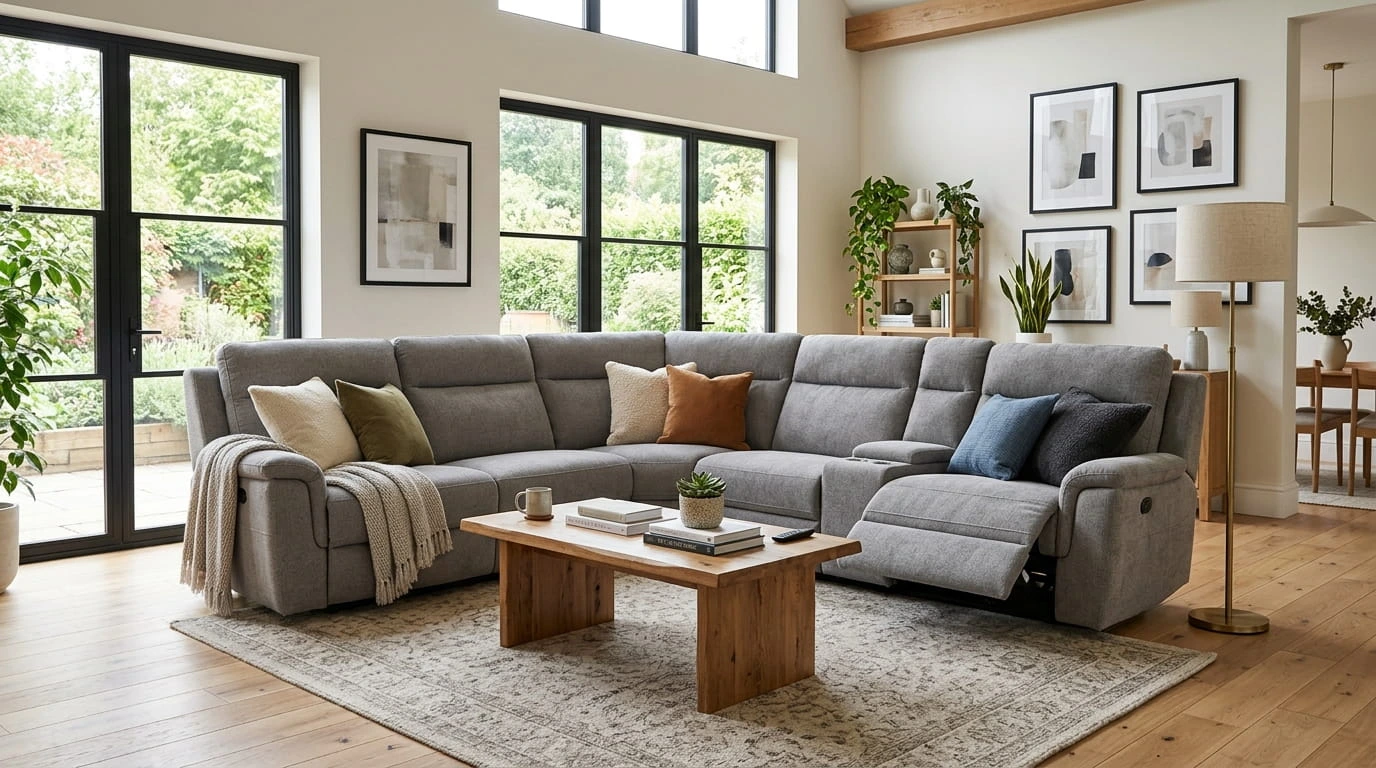
Reclining sectionals are multi-piece sofas designed with built-in recliners, making them much more convenient than regular sofas. While the latter provides comfortable seating options, the former combines it with the practicality of a recliner. Thus, having both in one place, a reclining sectional replaces several other pieces of furniture while saving space. Whether your room layout calls for an L-shaped configuration tucked into a corner or a sprawling U-shape built for larger gatherings, these sectionals are designed to flex around your life not the other way around.
How a Reclining Sectional Actually Fits Into Your Space
One of the greatest fallacies regarding a reclining sectional sofa is that it will dominate the room. But the truth is that if it is selected and installed well, it will do exactly the reverse it will help the room organize around a single point. And the first step towards this is always being aware of the dimensions of your room.
Take accurate measurements and note the locations of the windows, doorways, and other furniture. Generally, it is advised to keep at least 30-36 inches of space free for the main walkways. This becomes especially important with power reclining sofas since they extend further outwards when reclined. Zero clearance/wall hugger reclining sofas have proved to be a wonderful answer to this.
Configuration matters enormously. L-shaped couches, when designed compactly, provide an excellent solution for small rooms and apartments as they create a natural flow of movement within the space through the open side of the L while maintaining focus and coziness within the seating area. Alternatively, U-shaped arrangements give a feeling of being in a movie theater which works well when placed within larger rooms. With regard to irregularly shaped family rooms, there are a number of modular sectional configurations that would enable you to combine various components, like a chaise or a wedge, and even an additional loveseat unit.
Manual vs. Power Reclining: Choosing the Right Mechanism
The operating system within the reclining sectional sofa may be considered the critical factor, and the decision-making process that people often neglect to consider prior to purchasing the item because they will have to think about it once they are at home and irritated. In terms of manual reclining, the process will require you to use the handle and exert some force in order to recline the footrest.
The process will not require any additional energy and will be relatively inexpensive. Power reclining, however, is where the category has genuinely evolved. At the press of a button, electric motors smoothly transition the sofa from upright to fully reclined, with no jerking or effort required. More advanced dual-motor systems let users adjust the footrest and headrest independently, which makes a real difference during long TV watching sessions or extended lounging especially for anyone dealing with neck strain or back discomfort.
Modern power reclining sectionals have gone well beyond simple motorized recline. Today’s models integrate USB-C charging ports, wireless charging consoles, adjustable headrests, built-in cup holders, drop-down storage trays, and even ambient LED lighting all without disrupting the clean lines of the upholstery.
This “invisible tech” approach means the sectional functions as a high-design centerpiece rather than a mechanical device. . Some devices, especially the cordless variants, run on batteries that can perform as many as 1,200 motor operations on each charge – hence ensuring that in case of a power failure, you won’t be helpless lying on your back. Always make sure that the machine you are purchasing is compliant with UL 962 electrical requirements and has been tested using BIFMA ratings, which determine whether it will be durable enough.
Frame, Cushioning, and Upholstery: What Actually Makes It Last
A reclining sectional is only as good as what’s holding it together underneath. The frame is the skeleton of the entire piece, and a hardwood frame ideally crafted in the USA or by Amish artisans is what separates furniture built to last decades from pieces that start wobbling within a year. Some manufacturers use patented steel springs alongside the hardwood for added structural integrity, and it genuinely shows in how the sofa feels when you settle into it. Think of the frame the way you’d think of a car chassis it sets the tone for the entire ride and determines longevity before a single cushion is even added.
The comfort factor comes into play during the selection of cushion filling materials and upholstery. High-density foam is great as far as providing support and longevity to avoid sagging due to extensive wear. The down blend filling is an indulgent choice as far as comfort goes, and who can resist that? For upholstery, the choice between leather, performance fabric, velvet, polyester, and suede comes down to lifestyle as much as aesthetics.
Leather reclining sectionals remain popular for their timeless appeal and easy-clean surface a quick wipe handles most spills, which is a genuine advantage in homes with kids or pets. Performance fabrics with tight weaves offer better resistance to claws and stains than bouclé or loosely woven textiles, which tend to snag. Whatever you choose, look for thick, supportive upholstery that feels substantial to the touch not papery or stretched thin over the frame.
Ergonomics, Back Support, and the Health Case for Reclining
Here’s something the furniture industry doesn’t always lead with: a reclining sectional can genuinely be good for your body. A well-designed recliner supports the lumbar region, elevates the legs to reduce pressure on the lower back, and positions the headrest to follow natural posture rather than fight it.
Designs inspired by NASA’s neutral body posture research often marketed as zero-gravity recliners reduce spinal pressure and improve circulation by distributing body weight more evenly across the seating surface. For elderly family members especially, a power reclining sectional with an adjustable headrest and lumbar support isn’t a luxury it’s a practical aid for daily comfort and mobility.
Ergonomic cues built into quality reclining sectionals gentle lumbar curves, waterfall seat edges, and back angle calibration work together to prevent hunching during long movie marathons or extended work-from-home sessions.
Fixed headrests on cheaper models are actually a common source of neck strain over time, which is why independently adjustable headrests on dual-motor power sectionals matter so much for family rooms used heavily throughout the day Having personally conversed with clients who decided on purchasing a reclining sofa for helping with their back pain, which occurs due to spending too much time sitting at a desk, the level of praise for back support is undeniable.
Configurations, Modularity, and Styling Your Reclining Sectional
The beauty of a modular reclining sectional is that it doesn’t ask you to adapt to it it adapts to you. Modern sectionals are usually constructed using individual sections that fit together in a way that allows the sections to be arranged in various arrangements based on what suits you. If you move house, you can rearrange them. If you get a baby, buy another one, and if you entertain guests frequently, you can extend them to create a U arrangement. It is not an option that a sofa offers, making it impossible to beat reclining sectionals. These are the primary reasons why reclining sectionals have become popular in living rooms all over the world.
Designing around a reclining sectional is much easier than you might think. An appropriately selected coffee table should complement the size of the reclining sectional. The coffee table should neither be too small, which means that it would appear insignificant against the section, nor too large to the point that it prevents reclining in some sections. Complementary accent pillows in terms of texture and color would create an ambiance.
If your style leans toward minimalistic and simplistic elements, then the combination of a neutrally colored leather reclining sectional, a wood coffee table, and one linen throw will create that effortlessly chic vibe. When you need some quality game night family time, the contrast can come in the form of a deeper colored and child-friendly sectional, multiple layers of throws, and a dimmable floor lamp – making it everyone’s favorite space in the house.
Conclusion
A reclining sectional is more than just buying a new piece of furniture. It is an investment in the comfort level of your home on a daily basis. From the flexibility in its design options to ensure the furniture works within any interior space to the power reclining systems that keep your body comfortable while lounging, there are many reasons why such furniture belongs in your home rather than a regular couch. The reclining sectional may be bought for different purposes such as providing ergonomic seating options, incorporating technology in the furniture, or making sure everyone has a seat that fits.
FAQs
A reclining sectional is a multi-piece sofa with built-in reclining features that combine traditional seating with the comfort of a recliner. Unlike a standard sofa, it provides adjustable relaxation options while offering flexible layouts such as L-shaped or U-shaped designs for different living spaces.
Power reclining sectionals offer smoother operation with button-controlled adjustments, while manual models rely on a handle and physical effort to recline. Power options are often preferred for extra comfort, adjustable headrests, and features like USB charging, especially for people who spend long periods relaxing on the sofa.
Start by measuring your room, checking walking space, and considering the sectional’s configuration. L-shaped models work well for smaller spaces, while U-shaped and modular reclining sectionals are better suited for larger rooms or families who need more seating flexibility.

5 thoughts on “Reclining Sectional Sofas: Comfort, Style, and Everything You Need to Know”