
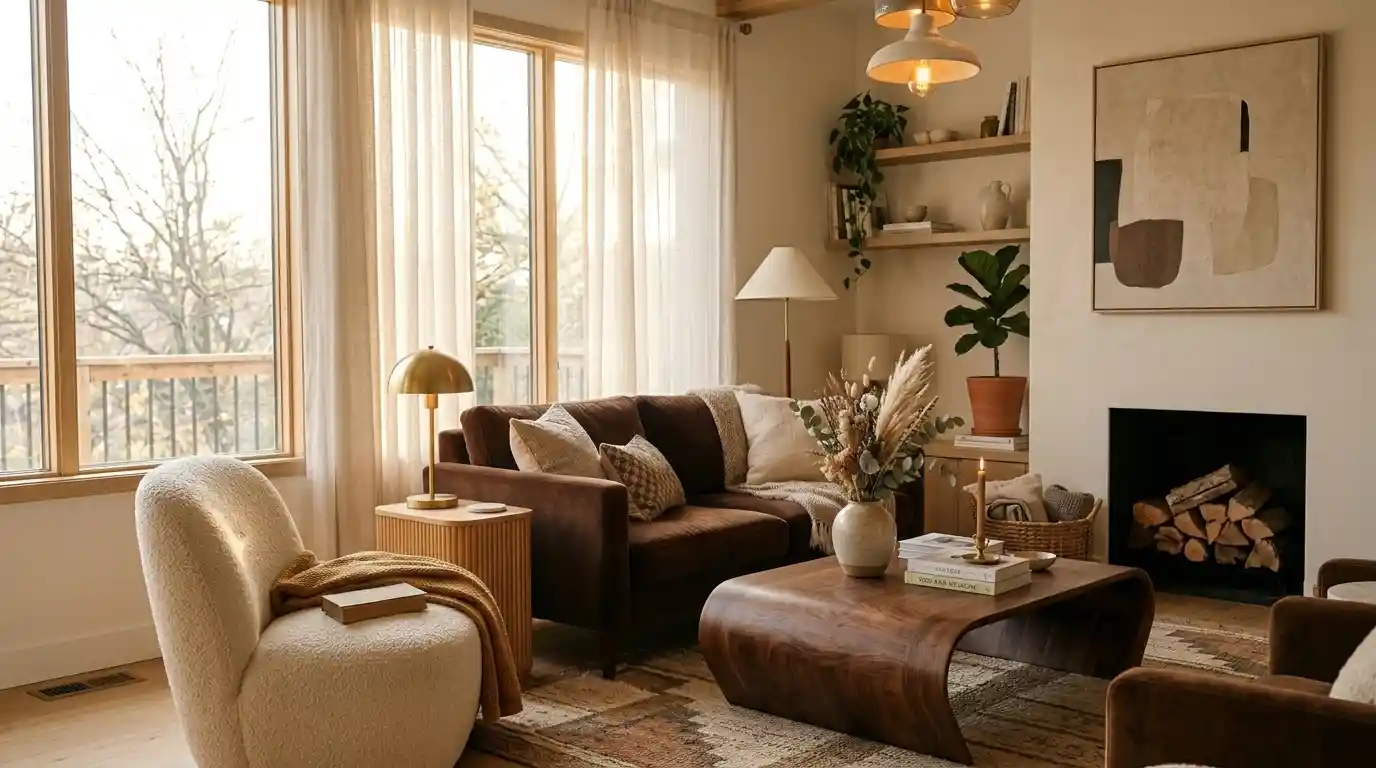
There’s a particular moment in every interior design project that I’ve come to quietly watch for. It usually happens around the third or fourth walkthrough when the client stops describing what they want the room to look like and starts talking about how they want to feel in it. That shift is everything. It’s the difference between a space that photographs well and one that actually works. Interior design, done properly, is engineering for daily life and the visual result is what happens when that engineering is invisible enough to look effortless.
DrHomey’s interior design service is built around that distinction. Not style imposed on a space, but a design process that starts with the person who lives there.
What an Interior Designer Actually Does That a Mood Board Can’t
The global interior design market sits at $152.33 billion in 2026, projected to climb to $214.35 billion by 2034 at a 4.36% CAGR. Over 1 million U.S.-based searches for interior designers happen every single month. People are clearly looking but what most of them find first is inspiration, not process. Pinterest boards, Houzz saves, DesignFiles screenshots. What they need is someone who can take that inspiration and run it through reality: room dimensions, door swing clearance, circulation path, structural walls, window placement, and the unsexy but critical question of whether a sectional sofa they love will actually fit without blocking the traffic flow through the room.
A professional interior designer starts with the client brief and the space simultaneously. The design brief tells you what the person needs; the space tells you what’s possible; the design process is what happens between those two facts. At DrHomey, the initial consultation whether that’s an in-home consultation or a virtual consultation is structured around pulling out information that clients often don’t think to volunteer: how many people use each room, at what times, for what purpose, and where the space currently fails them. That information shapes everything that follows, from space planning and activity zones to furniture layout and the final product source list.
The residential segment accounts for 57.39% of the market in 2025, and renovation and remodeling alone represent 47.85% growing at an 11.78% CAGR through 2031. Most of that renovation activity is homeowners who’ve lived with a layout that doesn’t suit them for years before finally deciding to fix it. The fix rarely requires demolition. It usually requires the kind of spatial thinking that a good interior designer applies before a single piece of furniture is moved.
The Design Process DrHomey Uses — From Brief to Final Room
The interior design process has a sequence that matters. Skip steps early and they don’t disappear they show up later as expensive corrections. DrHomey’s process moves from concept development through to implementation, with decision points built in before commitments are made.
It starts with the floor plan. Not the aspirational one the accurate one, measured properly, with existing built-in features, electrical ports, radiators, and any awkward corners marked. This is what makes a 3D rendering genuinely useful rather than decorative: when it’s built on real dimensions, it removes the single most common renovation mistake, which is discovering after delivery that the furniture doesn’t fit the way it did in your head.
From there: space planning. Activity zones get mapped before aesthetic details get discussed. The living room needs to serve conversation, television, and sometimes work and those three functions pull the furniture layout in different directions. Getting the zoned spaces right first means the color palette, the texture, the lighting design choices that come after it all land on a foundation that functions. Circulation path gets checked. Room proportion gets assessed. The 60-30-10 rule dominant color to secondary color to accent color goes on after that.
The concept board and mood board stage is where the style direction gets confirmed. At DrHomey, this is also where the style quiz output becomes most useful: it surfaces preferences clients have but can’t always name. Someone might not know they respond to Japandi’s wabi-sabi restraint or to the layered warmth of modern rustic but they know it when they see it assembled coherently in a concept board. From there, a 3D room planner visualization and VR walkthrough let clients see decisions at scale before they’re locked in.
Design revision happens before the purchase list is finalized. The product source list and implementation guide go out when the design is resolved not before.
Style Is Personal, But It Still Needs Structure
Maximalism is requested by 39% of designers’ clients heading into 2026. Eclecticism sits at 38%. The era of one dominant aesthetic is over Homestyler’s analysis of 18.48 million user cases globally confirms that design personalization and lifestyle-driven design are now the organizing principles, with modern contemporary and luxury styles holding a combined 65.42% market share but hybrid aesthetics closing the gap fast.
What that means practically: the interior design style conversation has become more complex, and more interesting. A client might genuinely respond to the bold geometry of Art Deco revival in one room and the handcrafted softness of Edwardian interiors in another. Mixing those without clashing requires understanding what creates design cohesion in the first place color harmony, material relationship, the visual weight distribution across positive space and negative space, and how rhythm and repetition carry the eye from one element to the next.
The 2026 color picture is specific. Chocolate brown leads as the top trending color, cited by 33% of designers surveyed by 1stDibs. Burgundy has rebounded dramatically, up from 7% to 21%. Pantone’s Transformative Teal anchors the sustainability-adjacent palette. Earthy tones, warm grays, soft browns, muted hues, and creamy whites form the base that most rooms are being built on this year, with jewel tones, moody tones, and saturated colors used as accent color against them rather than as the dominant color.
Material choices in 2026 follow the same logic. Wood grain detailing threaded timber channels cut into solid timber panels sits alongside reclaimed timber in the premium tier. Marble, stone, and ceramic work alongside bouclé, linen, woven textiles, macramé, and tapestries. Textile wall hangings have moved from accent to statement piece. Sumptuous textiles are the most tactile version of the handcrafted interiors trend: fabric installations that function as artwork, hand-dyed textiles that carry cultural reference Indian block prints, African woven baskets, Moroccan rugs and grounding the whole thing in natural materials rather than synthetic substitutes.
Fluted furniture, fretwork, checkerboard floors, arched details, and curved furniture are all in active use across both contemporary European design and Americas modern style not as novelties but as durable design choices that won’t date the room by 2028.
Lighting and Finishing Touches — Where Design Either Lands or Doesn’t
I’ve watched beautifully planned rooms fall slightly flat because the lighting wasn’t treated as a design element in the same tier as the furniture and materials. Lighting design is where spatial flow either becomes felt or stays theoretical.
Layered lighting ambient lighting establishing the base, task lighting addressing function, accent lighting defining the focal point is the structure. Within that structure: circadian lighting in spaces where people work, warm light in spaces meant for rest, cool light where detail work happens. Dimmer switches are non-negotiable for rooms that serve multiple purposes at different times of day. LED lighting and energy-efficient lighting are the baseline; architectural lighting, recessed lighting, and track lighting are the decisions that come after the ceiling plan is fixed.
The lighting fixture list pendant light, chandelier, floor lamp, table lamp, sconce gets selected in relation to the furniture layout and room proportion, not independently. A chandelier scaled wrong for a dining room table reads as an afterthought. A pendant light hung at the wrong height flattens the whole ceiling plane.
Finishing touches in DrHomey’s interior design process get the same weight as the early structural decisions: gallery wall placement, statement mirror positioning for natural light maximization, indoor plants selected for the actual light conditions of the room, ceramic vase and sculptural objects sized to the shelving they’ll occupy. Soft furnishings throw pillow combinations, area rug sizing (the 28-inch extension beyond the bed sides is a rule worth knowing), sheer curtain vs blackout blind decisions are specified with the same precision as the materials that came earlier.
An interior design package from DrHomey whether a one-room refresh or a full residential interior design project delivers a complete implementation guide, not just a look. Every decision connected to the next, every finish resolved against the others, every detail chosen with the understanding that finishing touches are what make a space feel complete rather than assembled.
FAQs
An interior designer creates a functional and visually balanced space by combining client needs, space planning, furniture layout, materials, lighting, and finishing details. Their role is to turn ideas and inspiration into a practical design that works for everyday living.
Mood boards and Pinterest collections help define style preferences, but they do not solve practical design challenges like room measurements, circulation flow, furniture sizing, or lighting placement. An interior designer uses those ideas as a starting point and develops a complete plan based on the actual space.
The process usually begins with a consultation and design brief, followed by floor planning, space planning, concept boards, 3D visualization, revisions, product selection, and final implementation guidance. Each stage helps prevent costly mistakes and ensures every design choice works together.

15 thoughts on “Interior Design by DrHomey”